


Elliot
Patient Details:
Elliot Feldman Hair Transplant Results
Patient Details
Elliot Feldman has always described himself as a pragmatist. When he began noticing a balding crown around age 55, he was not interested in turning hair loss into a full time project. He had a family, a career and a life to live. He wanted to know whether something could realistically be done, but whatever the answer was, it had to make sense.
A Massachusetts native and Wellesley resident, Elliot was serving as Executive Director of the Boston Police Athletic League when his thinning hair began affecting how he felt about his appearance. The people closest to him were not making comments about his hair loss. The concern was his own. He simply did not like what he was seeing.
After hearing about Leonard Hair Transplant Associates on Boston sports radio, Elliot did what came naturally to him. He went home, researched hair restoration and scheduled a consultation at the Newton office.
He was not looking for a miracle.
He was looking for a plan.
Why Did Elliot Decide to Have Hair Transplant Surgery?
Elliot decided to have hair transplant surgery after learning that his permanent hair loss could potentially be addressed with his own donor hair and that treatment was available close to his home in Wellesley.
Convenience mattered to Elliot, but so did understanding what he was getting into. He had no interest in traveling long distances in search of hair restoration or making the process more complicated than it needed to be. After his evaluation, he decided that surgery was a reasonable option for what was bothering him most at the time: the growing bald area in his crown.
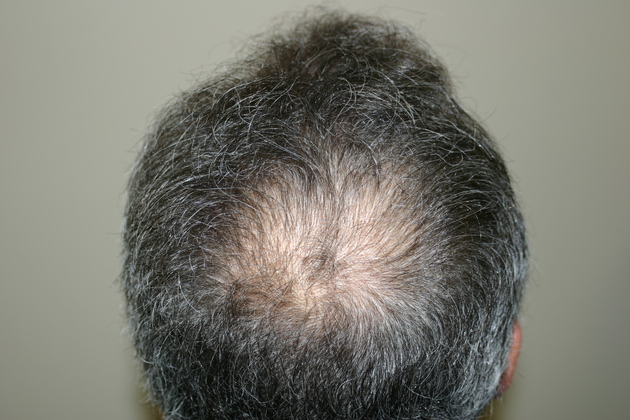
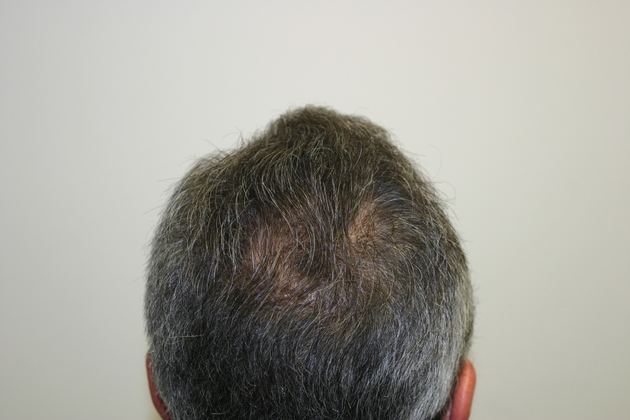
Elliot underwent his first hair transplant procedure in April 2007, concentrating on the crown at the back of the top of his scalp. The before and after photographs shown on this page document the result from that first crown procedure.
What started as a practical decision produced enough of a change that Elliot eventually decided to address another area.
Why Did Elliot Have a Second Hair Transplant?
Elliot underwent a second hair transplant because his hair loss also involved recession and thinning through the frontal portion of his scalp, an area that had not been the primary focus of his first procedure.
This is an important part of Elliot’s story because hair loss does not always progress evenly. The crown can be the area that first gets someone’s attention, while frontal recession or thinning may become more important later. For another patient, the sequence may be completely different.
Elliot’s first procedure focused on what concerned him at that point in his hair loss. His second procedure was designed to address his receding frontal area and add hair through the thinning frontal portion of his scalp.
Rather than treating his hair loss as one enormous project, Elliot addressed it in stages.
For a pragmatist, that made sense.
Is Crown Hair Loss Different From a Receding Hairline?
Crown hair loss and a receding hairline affect different areas of the scalp and can create very different visual patterns, even though both may occur as part of genetic male pattern hair loss.
The crown is the circular area toward the back of the top of the scalp. Because the hair naturally changes direction around the whorl, thinning in this area can gradually create an increasingly visible spot when viewed from above or behind. Frontal recession occurs toward the front of the scalp and temples, where changes can become more apparent when someone looks directly in the mirror.
Some men primarily lose hair in one area. Others, like Elliot, experience changes in both.
That is why a hair transplant plan should not begin with the assumption that every thinning area needs to be treated at once. The pattern of loss, existing hair, available donor hair and the areas that matter most to the patient all influence how a surgical plan is developed.
Elliot noticed his crown first.
His hair loss had more of the story to tell.
Can You Have a Hair Transplant After Age 60?
Age alone does not determine whether someone can have a hair transplant. Candidacy depends on factors including the cause and pattern of hair loss, the quality of the permanent donor area, general medical considerations and whether surgery can realistically accomplish the patient’s goals.
Elliot was in his early sixties when he underwent hair restoration surgery. In some respects, evaluating hair loss later in life can provide a clearer picture of how a patient’s genetic pattern has developed than may be available when someone first notices thinning at a much younger age.
That does not mean every man or woman in their sixties is a candidate for surgery. It means a birth date by itself does not answer the question.
The scalp does.
For someone who has lived with hair loss for years, an evaluation can determine what has been permanently lost, what donor hair remains available and whether surgical restoration is still a reasonable option.
What Can Patients Learn From Elliot’s Hair Transplant Results?
Elliot’s experience shows that hair restoration does not have to begin with desperation or an obsession with hair. Sometimes a person simply reaches a point where the problem bothers them enough to ask whether there is a sensible solution.
That was Elliot.
He noticed crown loss in his fifties, continued living his life and eventually decided to investigate his options. His first procedure addressed his crown. When he later wanted to improve the frontal portion of his scalp, he chose a second procedure.
His family thought the results looked great, but Elliot also understood something that gets lost in a lot of hair restoration advertising: the people who cared about him already cared about him with or without hair.
He did this because it mattered to him.
That may be the most practical reason of all.
Hair Transplant Evaluation in Newton, Massachusetts Today
Today, Chief Hair Restoration Surgeon Dr. Matthew Lopresti personally performs FUE and FUT hair transplant surgery for Leonard Hair Transplant Associates in Newton, Massachusetts and Warwick, Rhode Island.
For patients from Wellesley, Greater Boston and throughout Massachusetts, the Newton office provides an opportunity to have hair loss evaluated close to home before deciding whether surgery or another treatment approach makes sense. Each patient is evaluated individually based on the pattern and progression of hair loss, existing hair, permanent donor characteristics and personal goals.
Elliot’s case began with a bald spot in the crown that bothered him enough to finally investigate his options. It eventually became a two procedure story addressing different areas at different times.
No dramatic reinvention.
Just a practical decision that made a difference.
Patient Profile
Patient: Elliot Feldman
From: Wellesley, Massachusetts
Age at original case: Early 60s
Occupation: Executive Director of the Boston Police Athletic League
Gender: Male
Hair loss noticed: Around age 55
Primary concerns: Balding crown, frontal recession and thinning through the frontal scalp
Treatment: Hair transplant surgery
Procedures: Two hair transplant procedures
First procedure: Crown, April 2007
Second procedure: Frontal recession and thinning through the frontal scalp
About the photographs
The before and after photographs shown on this page reflect the results of Elliot’s first hair transplant procedure addressing his crown.