


Follicular Unit Excision (FUE)
At Leonard Hair Transplant Associates, Follicular Unit Excision, or FUE, is our premier approach to hair transplant surgery. This advanced technique is widely recognized as one of the most precise and natural ways to restore hair. Led by Dr. Matthew Lopresti, whose expertise in FUE hair transplant surgery is well-respected, our team focuses on delivering results that are detailed, natural looking, and built to last. Patients travel to Boston from across the country and around the world to undergo FUE with Dr. Lopresti, drawn by his experience, consistency, and thoughtful approach to this highly technical procedure.
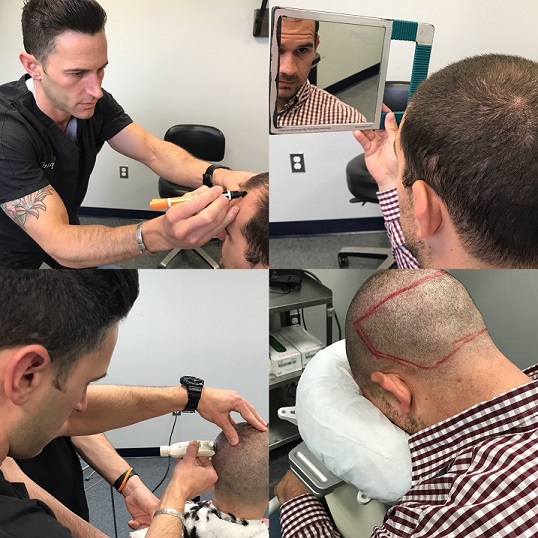
What sets the FUE technique apart is its ability to restore hair without the linear scar associated with traditional strip surgery. Individual follicles are harvested and placed with care, allowing for a quicker recovery and exceptionally natural results. This makes FUE an excellent option for patients who prefer shorter hairstyles, have smaller or targeted areas of thinning, need corrective work, or have tighter scalps. With a FUE hair transplant, the skill of the surgeon matters, and attention to detail makes all the difference.
If you are considering FUE, the process begins with a personalized evaluation. During your complimentary consultation, Dr. Lopresti assesses your donor hair, scalp characteristics, and long-term goals to determine the most effective plan. With careful planning and an experienced hand, FUE hair transplant surgery can deliver refined, long-lasting results that restore both hair and confidence.
- What Is FUE?
- FUE Benefits
- FUE Candidates
- FUE vs. FUT
- Preparing for FUE
- FUE Process
- FUE Recovery
- WAW and VORTEX
What Is Follicular Unit Excision (FUE)?
FUE, or Follicular Unit Excision, has quickly become the gold standard in hair restoration. Its precision and scientific approach give patients natural-looking results that truly last. Instead of working with larger sections of scalp, FUE hair transplant surgery focuses on harvesting individual follicular units, each with one to four hairs and the biological structures that support long-term growth. By preserving those natural growth units and placing them with careful attention to angle, depth, and spacing, you get density and movement that mirror how hair grows on its own. The result is new hair that feels intentional, looks balanced, and integrates seamlessly with existing hair.
What elevates FUE hair transplant surgery to the premier choice is execution. Dr. Matthew Lopresti brings specialized training, extensive experience, and an artistic eye to every procedure. He is a Fellow of the International Society of Hair Restoration Surgery and has presented nationally and internationally on the FUE technique. His skill ensures each follicular unit is handled and placed precisely, maximizing growth potential and creating natural results.
At Leonard Hair Transplant Associates, every graft is handled with care to protect its growth potential and positioned so the pattern of growth feels natural as it matures. This physician-led, detail-oriented approach is what allows FUE to deliver results that are not just effective but refined and long-lasting. It’s also why patients travel to Boston from across the country and around the world for FUE hair transplant surgery with Dr. Lopresti, because it’s an experience grounded in scientific understanding, surgical precision, and thoughtful design.
Learn more about the ISHRS standards and their significance in our press release on follicular unit excision.
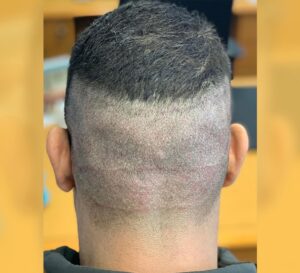
FUE donor site 1 day after surgery
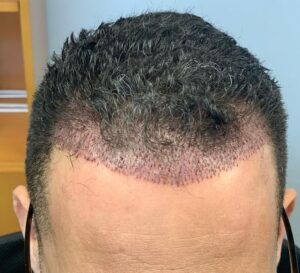
FUE recipient site 1 day after surgery
It’s important to underscore that FUE is a surgical procedure, one that requires the skill, training, and artistic eye of experienced hair restoration surgeons like Dr. Matthew Lopresti and Dr. Mary Lopresti. The International Society of Hair Restoration Surgery (ISHRS) recently updated the terminology applied to this procedure to more accurately describe the treatment and to emphasize the need for a physician to perform the operation. While some practices may opt to use technicians for follicular excision (which is the unlicensed practice of medicine), our extensively trained surgeons will always provide this service to ensure the highest-quality results and safest experience possible for our patients. Don’t trust anyone who would put your health and outcome at risk by using unqualified personnel!
Learn more about the updated definition and its significance in our press release on follicular unit excision.
What Are the Benefits of FUE?
FUE offers a wide range of benefits that make it one of the best techniques for certain patients. These can include:
- Decreased healing time in the donor area
- No linear scar in the donor area
- Ability to wear your hair as short as you like
- Natural-looking results
- Precision in harvesting follicular units and artistry in placing them
Who Is an Ideal Candidate for FUE?
Follicular Unit Excision (FUE) can be an excellent hair restoration option for many men and women, but candidacy depends on several individualized factors. Ideal candidates typically have sufficient healthy donor hair at the back or sides of the scalp, stable or predictable hair loss patterns, and realistic expectations for their results.
FUE is often especially well-suited for patients who prefer to wear their hair short, want to avoid a linear scar, or lead active lifestyles that benefit from a shorter recovery period. It may also be a good option for patients with tighter scalps, smaller or targeted areas of hair loss, or those seeking corrective or revision hair restoration.
Good overall health is important, as FUE is a surgical procedure. Patients experiencing temporary hair loss due to stress, illness, medications, or hormonal changes may be better suited for non-surgical hair restoration treatments initially. During your consultation, Dr. Matthew Lopresti and Dr. Mary Lopresti will carefully evaluate your scalp, donor hair quality, medical history, and long-term goals to determine whether FUE is the most appropriate and effective option for you.
FUE vs. FUT: Understanding Your Hair Transplant Options
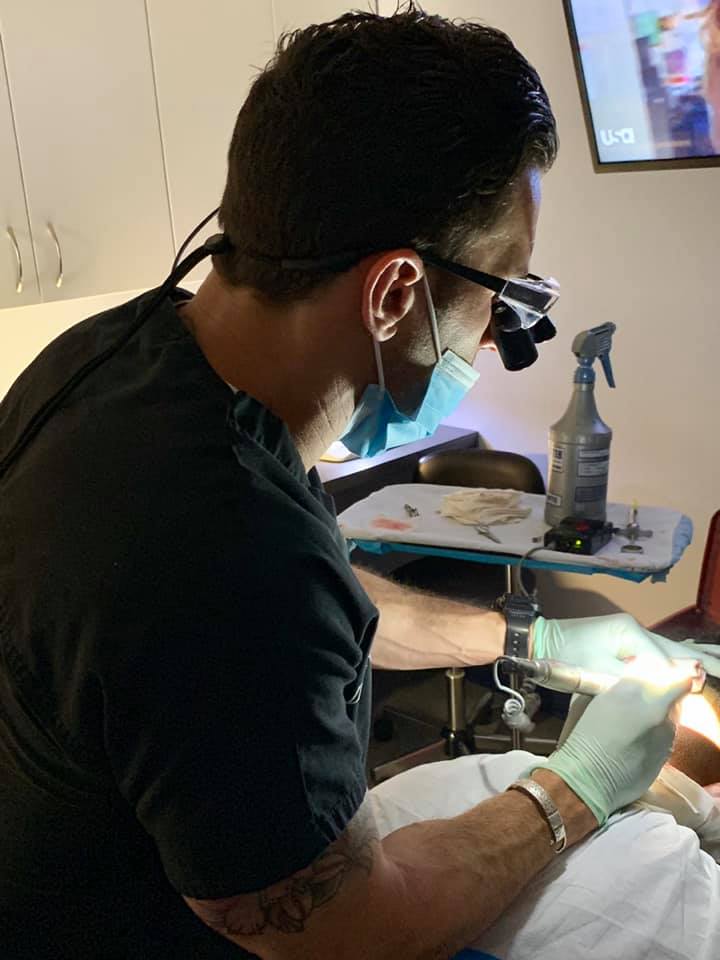
We are proud to offer some of the most technologically advanced techniques for hair transplant surgery. Two primary graft harvesting methods are used in modern hair restoration: Follicular Unit Excision (FUE) and Follicular Unit Transplantation (FUT). Closely supervised and controlled by our extensively trained hair restoration surgeons, both approaches can achieve excellent results for the right candidate.
Dr. Matthew Lopresti and Dr. Mary Lopresti will review both harvesting techniques with you during your consultation and help determine which approach is best suited to your unique anatomy, lifestyle, and desired outcome.
Follicular Unit Excision (FUE)
Follicular Unit Excision (FUE) is a hair transplantation graft harvesting technique that collects follicular units directly from the scalp in a specific manner that individually selects ideal hairs. This “randomized” approach is designed to provide natural-looking results in the donor area as well as in the transplanted zone. Because FUE does not require removal of a strip of tissue, it does not create a linear donor scar.
Follicular Unit Transplantation (FUT)
Follicular Unit Transplantation (FUT), also known as the strip hair transplantation harvesting method, involves removing a thin strip of tissue from the donor area. This strip is then carefully dissected into individual follicular units, which are transplanted into the thinning or balding areas of the scalp. FUT can be an effective option for certain patients depending on their hair loss pattern, donor hair characteristics, and overall goals.
How Should I Prepare for FUE?
Proper preparation helps ensure a smooth procedure and optimal outcome. Prior to your FUE hair transplant, our team will provide detailed pre-operative instructions tailored to your individual needs.
In general, patients are advised to avoid blood-thinning medications and supplements, such as aspirin, anti-inflammatory drugs, and certain vitamins, for a period of time before surgery (unless otherwise directed by a physician). Smoking and nicotine use should also be discontinued before and after the procedure, as they can impair healing and affect graft survival.
Because the donor area must be trimmed very closely, Dr. Lopresti recommends having your hair cut to a “tight military buzz” or “bald fade” a few days prior to surgery. On the day of your procedure, wear comfortable clothing and plan to arrive early in the morning. Since only local anesthesia is used, patients can drive themselves to and from the office and typically eat a normal meal beforehand unless instructed otherwise.
What Does the FUE Transplant Involve?
Pre-Procedure Planning & Hairline Design
On the day of your FUE hair transplant, you will arrive at our state-of-the-art surgical facility early in the morning. Dr. Matthew Lopresti will begin by taking photographs and carefully designing your treatment area, including the hairline when applicable. This step is critical to achieving natural, age-appropriate results and allows you and your surgeon to finalize the plan together before the procedure begins.
Donor Area Preparation & Anesthesia
To perform the FUE procedure, the donor area located at the back of your scalp is trimmed very closely. A local anesthetic is then administered to numb the donor area. Patients may experience a brief pinching or burning sensation during this process, which typically lasts only a few minutes. Once the area is numb, the remainder of the procedure is generally very comfortable.
Follicular Unit Extraction
Using advanced FUE technology and specialized instruments, Dr. Lopresti precisely and manually extracts individual follicular units from the donor area. This step requires a high level of technical skill and experience to preserve the integrity of each graft and promote optimal survival. Careful extraction helps ensure healthy donor healing and high-quality follicles for transplantation.
Graft Placement & Hair Restoration
Once the follicular units have been harvested, tiny incisions are created in the thinning or balding areas of the scalp. These incisions are made following the natural direction, angle, and density of your existing hair. Each follicular unit is then meticulously placed to create a seamless, natural-looking result that blends with surrounding hair.
Length of the Procedure & Same-Day Discharge
The FUE procedure typically takes between six and eight hours, depending on the size of the treatment area. Patients typically remain awake, relaxed, and comfortable throughout the day and are able to watch television or listen to music during the procedure. Once complete, the donor and recipient areas are thoroughly cleaned, post-operative instructions are reviewed in detail, and patients are able to drive themselves home the same day to begin recovery.
What Is FUE Hair Transplant Recovery Like?
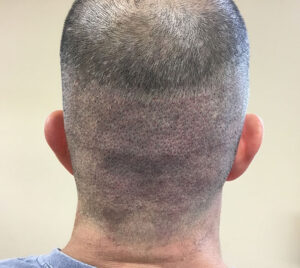 After a FUE hair transplant, the recipient areas begin to heal immediately. You will notice tiny scabs or redness on the scalp, which is completely normal and a sign that your follicles are settling in. Over the first week or two, the redness gradually fades to your natural skin tone, and the scabs naturally shed. During this time, you can comfortably wear a baseball hat to protect the scalp and minimize visibility while going about your daily routine.
The donor site generally heals quickly since the follicles are removed individually. Any mild soreness or tightness usually resolves within a few days, and the closely trimmed hair in the back grows out naturally within a couple of weeks.
Recovery is generally straightforward. Most patients experience only mild discomfort, which can be managed with over-the-counter pain relievers. Following basic care in the first weeks ensures healthy growth, minimal complications, and the most natural-looking, long-lasting results.
WAW and VORTEX: Advanced Tools for FUE Hair Restoration
To help achieve the best possible results, our hair loss surgeons utilize some of the most technologically advanced medical instruments available. These tools allow our surgeons to harvest follicular units of varying sizes to provide the appropriate grafts for each patient’s hair restoration needs.
The WAW Device
The WAW motorized pedal, Nouvag motor and hand piece, and hybrid trumpet punches are used to harvest and extract grafts from the patient’s donor site. This instrument gives our surgeons precise control over the FUE procedure. The WAW devices can be used on virtually all hair types and with a wide range of patients.
The VORTEX Device
The VORTEX offers a hands-free pedal for excellent control during the extraction process. What makes the VORTEX unique is the depth-control nose on the punch. This makes it possible for our hair restoration surgeons to harvest grafts from the donor site efficiently and effectively.
The purpose of both of these technologies is to provide exceptional results. Each technique and device offers unique benefits, and our hair restoration surgeons can select the optimal approach for your individual characteristics and desired outcome.
Learn More About FUE
To learn more about FUE and our state-of-the-art technologies, or to schedule a complimentary consultation, please contact our office today at 800-543-0660.