


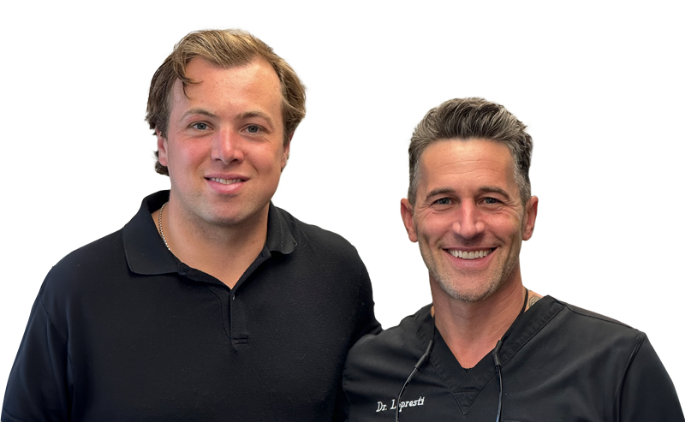
Ben


Patient Details:
Ben Scaralia Hair Transplant Results
Patient Details
Ben Scaralia started losing his hair in college. At first it was thinning. Then the thinning became more noticeable, bald areas began developing, and by his mid twenties Ben was spending far too much time thinking about something he wished he did not have to think about at all.
Every morning became an exercise in getting his hair exactly right. He would style and restyle it to conceal the areas that bothered him, then check it again throughout the day to make sure everything was still in place. When he could, he wore a hat. When he couldn’t, including while teaching high school science, he became increasingly conscious of whether other people were noticing his hair.
“Whenever I was in public, no matter where I went, I felt like people were looking at me,” Ben said. “I was fixated on it.”
At 26, he decided he had spent enough time arranging his life around his hair loss.
Ben had heard Leonard Hair Transplant Associates on the radio but knew very little about hair restoration or what his options might be. Rather than trying another way to disguise the problem, he scheduled a consultation to find out.
“I had no idea what to do, so I just called and made the appointment,” Ben said. “And I am glad I did.”
Can You Have a Hair Transplant in Your 20s?
Someone in their twenties may be a candidate for hair transplant surgery, but age alone should never determine whether surgery is appropriate.
Younger patients require particularly thoughtful evaluation because genetic hair loss is progressive. A 26 year old may have already experienced permanent loss while still having decades of additional thinning ahead. That means a surgical plan cannot focus exclusively on filling whatever looks thin today. Existing hair, the pattern and progression of loss, permanent donor characteristics and the possibility of future procedures all need to be considered.
When Ben was evaluated, he had moderate thinning through the central frontal area and top of his scalp. He met with Dr. Matthew Lopresti and Dr. Robert Leonard to discuss his options and remembers the consultation as educational rather than a sales pitch.
“They didn’t sell me,” Ben said. “I didn’t feel nervous or forced into anything. But I did feel informed and reassured.”
That distinction is especially important for younger men considering surgery. Wanting more hair at 26 is understandable. Knowing what the rest of your hair may do at 36, 46 and beyond is part of making the decision responsibly.
Why Did Ben Choose Hair Transplant Surgery?
Ben chose hair transplant surgery because his progressive thinning had reached the point where concealing it was consuming too much of his attention and he wanted a longer term approach to the hair he had permanently lost.
In September 2014, Ben underwent an FUT hair transplant, historically also called strip surgery. FUT obtains donor follicles from a narrow strip of permanent donor tissue, which is then carefully divided into individual follicular units for transplantation into areas of permanent hair loss.
For Ben, surgery was not about becoming someone different. It was about getting out of a routine that had gradually taken over more of his day than he realized. The careful styling, checking, hats and concern about what happened if his hair moved were all responses to the same problem.
The procedure addressed the hair loss.
Time would reveal what that meant for everything surrounding it.
What Happened After Ben’s Hair Transplant?
Ben saw his transplanted hair develop gradually following surgery and later described the results as “amazing.” About a year after his procedure, he also began using additional hair loss treatments, including Rogaine, Propecia and a laser cap.
That timing matters when looking at his results. Hair transplant surgery relocates permanent donor follicles into areas of permanent loss, while treatments such as finasteride and minoxidil are generally used to address existing non transplanted hair. Because Ben incorporated additional treatments after surgery, his longer term experience reflects a broader approach to managing progressive hair loss rather than surgery existing in isolation.
Three years later, Ben said his hair was considerably thicker and that looking at older photographs could be startling.
“I look back at pictures and I don’t even recognize myself,” he said.
The difference he described was not limited to photographs. He bought new clothes, felt more confident personally and professionally, and stopped structuring everyday situations around keeping his thinning areas concealed.
There was one small test that said almost everything.
Rain no longer mattered.
Why Is Long Term Planning Important for Younger Hair Transplant Patients?
Long term planning is especially important for younger hair transplant patients because transplanted follicles may remain while genetic hair loss continues affecting the surrounding non transplanted hair.
A hair transplant can address areas where hair has already been permanently lost, but it does not switch off the genetic process responsible for future loss. That is why younger patients should understand that the hair they have today may not represent the pattern they will have years from now.
This can influence decisions about where transplanted hair is placed, how aggressively an area should be restored and whether treatments intended to help maintain existing hair should also be considered. It is also why an evaluation should look beyond the immediate cosmetic concern.
At 26, Ben understandably wanted to solve the problem he could see in the mirror.
A responsible plan also has to consider the hair loss he cannot see yet.
What Can Younger Men Learn From Ben’s Hair Transplant Results?
Ben’s experience shows that being young does not automatically make someone too young for hair transplant surgery, but it does make individualized evaluation and long term planning particularly important.
There is another lesson in his story that has nothing to do with age. Hair loss does not have to reach an arbitrary level before someone is allowed to care about it. For Ben, the issue was not simply the amount of hair he had lost. It was the amount of time and mental energy he was spending trying to make sure nobody noticed.
That changed after treatment.
Ben could teach without thinking about whether a hat was an option. He could leave the house without carefully engineering every strand into position. He could even get caught in the rain without wondering what his hair would reveal.
Sometimes the result isn’t just what grows.
It’s what you stop thinking about.
Hair Transplant Evaluation for Younger Patients in Boston and New England
Today, Chief Hair Restoration Surgeon Dr. Matthew Lopresti personally performs FUE and FUT hair transplant surgery for Leonard Hair Transplant Associates in Newton, Massachusetts and Warwick, Rhode Island.
For younger men experiencing early or progressive hair loss, an evaluation can help determine what is causing the loss, how established the pattern appears to be, whether permanent donor hair is sufficient for surgery and whether surgical or non surgical treatment should be considered. Not every patient in their twenties will be an appropriate candidate for a hair transplant, and not every patient who eventually becomes a candidate needs surgery immediately.
Leonard Hair Transplant Associates evaluates patients from Boston and Greater Boston, throughout Massachusetts and Rhode Island, across New England and from outside the region.
Ben was 26 when he stopped trying to perfectly arrange the hair he was losing and started asking what could actually be done about it.
That turned out to be a much better use of his time.
Patient Profile
Patient: Ben Scaralia
Occupation: High school science teacher
Gender: Male
Hair loss began: College
Age at surgery: 26
Primary concern: Progressive thinning and visible areas of hair loss through the central front and top of the scalp
Treatment: FUT hair transplant surgery
Procedure date: September 2014
Additional treatments: Ben later reported using Rogaine, Propecia and a laser cap beginning approximately one year after surgery
Ben on his consultation
“They didn’t sell me. I didn’t feel nervous or forced into anything. But I did feel informed and reassured.”
Ben on his results
“The results have been amazing.”