


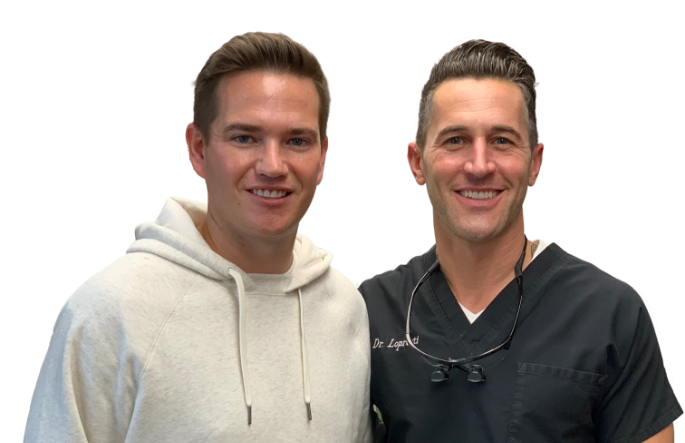
Angelo


Patient Details:
Angelo Cataldo Hair Transplant Results
Patient Details
Angelo Cataldo wasn’t afraid of getting his hair back. He was afraid everyone would know how he got it. That distinction mattered because Angelo had already seen hair transplant results on other men that he did not think looked natural, and he had no interest in trading one concern about his appearance for another.
His hair loss had started decades earlier, at just 22 years old. Angelo first noticed the loss toward the back of his scalp before it eventually began affecting the front as well. He didn’t like the way he looked as his hair disappeared, but it was more personal than simply seeing thinning in a mirror. He missed the way his hair used to feel when he ran his hands through it, and comments from other people made him increasingly conscious of something that was already bothering him.
Over the years, Angelo tried almost everything he thought might help. He used shampoos and lotions from his native Italy, products from Finland, Rogaine and other treatments he had seen advertised on television. He kept looking for something that would give him back what he had lost, but he was not seeing the improvement he wanted.
Hair transplant surgery seemed like the obvious next thing to investigate, except Angelo had reasons to be skeptical. He personally knew men who had undergone hair transplants with other surgeons and did not like their results. He worried that his friends might laugh, that the initial appearance following surgery would be too obvious and that he might end up with a result that looked worse than simply having less hair. Even his wife and daughter initially encouraged him not to pursue treatment.
Eventually, Angelo heard an advertisement for Leonard Hair Transplant Associates and scheduled a consultation. He reviewed before and after photographs, learned more about what hair restoration surgery could realistically accomplish and decided that avoiding surgery because of other people’s results did not answer the question of what his own result could look like.
Angelo ultimately underwent three hair transplant procedures over approximately two years. The man who had spent years worrying that everyone would notice a hair transplant ended up experiencing something very different.
People noticed Angelo looked better.
They didn’t know why.
Can a Hair Transplant Look Natural?
Yes. A hair transplant can look natural when the restoration is designed around the individual patient and transplanted follicles are placed with careful attention to direction, angle, distribution and how naturally growing hair actually appears on the scalp.
That was the question at the center of Angelo’s decision. He did not need anyone to convince him that follicles could physically be moved from one area of the scalp to another. He had already seen hair transplants on people he knew. What he needed to understand was whether transplanted hair could grow in a way that did not immediately reveal the procedure behind it.
Natural looking hair restoration depends on details that should become almost invisible when the result matures. Human hair does not grow in perfectly uniform rows or at identical angles, and density is not exactly the same across every part of the scalp. The placement of transplanted follicles needs to respect those natural variations while also fitting the patient’s face, age, existing hair and pattern of loss. Particularly in visually prominent areas toward the front, small surgical decisions can have a large effect on what another person ultimately sees.
This is why the number of transplanted grafts by itself tells only part of the story. Two patients could receive a similar number of grafts and have very different looking outcomes depending on where those grafts are placed and how the restoration is designed. More hair is not automatically better hair restoration if the finished result draws attention for the wrong reason.
Angelo’s concern was therefore not unreasonable. In fact, it gave him a useful standard for evaluating his options. He knew exactly what he did not want before he ever decided what he did.
The goal wasn’t to make Angelo look like a man who had undergone a hair transplant.
It was to make him look like Angelo with more hair.
Why Do Some Hair Transplants Look Obvious or Unnatural?
A hair transplant may look obvious when the design, placement, direction or distribution of transplanted hair does not convincingly resemble natural hair growth or does not fit the individual patient’s appearance.
Angelo had seen this firsthand, and those experiences shaped his perception of hair transplant surgery for years. When someone already feels self conscious about losing hair, the idea of replacing that concern with a result that attracts even more attention can become a powerful reason to do nothing. That was part of what held Angelo back.
His story also illustrates why before and after photographs deserve more scrutiny than simply comparing how much hair appears in each image. Someone considering surgery should look at patients with patterns of loss that resemble their own and examine how naturally the restored hair fits the face and remaining hair. A good result should make sense as a whole. The viewer’s eye should not immediately be pulled toward a perfectly straight transition, an unusual pattern or hair that seems to be growing in a direction that does not belong there.
This becomes particularly important when someone is comparing hair transplant practices. Large graft counts, low prices and dramatic promises are easy to advertise. Natural design is harder to reduce to a number. Patients should understand who will be responsible for the surgical plan, who performs the procedure and whether the practice can show results that reflect the type of restoration the patient actually wants.
Angelo approached surgery with skepticism because he had already seen what could go wrong. Instead of dismissing that concern, he used it to become more selective about what he considered acceptable.
He wasn’t shopping for the most hair.
He was looking for hair that looked like it had always belonged to him.
Why Would Someone Have More Than One Hair Transplant?
Some patients undergo more than one hair transplant because restoration can be performed in stages to build additional coverage or density, address different areas or respond to the way an individual’s hair loss and goals develop over time.
Angelo underwent three procedures over approximately two years. That fact is important because multiple procedures should not automatically be interpreted as evidence that an earlier transplant failed. Depending on the patient’s situation, surgical restoration may be approached progressively rather than attempting to accomplish every objective through one procedure.
For Angelo, that gradual process also addressed one of the concerns that had originally made him reluctant to pursue surgery. He had worried about suddenly appearing different and having friends immediately recognize that he had done something to his hair. Instead, his appearance changed over time. Transplanted hair grew gradually, and additional procedures contributed to a fuller overall look rather than producing an overnight transformation.
The reactions he received were telling. People asked whether he had lost weight. Others told him that he never seemed to get older. Angelo said he began receiving compliments every day. People recognized that something about his appearance looked different, but they were not necessarily identifying hair transplant surgery as the reason.
That is a very different experience from the one Angelo had imagined when he was afraid to make the first appointment. He thought surgery might create a result he would have to explain. Instead, the gradual transition meant there was very little explaining to do.
Three procedures gave him more hair over time.
They didn’t give him a sign announcing how it got there.
Will Everyone Know You Had a Hair Transplant?
No. People do not necessarily know someone has undergone a hair transplant, particularly because transplanted hair develops gradually rather than creating the finished cosmetic result immediately after surgery.
There is, however, an important distinction between the recovery period and the eventual result. Hair transplant surgery does temporarily leave visible evidence that a procedure has been performed, and patients should understand the expected healing process before scheduling surgery. The finished hair restoration is different because transplanted follicles require months to begin producing visible growth, with the appearance continuing to change as that hair grows and matures.
That gradual timeline worked in Angelo’s favor. One of his biggest fears had been how people around him would react, yet the comments he eventually received were about looking younger, looking better or perhaps having lost weight. His friends were noticing the effect without necessarily identifying the cause.
For Angelo, that was more meaningful than simply having more hair. He had spent years worrying about how his hair loss looked to other people and then worried that correcting it would become equally obvious. What he ultimately wanted was the freedom to stop explaining his appearance altogether.
“I feel much better, I look better, definitely look younger and get compliments every day,” Angelo said.
There is a considerable difference between someone noticing you look good and someone noticing you had something done.
Angelo got the reaction he wanted.
What Can Patients Learn From Angelo’s Hair Transplant Results?
Angelo’s experience shows that being skeptical about hair transplant surgery can be useful when that skepticism leads to better research, better questions and a clearer understanding of what you expect from a result.
He had spent years trying different products before considering surgery, and he had personally seen hair transplants that made him reluctant to become a patient himself. He did not arrive at his consultation looking for someone to sell him on hair restoration. He needed to see evidence that surgery could produce the kind of natural appearance he was comfortable living with.
That is a useful mindset for anyone considering a hair transplant today. Look beyond advertising claims. Review actual patient results. Ask questions about who performs the procedure and how the restoration will be designed. Understand that another patient’s outcome cannot guarantee yours, because hair characteristics, the extent of loss, available donor hair and individual surgical planning are different for everyone.
Angelo eventually underwent three procedures over approximately two years and described the effect in straightforward terms: “Doctor Leonard changed my life around a lot. I feel much better, I look better, definitely look younger and get compliments every day.”
The man who was afraid everyone would recognize a hair transplant ended up with a very different problem.
People kept telling him he looked good.
What Should New England Patients Look for When Choosing a Hair Transplant Practice?
Patients considering a hair transplant in New England should look for a practice that can demonstrate natural looking patient results, clearly identify who will perform the surgery and explain how the proposed restoration is being designed for that individual’s pattern of hair loss rather than selling a predetermined procedure or graft count.
Angelo’s story makes this question especially relevant because seeing poor results elsewhere was one of the main reasons he delayed surgery. Before choosing Leonard Hair Transplant Associates, he reviewed patient photographs and used those results to decide whether the type of change he wanted appeared realistic.
Today, Dr. Matthew Lopresti leads hair transplant surgery at Leonard Hair Transplant Associates. Patients from Boston and throughout Massachusetts, Rhode Island and New England can be evaluated at the practice to determine whether hair transplant surgery or another hair restoration approach may be appropriate. Surgical procedures are performed in Newton, Massachusetts and Warwick, Rhode Island.
For someone who shares Angelo’s concern about an obvious looking transplant, the consultation should be used to discuss more than how many grafts can be moved. Ask how the restored areas will be designed, how transplanted hair will work with the hair that remains and what the practice considers a natural result for someone with your individual pattern of loss.
Angelo spent years knowing exactly what he didn’t want.
Sometimes that is the smartest place to start.
Patient Profile
Patient: Angelo Cataldo
Originally from: Italy
Gender: Male
Age at original case: 57
Hair loss began: Age 22
Primary concern: Progressive hair loss affecting the back and front of the scalp and concern that hair transplant surgery might look unnatural
Treatment: Hair transplant surgery
Procedures: Three procedures over approximately two years
Angelo on his results
“Doctor Leonard changed my life around a lot. I feel much better, I look better, definitely look younger and get compliments every day.”