



Philip
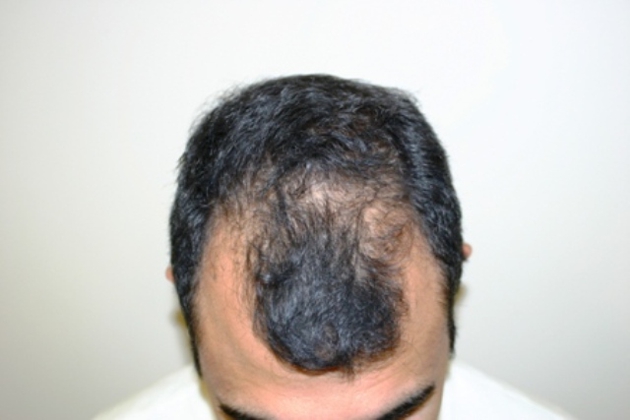
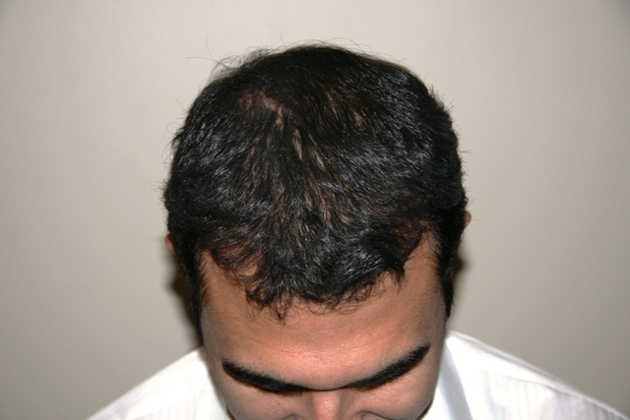
Patient Details:
Philip DaPonte Hair Transplant Results
Patient Details
Westport, Massachusetts
Mid-30s at time of treatment
Traditional FUT hair transplant
Male pattern hair loss
Family history of hair loss
Philip DaPonte knew hair loss ran in his family. Knowing it was possible was one thing. Watching it happen to him was another.
The Westport, Massachusetts resident first began noticing hair loss in his twenties. As the years passed, the thinning became progressively more noticeable. By his mid-30s, Philip wasn’t wondering whether his hair was changing anymore. He was wondering how much further it would go.
That raises a question many men start asking long before they ever consider a hair transplant.
Does a Family History of Baldness Mean You Will Lose Your Hair?
A family history of male pattern hair loss can increase the likelihood of developing it, but it does not provide a precise forecast of exactly when hair loss will begin, how quickly it will progress or how extensive an individual’s pattern will eventually become.
Male pattern hair loss is strongly influenced by genetics, and those genetics can come from either side of the family. That is why looking at a father, grandfather or brother can provide clues, but not a blueprint. Two men in the same family can experience very different patterns, rates of progression and degrees of hair loss.
For Philip, the family history was accompanied by something much more convincing. His own hair was progressively thinning.
Knowing What’s Coming Doesn’t Necessarily Make It Easier
Hair loss rarely occupies every minute of the day. It doesn’t have to.
It can be the few seconds in front of the mirror before work. The photograph you look at twice. The way your hair behaved five years ago compared with the way it behaves today. Over time, those little moments add up.
Philip described becoming increasingly concerned about his hair as the loss progressed. Eventually, he decided he was tired of worrying about it and wanted to find out what could actually be done.
At 34, Philip sought a professional hair restoration evaluation with Dr. Robert Leonard at the practice’s former Cranston, Rhode Island office. This is a historical Leonard Hair Transplant Associates patient case from the period when Dr. Leonard was practicing.
After his evaluation, Philip chose traditional FUT hair transplant surgery.
Why Does Progressive Hair Loss Matter When Planning a Hair Transplant?
Hair loss can continue after a hair transplant, which is why surgical planning should account for more than the areas that look thin today. Donor hair is limited, while male pattern hair loss can continue progressing over many years.
With FUT, a narrow strip of donor tissue containing permanent hair follicles is surgically removed from the donor area. Follicular unit grafts are then carefully prepared and transplanted into the areas selected for restoration.
The procedure addresses the hair that is transplanted. It does not stop genetically susceptible non-transplanted hair from continuing to thin. That makes long-term planning particularly important for someone like Philip, who began losing hair relatively young and already had evidence that the pattern was progressing.
Today at Leonard Hair Transplant Associates, Dr. Matthew Lopresti personally performs both FUE and FUT hair transplant surgery. The decision between them is based on factors including the patient’s pattern of loss, donor area, hairstyle, goals and long-term needs rather than assuming one surgical method is right for everyone.
When Hair Stops Being Something You Think About
Philip’s results changed more than what he saw in the mirror.
Looking back on his experience, he said something remarkably simple.
“I don’t have to worry about my hair anymore.”
There is a lot packed into that sentence.
For years, Philip had watched his hair change while knowing baldness ran in his family. He had seen the progression and wondered where it was heading. After his hair transplant, that daily concern no longer occupied the same space in his life.
A successful hair transplant does not rewrite someone’s genetics. It uses permanent donor hair to restore strategically selected areas while planning for the reality that hair loss may continue.
Philip’s story started with what he inherited.
The result was deciding what he wanted to do about it.
Hair Transplant Consultation for Westport and South Coast Massachusetts
For patients in Westport, Fall River, Dartmouth, New Bedford and communities throughout South Coast Massachusetts, Leonard Hair Transplant Associates offers hair restoration consultations with surgical hair restoration available nearby at the practice’s Warwick, Rhode Island location.
A family history can be an important part of understanding hair loss, but it is only one piece of the evaluation. The pattern developing on your own scalp, the quality and availability of donor hair, your age, progression and long-term goals provide the information needed to determine what options may make sense.
For someone watching a familiar family pattern beginning to appear in the mirror, the first useful question isn’t whether you’ll eventually look exactly like someone else in your family.
It’s what is happening to your hair now.