


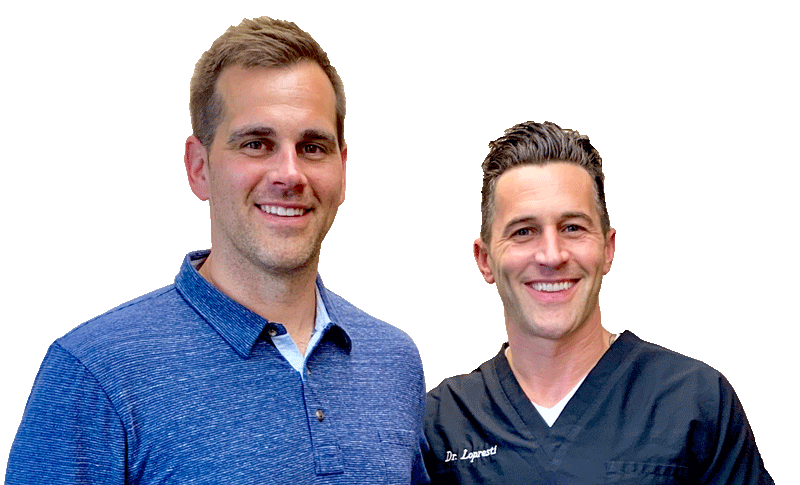
Fast Freddy


Patient Details:
Fast Freddy Hair Transplant Results
Patient Details
Longtime Boston radio personality Fast Freddy was 39 when he decided his thinning hair had become difficult to ignore. It had not disappeared overnight and there was no single dramatic bald spot that suddenly changed everything. Instead, his hair gradually began looking thinner and, in Freddy’s words, almost “transparent.”
That description captures an early stage of hair loss many men recognize. There may still be hair across the scalp, but more light begins passing through it, the scalp becomes easier to see and the overall density no longer looks the way it once did.
For Freddy, this was never primarily about what listeners, friends or coworkers thought. He had spent years behind a microphone and in the public eye, but the person bothered by the change was the one he saw in the mirror.
Today, Fast Freddy remains a familiar voice in Boston radio as part of Gregg & Freddy on Mix 104.1, continuing a career that has made him a recognizable personality throughout Greater Boston and New England.
What Does See-Through or Transparent Hair Mean?
Hair that begins looking see-through or transparent often reflects a loss of density that allows more of the scalp to become visible between the remaining hairs.
Hair loss does not always begin with a clearly defined bald spot. For some men, individual hairs gradually become finer and overall density decreases, making the scalp increasingly visible under bright lights, in photographs or when the hair is wet or moved.
That was the change Freddy noticed. He still had hair, but it no longer provided the coverage he was accustomed to seeing.
Rather than assuming that thinning was simply his “lot in life,” Freddy started researching hair restoration, talked with other people who had experience with treatment and eventually scheduled a consultation at the Newton, Massachusetts office.
He arrived prepared with questions.
That was exactly the right place to start.
Why Did Fast Freddy Choose Hair Transplant Surgery?
Fast Freddy chose hair transplant surgery after researching his options and deciding that he wanted to restore naturally growing hair rather than continue watching his density decrease.
His consultation gave him the opportunity to understand what was happening, what could realistically be improved and what hair restoration surgery would involve. Freddy had already spent time reading about treatment and speaking with someone else in radio who had undergone hair restoration, so he approached the process with specific questions rather than simply asking for more hair.
That matters because a hair transplant should begin with understanding the problem, not choosing a procedure from an advertisement.
For Freddy, one part of the answer mattered more than almost anything else. The transplanted hair would still be his own hair.
After his procedure, that became one of the things he appreciated most.
“It’s there and it’s me and it’s not going anywhere,” Freddy said. “It’s my own, it’s growing.”
Is Hair Transplant Hair Really Your Own Hair?
Yes. Hair transplant surgery uses the patient’s own permanent donor follicles and relocates them into selected areas where hair has been permanently lost.
No artificial hair is added and no hairpiece is attached. Once the transplanted follicles have healed and begun producing hair, that hair can be washed, cut and styled along with the patient’s other hair.
For Freddy, that distinction was central to the appeal. He did not want something that merely covered his thinning. He wanted his own hair growing where he had lost density.
His friends noticed the change as his result developed, but Freddy’s reaction is more telling. He still cared about his hair. He simply stopped worrying about the thinning the way he once had.
There is a difference between caring about your hair and having to think about it all the time.
Freddy finally got some distance between the two.
Can You Have a Hair Transplant Before Age 40?
Someone in their thirties may be a candidate for hair transplant surgery if the pattern of hair loss, permanent donor hair and long-term outlook make surgery appropriate.
Freddy was 39 when he addressed his hair loss, but age by itself does not determine whether someone should have a transplant. A patient in their thirties may still experience additional genetic hair loss for many years, which means the surgical plan needs to consider both the areas that are thin now and what may happen to the surrounding hair later.
That is why a consultation should evaluate the overall pattern rather than simply the spot that bothers someone most. The goal is not to chase every thinning area as it appears. It is to understand where the hair loss may be heading and whether surgical restoration fits into that longer picture.
Freddy had already done his homework before his consultation.
The medical evaluation was where the homework became a plan.
What Can Patients Learn From Fast Freddy’s Hair Transplant Results?
Freddy’s story shows that hair loss does not have to become severe before someone decides it is worth discussing.
His concern began with density. His hair was still there, but it was becoming easier to see through it, and he did not like where that progression appeared to be headed. Rather than waiting for the change to become more dramatic, he found out what his options were.
That decision was personal, not professional. Being on the radio and being recognized around Boston made Freddy more visible, but visibility was not why he chose treatment.
He simply preferred having more of his own hair.
Years in broadcasting taught Freddy the value of a good signal.
His hair was sending one too.
He decided to listen.
Hair Transplant Surgery in Boston Today
Today, Chief Hair Restoration Surgeon Dr. Matthew Lopresti personally performs FUE and FUT hair transplant surgery for Leonard Hair Transplant Associates in Newton, Massachusetts and Warwick, Rhode Island.
Patients from Boston and Greater Boston, throughout Massachusetts and across New England can be evaluated to determine what is causing their thinning, whether hair has been permanently lost and whether surgical or non-surgical hair restoration may be appropriate.
For someone noticing the same kind of see-through thinning Freddy described, the first step is not assuming a hair transplant is necessary. It is determining what hair remains, what has been permanently lost and what options make sense for the individual pattern of hair loss.
Freddy started with questions.
That turned out to be a better strategy than simply accepting the thinning.
Patient Profile
Patient: Fast Freddy
From: Boston, Massachusetts
Occupation: Boston radio personality and Mix 104.1 co-host
Gender: Male
Age at original case: 39
Primary concern: Progressive thinning and reduced density that made the hair appear increasingly transparent
Treatment: Hair transplant surgery
Fast Freddy on his results
“It’s my own, it’s growing.”
Fast Freddy on his experience
“I still care a lot about my hair, but I don’t sweat the thinning like before.”