


Maurice

Patient Details:
Maurice Rubino Hair Transplant Results
Patient Details
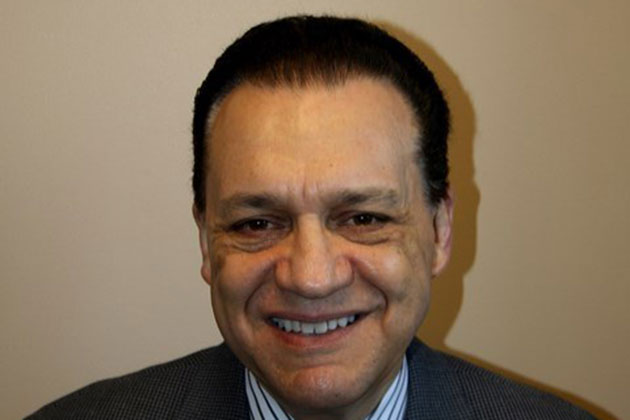
Maurice Rubino had been watching his hair change since his mid thirties. By the time he decided to do something about it, he was 61, living in Arlington, Massachusetts and working as an insurance agent, a career that regularly put him in front of clients, prospects and professional groups.
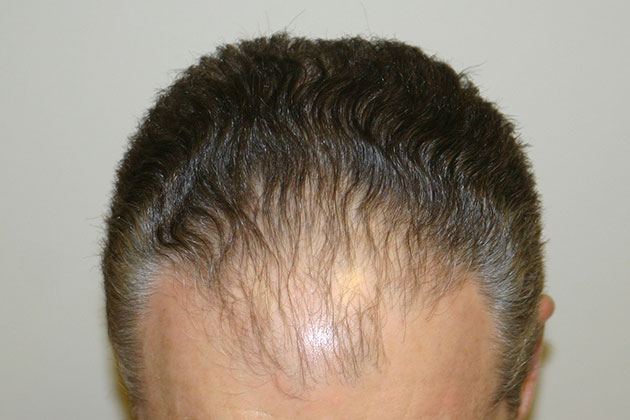
Maurice’s hair loss was most noticeable toward the front of his scalp. After living with the progression for years, he reached a point where he simply wanted to look better and feel better about his appearance.
“I wanted to feel better and look better,” Maurice said.
After having his hair loss evaluated, Maurice decided to undergo hair transplant surgery. Like most patients, he then had to adjust to one of the realities of hair restoration that can be difficult to appreciate before surgery: the procedure may happen in a day, but the result takes months to reveal itself.
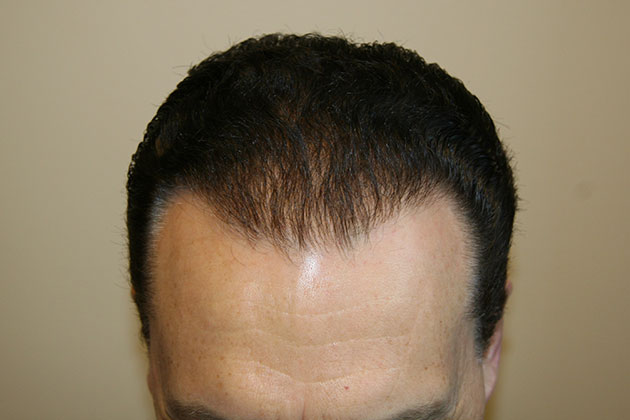
For Maurice, the waiting eventually paid off in exactly the way he wanted.
People started noticing his hair.
They didn’t notice his hair transplant.
How Soon Do You See Results After a Hair Transplant?
New hair transplant growth commonly begins several months after surgery, with increasingly visible improvement developing gradually over the months that follow.
Maurice remembered seeing an obvious change at approximately six months. That did not mean his final result suddenly appeared at the six month mark. Transplanted follicles need time to heal before beginning their new growth cycle, and different follicles may begin producing visible hairs at different times.
At Leonard Hair Transplant Associates, patients are generally advised that early transplanted hairs may begin appearing around five to six months after surgery. More noticeable cosmetic change commonly develops around nine to twelve months, while the result can continue maturing for approximately 16 to 18 months.
Individual growth varies, so those milestones are not guaranteed deadlines. They are better understood as a general progression.
Maurice had spent decades watching his hair gradually disappear.
Growing it back required a different kind of patience.
When Does a Hair Transplant Reach Its Final Result?
A hair transplant can continue developing for approximately 16 to 18 months as transplanted hairs emerge, grow longer and contribute progressively more to the overall appearance.
This is why judging a hair transplant too early can create unrealistic expectations in either direction. Someone several months after surgery may see early hairs and assume the result is nearly complete, while another patient may become concerned because the change is not yet as dramatic as expected.
Hair transplantation does not work like an immediate cosmetic procedure. The transplanted follicles follow biological growth cycles, which means the visual result unfolds gradually.
Maurice began seeing enough change around six months to recognize that something was happening. From there, additional growth continued to develop.
The surgery had already happened.
The result was still arriving.
Can a Hair Transplant Look Natural Enough That People Do Not Notice?
A well planned hair transplant is intended to produce natural looking hair growth that blends with the patient’s appearance rather than make the surgery itself obvious.
That became one of Maurice’s favorite parts of his experience.
Around six months after his procedure, Maurice attended a networking group where another man commented that he liked his hair. He did not ask whether Maurice had undergone a transplant. He did not try to identify what had changed. He simply noticed that Maurice’s hair looked good.
For someone whose professional life involved meeting people, making sales calls and giving presentations, that reaction mattered. Maurice wanted an improvement he could enjoy without turning his hair restoration into the first topic of every conversation.
Natural looking hair restoration should not have to introduce itself.
Maurice’s didn’t.
Why Can Hair Transplant Results Take So Many Months to Grow?
Hair transplant results take months to develop because transplanted follicles must heal and move through their natural growth cycle before producing increasingly visible hair.
The follicles are relocated during surgery, but the finished cosmetic result does not arrive with them. Following the procedure, the scalp heals and transplanted follicles eventually begin producing new hairs. Those hairs then need time to grow in length and contribute enough coverage to change what someone sees in the mirror.
That process explains why patience is part of hair transplant recovery even after the scalp itself has healed. Someone may feel physically back to normal long before the transplanted hair has finished developing.
Maurice’s experience provides a useful real patient example. At approximately six months, he was already seeing enough growth for other people to notice his hair. That was an important milestone, but it was part of the process rather than the finish line.
Hair grows on its own schedule.
The calendar doesn’t negotiate.
What Can Patients Learn From Maurice’s Hair Transplant Results?
Maurice’s experience shows why the success of a hair transplant is not necessarily measured by how many people recognize that someone had surgery. For him, almost the opposite was true. He wanted to improve his hair without making hair restoration the first thing people noticed when he walked into a room.
He also demonstrates why patients need realistic expectations about timing. The change he remembered at approximately six months was meaningful precisely because he had given the transplanted follicles time to begin growing. A hair transplant requires patience before the visible payoff begins.
Maurice’s individual outcome cannot predict what another patient will experience. Hair characteristics, the extent of loss, the surgical plan and individual growth can all influence the timeline and final appearance.
But Maurice knew what he wanted when he started.
“I wanted to feel better and look better.”
Afterward, his assessment was even shorter.
“It worked perfectly!”
What Should Someone in Greater Boston Know Before Considering a Hair Transplant?
A hair transplant evaluation should determine the cause and extent of the hair loss and whether surgical restoration can realistically produce a natural looking improvement for that individual patient.
For someone like Maurice from Arlington, that evaluation is available nearby at Leonard Hair Transplant Associates in Newton, Massachusetts. Dr. Matthew Lopresti currently leads the surgical practice and evaluates patients from Arlington, Cambridge, Boston and communities throughout Greater Boston who are considering hair restoration.
The consultation is also the time to discuss expectations that cannot be answered by before and after photographs alone. How much improvement may be possible? When should early growth become visible? How long could the result take to mature? What happens to existing hair as genetic hair loss continues?
Those questions matter because surgery day is only the beginning of a hair transplant result.
Maurice waited decades before deciding to address his hair loss. Then he waited months for the transplanted hair to begin showing what it could do.
Around six months later, people started noticing his hair.
Not his hair transplant.
Patient Profile
Patient: Maurice Rubino
From: Arlington, Massachusetts
Occupation: Insurance agent
Gender: Male
Age at original case: 61
Hair loss began: Mid thirties
Primary concern: Male pattern hair loss with significant frontal loss
Treatment: Hair transplant surgery
Maurice on why he pursued treatment
“I wanted to feel better and look better.”
Maurice on his results
“It worked perfectly!”