


Transgender Hair Transplant and Hair Restoration in Boston
Hair can be an important part of how someone expresses themselves and feels comfortable in their appearance. For transgender patients experiencing hair loss, concerns may include a receding hairline, temporal recession, thinning through the top or crown, or visible scarring following previous facial procedures. For some, restoring their own naturally growing hair can become an important part of feeling more comfortable with what they see in the mirror.
 Leonard Hair Transplant Associates has cared for transgender hair restoration patients in New England for decades. Today, Chief Hair Restoration Surgeon Dr. Matthew Lopresti provides individualized surgical and non-surgical hair restoration for transgender patients, including FUE and FUT hair transplant surgery. Every treatment plan begins with the patient’s existing hair, permanent donor supply, history of hair loss and, most importantly, their own goals.
There is no single transgender hairline, just as there is no single way someone should look. Hair restoration should never begin with an assumption about what is masculine, feminine or appropriate for a particular person. It should begin by listening.
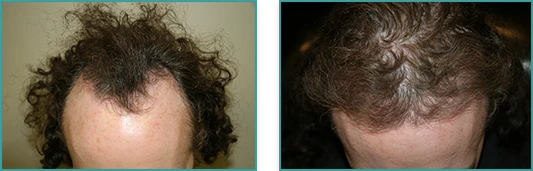
Can transgender women get a hair transplant?
Yes. Transgender women experiencing permanent hair loss may be candidates for hair transplant surgery when they have sufficient permanent donor hair and areas of hair loss that can appropriately be restored surgically.
Previous androgenetic hair loss may leave recession at the temples, a higher frontal hairline, thinning across the top of the scalp or permanent hair loss in the crown. For appropriate candidates, hair transplant surgery can relocate the patient’s own permanent donor follicles into selected areas where hair has been permanently lost.
Dr. Lopresti evaluates existing hair, donor density, the pattern and progression of hair loss, previous procedures and the patient’s individual goals before recommending surgery. Some patients may benefit from FUE or FUT hair transplantation, while others may have existing hair that can potentially be addressed with non-surgical treatment.
The consultation is not about fitting someone into a predetermined idea of what their hair should look like. It is about understanding what they would like to change and determining what can safely and naturally be accomplished.
What is transgender hairline feminization?
Hairline feminization with hair transplant surgery involves strategically transplanting permanent donor follicles to reshape selected areas of the frontal hairline and temples. It may be considered by transgender women who have experienced permanent recession or who would like a different hairline shape to better complement their facial features and personal goals.
Traditionally masculine hairlines are often described as having greater temporal recession and a more angular shape, while traditionally feminine hairlines are often softer, rounder and less recessed at the temples. Those are general anatomical descriptions, not rules for how someone’s hairline should look.
Dr. Lopresti designs each hairline individually, taking into account facial proportions, existing hair, donor supply, previous hair loss and the patient’s preferences. The direction and angle of transplanted follicles are also carefully planned because creating a natural result involves considerably more than simply lowering a hairline.
A successful transgender hair transplant should look like naturally growing hair, not like a surgical procedure.
What areas can transgender hair restoration address?
Depending on the individual’s hair loss, donor supply, previous procedures and goals, transgender hair restoration may be considered for:
• Receding frontal hairlines
• Temporal recession around the corners of the hairline
• Hairline reshaping and feminization
• Thinning through the top of the scalp
• Permanent hair loss in the crown
• Selected scars following forehead or facial procedures
• Areas of permanent hair loss that cannot be restored with non-surgical treatment
Not every concern necessarily needs to be addressed surgically or during one procedure. Permanent donor hair is a finite resource, so Dr. Lopresti considers both the patient’s priorities today and how their hair restoration may need to age with them over time.
Is FUE or FUT better for transgender hair transplant surgery?
Neither FUE nor FUT is automatically better for every transgender patient. Both are established hair transplant techniques that relocate the patient’s permanent donor follicles into areas where hair has been permanently lost. The primary difference is how those donor follicles are obtained.
With FUE, or Follicular Unit Excision, follicular units are individually removed from the donor area, leaving small scattered scars rather than a linear donor scar. With FUT, or Follicular Unit Transplantation, a narrow strip of donor tissue is removed and the area is closed with sutures, leaving a fine linear scar that is typically concealed beneath surrounding hair.
Dr. Matthew Lopresti personally performs both FUE and FUT hair transplant surgery. Having both techniques available is important because the procedure can be selected around the individual rather than requiring every patient to fit the same surgical approach.
Donor density, hairstyle, extent of hair loss, number of grafts potentially required and long-term restoration goals can all influence which approach may be appropriate. These considerations can be especially important when designing a new frontal hairline or when significant areas of previous hair loss need to be restored.
Can a hair transplant help conceal scars from facial feminization surgery?
In some cases, hair transplantation may be used to help camouflage selected scars or areas of reduced hair density following facial or forehead procedures, including some procedures associated with facial feminization surgery.
When appropriate donor hair is available, individual follicles can potentially be transplanted into or around selected areas to provide additional coverage. However, scar tissue is different from untreated scalp tissue, and every scar needs to be evaluated individually. The location and condition of the scar, previous procedures, blood supply to the tissue and available donor hair can all affect what may realistically be achieved.
For patients who have already undergone facial feminization surgery or forehead procedures, Dr. Lopresti can evaluate the scalp and surgical areas to determine whether hair transplantation may be appropriate. Patients planning future facial procedures should also discuss that history during their hair restoration consultation so treatment can be considered as part of a longer-term plan.
Can gender-affirming hormone therapy regrow a receding hairline?
Gender-affirming hormone therapy may affect hair characteristics and the progression of androgen-related hair loss, but it does not reliably recreate follicles that have already been permanently lost. A transgender woman may experience changes in existing hair while still having recession or areas of permanent hair loss that developed previously.
This distinction between thinning hair and permanently lost hair is important. Some viable, miniaturized follicles may potentially respond to non-surgical hair loss treatment, while hair transplant surgery physically relocates permanent donor follicles into areas where follicles have already been lost.
A hair restoration evaluation can help distinguish between those situations. Depending on the individual, treatment may involve FUE or FUT hair transplantation, a non-surgical option such as PRP with ACell or hair loss medication when medically appropriate, or a combination of approaches over time.
Do transgender men have hair restoration options?
Yes. Hair loss can also affect transgender men, and treatment depends on the individual’s pattern of loss, medical history, existing hair and goals. Some transgender men may develop androgenetic hair loss and want to preserve existing hair, while others may eventually consider hair transplant surgery for areas where hair has been permanently lost.
The same principle applies regardless of gender. Treatment should be based on the individual rather than assumptions. Dr. Lopresti evaluates the pattern and progression of hair loss, donor supply and the patient’s goals before discussing surgical or non-surgical options.
Where can transgender patients get hair transplant surgery in Boston and New England?
Dr. Matthew Lopresti is Chief Hair Restoration Surgeon at Leonard Hair Transplant Associates and personally performs FUE and FUT hair transplant surgery in Newton, Massachusetts and Warwick, Rhode Island. The practice welcomes transgender patients from Boston and Greater Boston, throughout Massachusetts, Rhode Island, New Hampshire and the rest of New England, as well as patients traveling from other parts of the United States.
For patients who live outside the immediate Boston or Providence areas, the process can begin with a consultation to discuss hair loss, previous treatments or procedures, donor supply and restoration goals. Virtual consultations are also available for patients traveling from outside the region.
Choosing hair restoration is personal. Some transgender patients want to reshape a frontal hairline. Others want greater density, coverage of permanent hair loss or help concealing a scar. Others simply want to understand their options and decide that no treatment is necessary right now.
All of those conversations deserve the same thing: clear information, realistic expectations and respect for the person making the decision.
Your identity does not need to be designed here. Your hair restoration plan does.