



Hair Transplants for Different Hair Types and Textures

Hair loss can affect men and women of every background, but hair does not grow the same way for everyone. Straight, wavy, curly and tightly curled hair can differ not only in how they look above the scalp, but also in the shape and direction of the follicles beneath it. Those differences matter when planning a hair transplant because successful surgery depends on more than moving hair from one area to another. The surgeon must understand the patient’s donor hair, follicle characteristics, curl pattern and long term hair loss before determining which surgical approach may be appropriate.
At Leonard Hair Transplant Associates, Chief Hair Restoration Surgeon Dr. Matthew Lopresti evaluates these characteristics as part of each patient’s individual hair transplant plan. Both Follicular Unit Excision (FUE) and Follicular Unit Transplantation (FUT) can provide natural looking hair restoration, but the technique that makes sense for one patient may not be the right choice for another. Hair texture, follicle curvature, donor hair availability and the progression of hair loss all help shape that decision.
Why Hair Texture Matters in Hair Transplant Surgery
What you see above the scalp does not always tell the entire story. With straight hair, the follicle beneath the skin generally follows a more predictable path. With very curly or tightly curled hair, the follicle itself may also curve beneath the surface of the scalp. That can make individual follicular units more technically challenging to remove during FUE because the surgeon needs to account for the direction and curvature of the follicle while attempting to preserve it during extraction.
This can be particularly important for some patients of African or Caribbean descent, although ethnicity alone does not determine whether someone is a good candidate for FUE or FUT. The individual characteristics of the patient’s hair and donor area are what matter. Two people with seemingly similar hair can have very different follicle patterns beneath the scalp, which is one reason an experienced surgical evaluation is important before deciding on a technique.
Can Patients With Curly or Tightly Curled Hair Have FUE?
Yes, some patients with curly or tightly curled hair can be candidates for FUE, but the decision should be made individually. When Dr. Lopresti believes follicle curvature could make FUE extraction more challenging, he may perform a small test extraction to evaluate how the follicles behave beneath the scalp and whether they can be removed successfully using the FUE technique.
That small test can provide information that simply looking at the hair cannot. If the follicles can be extracted effectively, FUE may remain an option. If their curvature makes individual extraction less appropriate, Dr. Lopresti may discuss FUT as an alternative. The objective is not to make the patient fit a particular procedure. It is to choose the procedure that best fits the patient.
FUE vs. FUT for Different Hair Types
With FUE hair transplantation, follicular units are individually removed from the donor area. Because each follicular unit is extracted separately, the direction and shape of the follicles beneath the scalp can influence the technical difficulty of the procedure. This is why careful donor area evaluation can be especially important for patients with tightly curled hair.
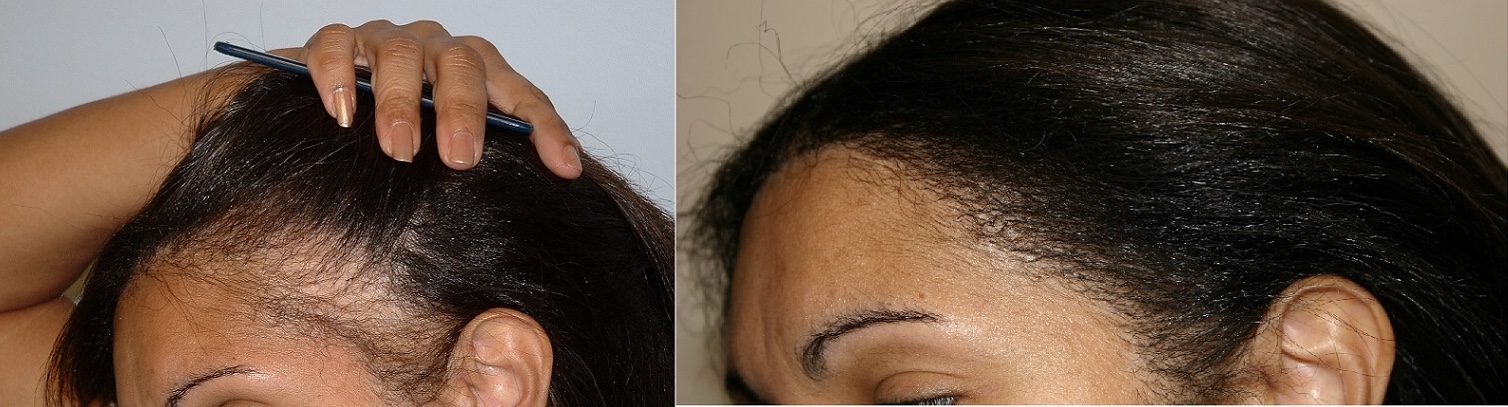
With FUT, a narrow strip of donor tissue is surgically removed from the donor area and the follicular units are then carefully prepared for transplantation. Because the follicles are not individually extracted from the scalp in the same manner as FUE, FUT may be an option for certain patients whose follicle characteristics make FUE more challenging. Neither technique is automatically better based on hair type alone. The appropriate choice depends on the patient’s donor hair, follicle characteristics, hairstyle preferences, hair loss pattern and long term goals.
Curly Hair Can Also Influence the Appearance of Hair Transplant Results
Hair texture matters after the follicles have been transplanted as well. Curly and wavy hair can create different visual coverage than very straight hair because each strand occupies space differently as it grows. Hair shaft diameter, curl pattern, color contrast between the hair and scalp, and the amount of permanent donor hair available can all influence the appearance of density.
That does not mean one hair type guarantees a better result than another. It means that natural looking hair transplant surgery requires planning around the hair a patient actually has rather than applying the same surgical design to everyone. The direction and angle of transplanted follicles are also important because the new hair should grow in a way that complements the patient’s existing hair and natural growth pattern.
The Donor Area Helps Determine the Right Approach
Regardless of whether your hair is straight, wavy, curly or tightly curled, the donor area remains one of the most important considerations in hair transplant surgery. The hair available along the back and sides of the scalp is a limited resource, so Dr. Lopresti evaluates its characteristics along with the areas of thinning and the possibility of future hair loss before recommending surgery.
This is also why deciding between FUE and FUT should not begin with which procedure happens to sound more appealing. It should begin with your hair. A consultation allows Dr. Lopresti to examine the donor area, evaluate your hair and follicle characteristics, discuss the progression of your hair loss and determine whether FUE, FUT or another approach makes sense for your individual situation.
For patients throughout Boston and New England considering hair transplant surgery, understanding your hair type is only one part of the decision. The more important question is how all of those individual characteristics come together to create a surgical plan designed specifically for you.