



What Happens If You Stop Hair Loss Treatment? Finasteride, Minoxidil, and PRP with ACell Explained
There’s a question I hear from patients about what happens when they stop hair loss treatment that always makes me smile a little. It’s usually from someone who’s been treating their hair loss for a while, and things are going well. Their hair looks thicker, they’re noticing less shedding, and they’re finally feeling good about what they see in the mirror. Then they ask me, “Dr. Lopresti, my hair looks great. Do I really need to keep doing this?”
It’s a fair question, and I completely understand why they ask. After all, if you’ve been taking finasteride, using minoxidil, or getting PRP with ACell treatments and you’re happy with your results, why wouldn’t you want to see if you could maintain them without continuing treatment? Nobody wants to spend time or money on something they might not need anymore.
But here’s where things get interesting, and it’s something I wish more people understood about hair loss. Sometimes the very reason you think you no longer need treatment is actually the best evidence that it’s working. I’ve seen patients make decisions about stopping treatment without realizing what was happening behind the scenes, and the results can catch them by surprise. Before you decide to stop, there are a few things about finasteride, minoxidil, and PRP with ACell that I think you should know.
Will Your Hair Start Falling Out Again If You Stop Treatment?
Yes, your hair may start thinning again if you stop an effective hair loss treatment, especially if you have genetic hair loss. Treatments like finasteride and minoxidil help slow that process, but they don’t permanently change your genetics or eliminate the underlying cause of thinning.
Let’s say you started treatment two years ago and your hair looks about the same today. You might think the treatment isn’t doing much, but that’s actually a good result. Without it, you could have lost quite a bit more hair during those two years. Sometimes keeping the hair you already have is just as important as growing new hair.
How much hair you lose after stopping treatment and how quickly it happens depends on your age, genetics, and the treatment you’ve been using. Some people notice more shedding within a few months, while others experience a slower change.
What Happens If You Stop Taking Finasteride?
If you stop taking finasteride, your DHT levels will return toward their previous levels, and your genetic hair loss may begin progressing again. You won’t suddenly wake up bald the next morning, but over the following months, you could notice your hairline changing or your crown becoming thinner.
Finasteride, also known by the brand name Propecia, works by lowering a hormone called DHT. This hormone is one of the main reasons men with genetic hair loss gradually lose hair around their hairline and crown. By reducing DHT, finasteride helps protect existing hair and can improve hair density in some patients.
I’ve had patients stop finasteride because their hair looked great and they figured they didn’t need it anymore. Then, several months later, they noticed more thinning and wondered what happened. In many cases, the medication had been helping them hold on to hair they otherwise might have lost.
Of course, some people consider stopping because of side effects or concerns about taking medication long term. Those are valid concerns. Finasteride can cause sexual side effects, and mood changes have also been reported. Some patients have reported sexual symptoms that continued after stopping. If you’re having problems with the medication, talk with your prescribing clinician about your options.
What Happens If You Stop Using Minoxidil?
If you stop using minoxidil, you may gradually lose some of the hair thickness and growth you’ve gained while using it. Some patients notice increased shedding within a few months, while others begin seeing more scalp through their hair or find that their hair doesn’t feel as full as it did during treatment.
Minoxidil works differently from finasteride. Rather than lowering DHT, it helps support hair growth by influencing the activity and growth cycle of hair follicles. Most people recognize topical minoxidil by the brand name Rogaine, although some patients also take prescription oral minoxidil. Topical minoxidil is FDA approved for certain forms of pattern hair loss, while oral minoxidil is prescribed off label for hair loss.
I explain it this way. Minoxidil may be helping certain hairs grow better than they would on their own. When you stop using it, those hairs may gradually return to the way they were before treatment. That doesn’t mean minoxidil caused your hair loss. It means the treatment was helping control it.
If you’re taking oral minoxidil, don’t change your prescription without speaking with your prescriber. Unlike the topical version, oral minoxidil affects your whole body and can cause side effects such as dizziness, swelling, and changes in blood pressure or heart rate.
What Happens If You Stop PRP with ACell Hair Loss Treatments?
If you stop PRP with ACell treatments, your hair won’t suddenly fall out, but you may gradually lose some of the thickness and fullness you’ve gained. That’s why I recommend maintenance treatments for patients who are seeing good results. The goal is to keep your hair looking its best rather than waiting for thinning to become noticeable again.
PRP with ACell is one of the non-surgical hair restoration treatments we offer at Leonard Hair Transplant Associates. It uses concentrated platelets from your own blood, combined with ACell, to help support your hair follicles and encourage healthier hair growth. I’ve seen patients experience thicker, fuller hair and less shedding, and one of the biggest advantages is that it doesn’t require taking medication or applying something to your scalp every day.
Our initial PRP with ACell program typically includes two treatments about three months apart. Once we’ve achieved improvement, I generally recommend an annual maintenance treatment to help preserve those results. Since genetic hair loss can continue as we age, staying consistent with treatment can help us manage thinning over time.
I tell patients to think of PRP with ACell as an investment in the hair they already have. When you’re happy with how your hair looks, the last thing you want is to wait until you’re losing ground before doing something about it.
Can You Stop Finasteride but Keep Taking Minoxidil?
Yes, you can stop finasteride and continue taking minoxidil, but you may lose some of the benefits finasteride was providing. These medications work differently, so continuing one doesn’t necessarily replace what the other was doing for your hair.
Finasteride lowers DHT, while minoxidil helps support hair growth. If you’re taking both and stop finasteride, minoxidil may continue helping your hair, but it won’t provide the same protection against DHT related thinning. The reverse is also true. If you stop minoxidil but continue finasteride, you may gradually lose some of the growth improvements you gained from minoxidil.
Not everyone needs both treatments, and some patients do well with just one. The important thing is to understand what each medication is doing before changing your routine. I recommend reviewing those changes with your prescribing clinician.
Will Your Hair Transplant Fall Out If You Stop Treatment?
No, stopping finasteride or minoxidil doesn’t automatically cause your transplanted hair to fall out. However, the natural hair surrounding your transplant can continue thinning, which may change how your hair looks over time.
During FUE or FUT hair transplant surgery, we move hair follicles from the back or sides of your scalp into areas where you’ve lost hair. Those transplanted follicles are generally more resistant to the hormones that cause genetic hair loss, which is why transplanted hair can last for many years.
Let’s say you had a hair transplant to restore your hairline. Your transplanted hair looks great, but over the next several years, the original hair behind it continues thinning. You could eventually develop gaps in your hair even though the transplanted follicles are still growing.
That’s why I think about the future when planning every hair transplant. I want your hair to look good years from now, not just when we take your after photographs. For some patients, medication can play an important role in helping protect the natural hair around their transplant.
Can You Restart Hair Loss Treatment If You’ve Already Stopped?
Yes, in many cases you can restart hair loss treatment, and it may help slow further thinning or improve some of the density you’ve lost. However, there’s no guarantee you’ll get all that hair back, especially if your hair loss has continued progressing for a long time.
Hair follicles affected by genetic hair loss can become progressively smaller over time, and follicles that have undergone advanced changes may be harder to improve. That’s why I encourage patients to address noticeable thinning sooner rather than waiting several years.
It’s also important to remember that not all hair shedding is genetic. Stress, illness, certain medications, and other health conditions can cause hair loss. Before restarting treatment, it’s worth having your hair evaluated so we understand what’s actually happening.
How Do You Know Whether You Still Need Hair Loss Treatment?
The best way to know whether you still need hair loss treatment is to evaluate your current hair, compare it with where you started, and understand what the treatment has accomplished. If you have genetic hair loss and your hair has remained stable, that may be a good reason to consider continuing a treatment that’s working.
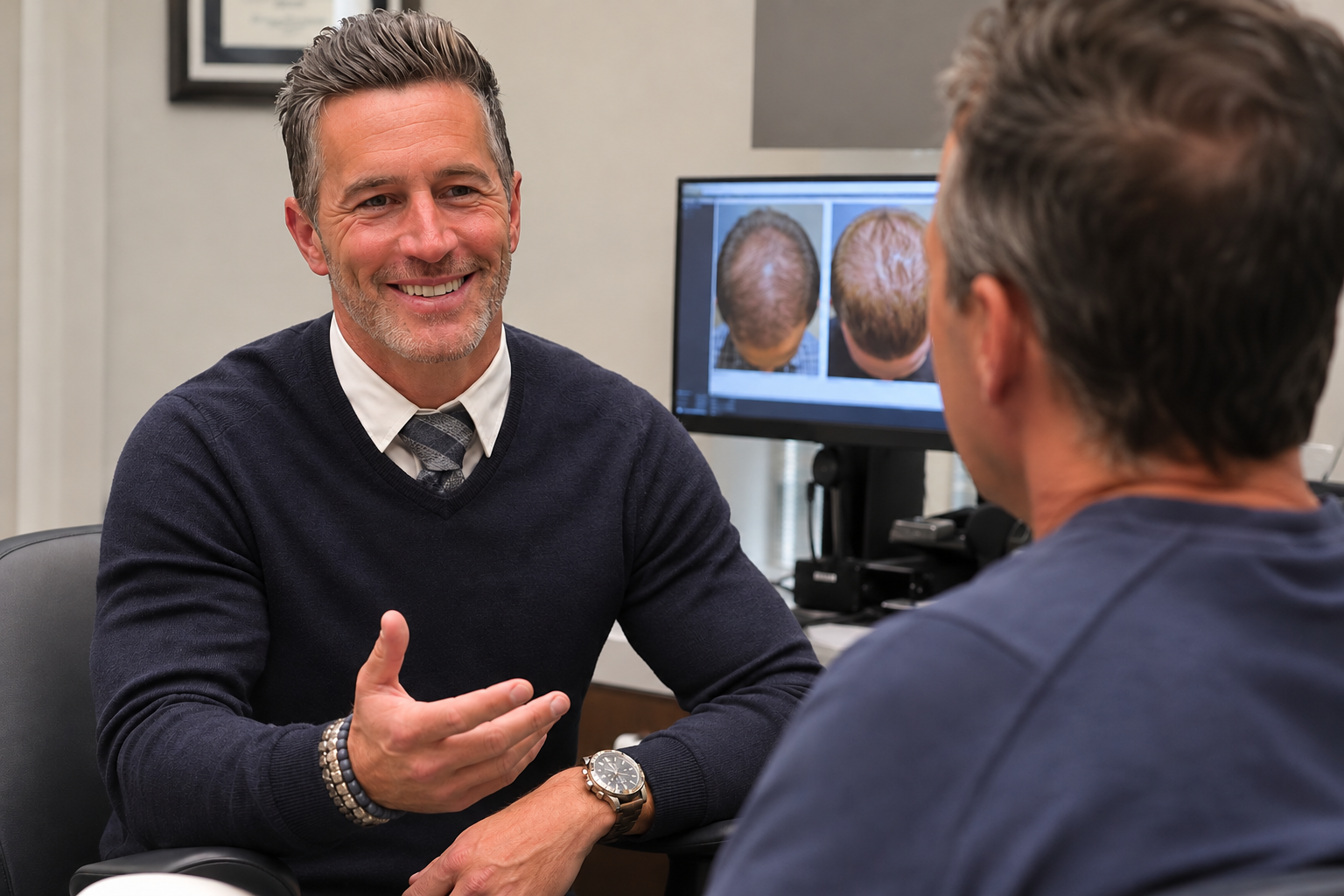
When patients come in for follow-up visits, I like to compare their current hair with photographs taken before treatment. Sometimes they tell me they don’t think medication is doing much because they haven’t experienced dramatic regrowth. But if their hairline and crown have remained stable for several years, that can be a meaningful result.
I also want to know what’s important to you. Maybe you’re concerned about side effects, tired of taking medication, or wondering whether the expense is justified. Those are all reasonable concerns, and I don’t believe everyone should follow the same treatment plan. The goal is to find an approach that works for your hair, your health, and your lifestyle.
My Advice Before You Stop Hair Loss Treatment
Before you stop a hair loss treatment that’s working, make sure you understand what could happen to your hair without it. Sometimes the reason you’re happy with your hair today is because the treatment has been helping you keep it all along.
That doesn’t mean everyone needs to stay on medication forever or continue treatments that aren’t helping. If you’re dealing with side effects, concerned about costs, or simply want to know whether treatment is still necessary, those are all good reasons to have a conversation.
At Leonard Hair Transplant Associates, we help men and women throughout Boston, Newton, Massachusetts, Rhode Island, New Hampshire, and the rest of New England understand their hair loss and treatment options. Whether you’re using finasteride, minoxidil, PRP with ACell, or considering FUE or FUT hair transplant surgery, we can help you figure out what makes sense for your situation.
If you’re thinking about stopping treatment or have already noticed more hair loss, I invite you to schedule a complimentary consultation with our team. We’ll take a look at your hair, talk about your concerns, and help you decide what to do next.
My advice is to protect the hair you have today, because getting it back later isn’t always easy.
Dr. Matthew Lopresti is Chief Hair Restoration Surgeon at Leonard Hair Transplant Associates, a Diplomate of the American Board of Hair Restoration Surgery, and a Fellow of the International Society of Hair Restoration Surgery.