


No-Shave FUE Hair Transplants: What the Marketing Doesn’t Tell Boston Patients
If you’ve been researching hair transplants in Boston, you’ve probably encountered advertisements promising a procedure called a ‘no-shave FUE hair transplant.’ The pitch is designed to get your attention. Restore your hair without shaving your head, avoid an obvious change in your appearance, and return to your normal routine without anyone knowing you’ve undergone surgery. For professionals who spend their days meeting clients, appearing on camera, or simply prefer to keep personal decisions private, I understand why that sounds attractive. But before you allow a marketing promise to influence a surgical decision, there’s something important you should know about what the hair restoration industry itself has been saying.
The International Society of Hair Restoration Surgery (ISHRS), the leading international medical organization dedicated to hair restoration, has published specific guidance addressing the confusing terminology surrounding shaved and unshaven hair transplantation. The organization has also issued a formal position statement warning about misleading and inappropriate promotional messaging in our industry. When a professional medical organization believes patients need clearer information about how procedures are described and advertised, I think that’s something worth paying attention to.
As a Fellow of the ISHRS and a hair restoration surgeon, I share those concerns. The objective of FUE surgery isn’t to win a contest over how little hair gets shaved. It’s to carefully extract and transplant healthy follicular units, preserve the donor area, and create a natural result that continues to look appropriate years after the procedure. That’s where my attention belongs, and it’s why I don’t offer no-shave FUE at Leonard Hair Transplant Associates.
There’s also a distinction that many patients don’t realize until they come in for a consultation. During our FUE procedures, we shave the donor area at the back of the head, but we don’t shave the existing hair on top. With FUT, we clip up the surrounding donor hair, shave only the narrow section of skin being removed, and allow the existing hair to fall back over that area when the clips are removed. For patients with adequate hair length, that shaved section is concealed beneath their existing hair.
Those are meaningful surgical differences, and they’re considerably more useful than a catchy procedure name. Before you decide that no-shave FUE is the answer, I want you to understand what the advertising doesn’t always explain.

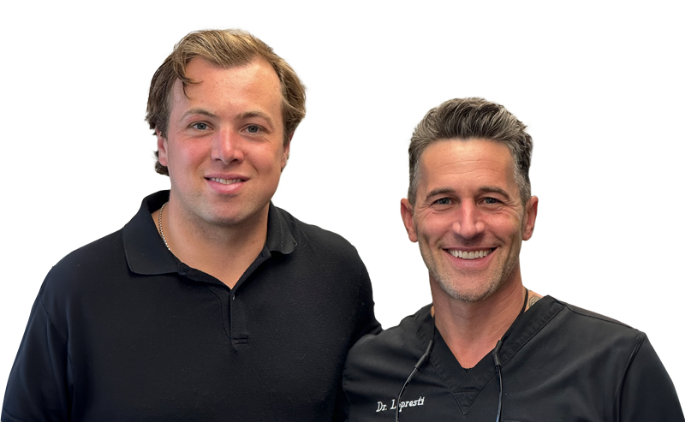
Dr. Matthew Lopresti at the 2026 International Society of Hair Restoration Surgery (ISHRS) World Congress.
What Does the ISHRS Say About No-Shave FUE Hair Transplants?
The International Society of Hair Restoration Surgery has published specific terminology guidance distinguishing between completely shaved, partially shaved, and unshaven hair transplantation techniques. The reason this matters is that patients may encounter the same promotional phrase being used to describe procedures that involve very different preparation methods.
In its published Shaven and Un-Shaven Hair Transplant Terminology, the ISHRS explains the distinctions between these approaches and identifies additional technical considerations associated with certain unshaven methods. These include the challenges of extracting follicles while working with longer hair and the possibility of increased follicular transection when longer hair shafts remain attached during extraction.
The ISHRS has also issued a Position Statement on Misleading and Inappropriate Messaging addressing the use of promotional terminology in hair restoration advertising. Its concerns include marketing language that exaggerates advantages, creates unrealistic expectations, or fails to explain the actual nature of a procedure.
I believe patients should pay attention to those warnings because a hair transplant isn’t a product you can return if the results don’t meet your expectations. You’re making a decision that involves surgery, your appearance, your donor hair supply, and a substantial financial investment.
When a clinic promotes no-shave FUE, the first question shouldn’t be how quickly you can return to the office without anyone noticing. It should be what the procedure actually involves, what parts of your scalp will be shaved or trimmed, and how the surgeon intends to protect your donor hair while achieving the desired result.
The ISHRS guidance gives patients a reason to look beyond the advertising and ask those questions before committing to surgery.
Does No-Shave FUE Really Mean No Hair Will Be Shaved?
Not necessarily, and this is where I believe the marketing can become particularly confusing. The ISHRS distinguishes between partially shaved and completely unshaven techniques because they are not the same procedure, even though patients may encounter similar advertising language describing both.
Some clinics advertising no-shave FUE actually shave a concealed section of donor hair at the back of the head, leaving longer hair above it to cover the shaved area. Other approaches involve working around longer donor hair and trimming individual hairs before extraction, while more technically demanding methods may preserve longer hair shafts on the extracted grafts themselves.
Think about what that means from a patient’s perspective. You may be attracted to a procedure because the advertisement suggests that no shaving will be necessary, only to discover that a section of your hair will still be shaved. The procedure may be accurately described using a more specific surgical term, but the broader marketing phrase can leave a very different impression.
The ISHRS terminology guidance exists to clarify these distinctions, and I believe patients deserve that same clarity from the surgeon they’re considering.
If you’re being offered no-shave FUE, ask exactly which portions of your hair will be shaved, trimmed, or left untouched. Ask whether the procedure is partially shaved FUE, completely unshaven FUE, or another variation. Most importantly, ask why that approach is being recommended for your particular hair loss rather than simply accepting the name of the procedure as an advantage.
Why Has the ISHRS Warned About Misleading Hair Transplant Marketing?
The ISHRS has warned that promotional terminology and branded procedure names can create confusion when they suggest benefits that aren’t clearly explained or supported. Its position statement on misleading and inappropriate messaging emphasizes the importance of truthful advertising and accurate descriptions of hair restoration procedures.
This matters because hair transplantation has become a highly competitive industry, and marketing often focuses on whatever sounds newest, easiest, or least disruptive. A procedure advertised as requiring no shaving may immediately sound more advanced than one that requires donor-area preparation, even though the amount of hair shaved is only one part of a much larger surgical decision.
I don’t believe patients should assume that a procedure is superior simply because it has a more appealing name. The ISHRS guidance reinforces the importance of understanding the actual surgical technique, and I think that’s a standard every patient should insist upon.
A hair transplant requires careful planning, management of a limited donor supply, and an understanding of how the patient’s hair loss may progress over time. Those considerations deserve far more attention than whether a clinic has developed a compelling phrase to describe its approach.
When I meet with patients, I want the conversation focused on what we can realistically accomplish, how we’re going to accomplish it, and why the recommended technique makes sense for their hair. If the first thing a patient remembers about a procedure is the advertising slogan, I think there’s a good chance the most important questions haven’t been answered.
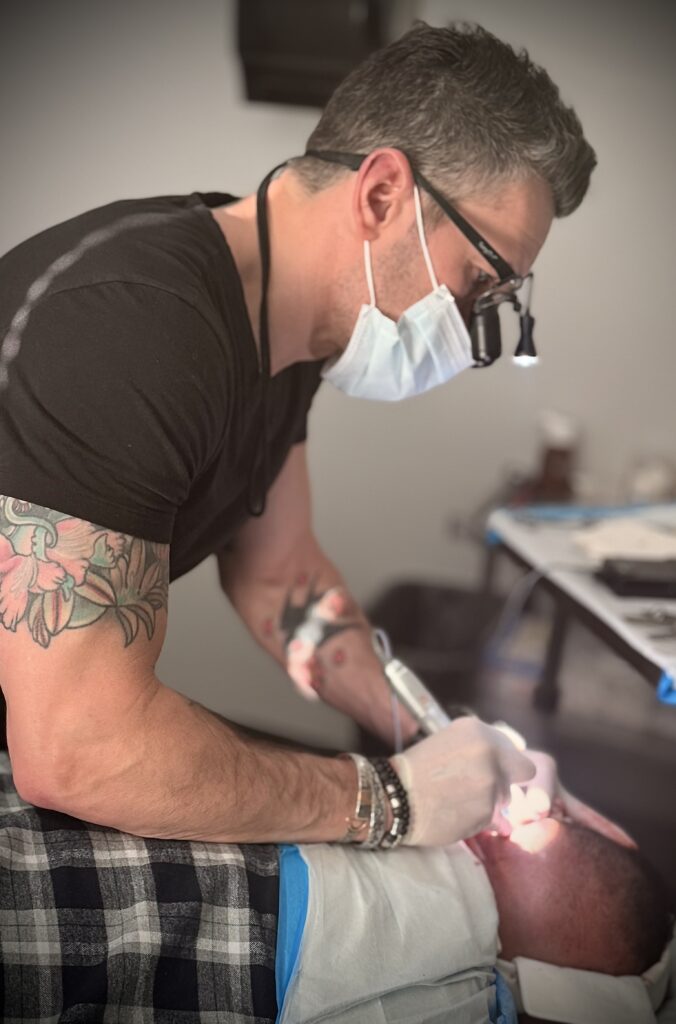
Dr. Matthew Lopresti performing FUE hair transplant surgery, with a focus on precision and donor hair preservation.
Why Doesn’t Dr. Lopresti Offer No-Shave FUE?
I don’t offer no-shave FUE because I believe shaving the donor area gives me the visibility and access I want when performing follicular unit extraction. My priority is to carefully harvest healthy follicular units, manage the donor supply, and create natural results rather than organize the surgical procedure around preserving the appearance of longer donor hair.
The ISHRS terminology guidance identifies technical challenges associated with certain unshaven approaches, including the possibility of increased follicular transection when extracting grafts with longer hair attached. Follicular transection occurs when a follicle is unintentionally cut during extraction, potentially affecting the viability of that graft.
Every patient has a limited amount of donor hair available for transplantation. That becomes particularly important when someone has significant hair loss, wants substantial coverage, or may require additional restoration as they age. I want to see the donor area clearly, assess the direction of the hair follicles, and work methodically throughout the extraction process.
Hair doesn’t always grow at the same angle, and the visible portion of a hair doesn’t necessarily reveal the direction of the follicle beneath the scalp. During FUE, we’re working with extremely small structures, and careful extraction requires attention to those details. Shaving the donor area helps me maintain a clear surgical field and concentrate on the follicles themselves.
I understand why patients would prefer not to shave any hair, but I don’t believe that preference should determine the surgical technique at the expense of other important considerations. If someone comes into my office expecting a procedure that requires no shaving whatsoever, I’m going to explain what I recommend and why.
I would rather have an informed patient who understands the surgical process than someone who chooses a procedure because the advertisement sounded more convenient.
Do You Have to Shave Your Entire Head for FUE at Leonard Hair Transplant Associates?
No. During FUE at Leonard Hair Transplant Associates, we shave the donor area at the back of the head, but we do not shave the existing hair on top of the head. This is one of the most important distinctions I explain to patients because many people mistakenly believe that FUE requires their entire head to be shaved.
The donor area is where I extract individual follicular units for transplantation into the thinning or balding areas. Shaving this section allows me to see the donor hair clearly and work around the follicles during extraction. The existing hair on top of the head remains at its current length, including the hair surrounding the areas we’re restoring.
That distinction can make a meaningful difference in how patients look immediately after surgery. Although the shaved donor area will be visible until the hair begins growing back, patients don’t have to start over with an entirely shaved hairstyle.
I often meet patients who have ruled out FUE because they assumed they would need to shave their entire head. Once I explain that we shave the back donor area while leaving the existing hair on top untouched, they realize the procedure is different from what they had imagined.
That’s why I encourage patients to learn what actually happens during surgery instead of relying on the impressions created by advertising.
Is Shaved FUE More Precise Than No-Shave FUE?
Shaving the donor area improves visibility and surgical access, two factors I consider important when extracting individual follicular units. Although the quality of a hair transplant depends on the surgeon’s experience, technique, and graft handling, I prefer to work with a clearly prepared donor area rather than around longer surrounding hair.
The ISHRS terminology guidance identifies additional technical demands associated with certain unshaven techniques, including the potential for increased transection when extracting follicles with longer hair attached. That is an important consideration because every viable graft represents part of a patient’s limited donor supply.
One of the risks during FUE is follicular transection, which occurs when a follicle is unintentionally cut during extraction. Surgeons work to minimize this risk by assessing hair direction, selecting appropriate instruments, and carefully following the path of the follicle beneath the skin.
When I’m performing FUE, I want my attention directed toward the extraction itself, the characteristics of the donor area, and the careful management of each graft. I don’t want the surgical approach to be driven primarily by a promise that no hair will need to be shaved.
The question patients should be asking isn’t simply whether a procedure allows them to keep their hair long during surgery. It’s whether the surgeon has a thoughtful plan for protecting the donor area and achieving the result they’re hoping for.
What Happens to Your Hair During an FUT Hair Transplant?
FUT, also known as follicular unit transplantation or the strip method, offers a different approach to preparing the donor area, and it’s one that patients concerned about shaving should understand.
During FUT at Leonard Hair Transplant Associates, we clip up the existing hair at the back of the head and shave only a narrow section within the donor strip that will be surgically removed. The surrounding hair remains at its existing length, rather than shaving the entire donor area.
After the donor strip is removed, I close the incision with sutures. At the end of the procedure, we remove the clips and allow the surrounding hair to fall naturally back over the donor area. For patients with adequate hair length and coverage, the existing hair conceals the shaved section, so it generally isn’t visible beneath their hairstyle.
This is a significant distinction for someone who wants to maintain their appearance after surgery. The incision still requires healing, sutures need to be removed, and FUT leaves a linear donor scar, but the patient doesn’t have to have the entire back of the head shaved.
I think this is one of the most overlooked considerations in the conversation about no-shave FUE. Patients sometimes become so focused on avoiding shaving that they overlook a surgical option that may allow them to maintain their existing hairstyle while achieving their hair restoration goals.
Is FUT a Better Alternative If You Don’t Want to Shave Your Head?
For some patients, FUT may be a more practical option because only a narrow donor section is shaved and the surrounding existing hair can conceal that area after surgery. Whether FUT or FUE is the better choice depends on the patient’s hair characteristics, donor density, hairstyle preferences, and the amount of restoration required.
I perform both FUE and FUT because I don’t believe every patient should be directed toward the same procedure. FUE involves extracting individual follicular units from the donor area, leaving numerous small extraction sites. FUT involves removing a narrow strip of donor tissue and closing the incision with sutures, leaving a linear scar that is generally easier to conceal when the surrounding hair is worn longer.
Patients who prefer very short hairstyles may place greater importance on avoiding a linear donor scar, while those who wear their hair longer may appreciate how FUT allows the surrounding hair to cover the donor incision. The number of grafts needed, the patient’s donor characteristics, and the possibility of future hair restoration procedures are also important considerations.
During consultations, I explain the advantages and limitations of both techniques rather than assuming one procedure is automatically better because it’s more heavily advertised.
The best choice is the one that makes sense for the patient’s hair loss, donor supply, and long-term goals.
Does No-Shave FUE Mean Nobody Will Know You Had a Hair Transplant?
No. Keeping longer hair during surgery doesn’t eliminate the normal healing process associated with hair transplantation, and patients should be cautious about assuming that a procedure marketed as no-shave will be completely undetectable.
Following FUE, patients may experience temporary redness, small crusts, tenderness, and visible changes in the donor or recipient areas. The appearance and duration of these effects vary depending on the extent of the procedure, skin characteristics, and individual healing.
Even when longer hair shafts remain attached to transplanted grafts, those hairs commonly shed during the weeks following surgery before new growth develops over the following months. Preserving hair length during the procedure doesn’t change the biological process that follows transplantation.
This is something I discuss with patients because I don’t want anyone choosing surgery based on the expectation that they’ll walk out looking exactly as they did when they arrived. Hair transplantation is still surgery, and the scalp needs time to recover.
If you have an important business event, wedding, vacation, or other commitment approaching, I encourage you to discuss the timing with your surgeon. A realistic recovery plan is far more valuable than a promise that nobody will notice anything.
How Long Does It Take to Look Normal After FUE Hair Transplant Surgery?
Most patients should anticipate a visible recovery period after FUE, although the time required before they feel comfortable returning to work and social activities varies.
For some patients, the most noticeable change is the shaved donor area at the back of the head. For others, redness or small crusts in the recipient area may be more apparent. Existing hairstyle, skin characteristics, the number of grafts transplanted, and individual healing all affect how the scalp looks after surgery.
When someone comes into my office with an important event on the calendar, I want to know about it before we schedule surgery. Those details help us discuss what recovery is likely to involve and whether the timing makes sense.
Some patients choose to take approximately a week or more away from in-person professional obligations, while others are comfortable returning sooner. I don’t promise that everyone will look completely recovered within seven or ten days because healing isn’t identical for every patient.
What I can offer is a realistic explanation of what to expect, including how the donor area will look, what the recipient area may look like during healing, and how the appearance of the scalp will change over time.
Is No-Shave FUE Worth Paying More For?
Whether no-shave FUE justifies an additional expense depends on what the patient is actually receiving and how the procedure is being performed. Some clinics charge more for unshaven techniques because working around longer hair can require additional time and more demanding graft preparation.
I encourage patients to think carefully about what they’re paying for. Are they investing in a carefully planned hair transplant designed around their long-term needs, or are they paying a premium primarily to avoid shaving some hair that will grow back?
Those aren’t necessarily the same thing, and the distinction matters when you’re making a decision involving surgery and a significant financial investment.
Before committing to any procedure, I recommend asking how many grafts are needed, why that number is appropriate, who will perform the critical surgical steps, and how the donor area will be managed. I would also ask what the surgeon expects to accomplish in the hairline or crown and how that result will fit into your appearance as you age.
The value of a hair transplant should be measured by the quality of the surgical plan and the long-term result, not by how attractive the procedure sounds in an advertisement.
What Should Boston Patients Ask Before Choosing a Hair Transplant Surgeon?
Before choosing a hair transplant surgeon in Boston or anywhere in New England, I recommend asking exactly how the procedure will be performed, what portions of your hair will be shaved or trimmed, who will perform the critical surgical steps, and what recovery will realistically involve.
I would also ask how the recommended procedure fits into your long-term hair loss plan. A hair transplant can restore hair in selected areas, but it doesn’t prevent hereditary hair loss from continuing in the surrounding native hair. Depending on the patient, medical treatments such as finasteride, minoxidil, or PRP with ACell may also be part of the discussion.
That longer-term perspective is particularly important for younger patients or anyone whose hair loss is still changing. A hairline that looks appropriate today needs to make sense as the patient ages, and the available donor hair should be managed with future needs in mind.
At Leonard Hair Transplant Associates, I meet with patients from Boston, Newton, and throughout New England who have spent months researching different procedures online. I welcome their questions because an informed patient is better equipped to understand both the opportunities and limitations of hair restoration surgery.
You should leave a consultation understanding why a particular procedure is being recommended, not simply remembering the name of the technique someone wants to sell you.
My Advice Before Choosing No-Shave FUE in Boston
If you’re considering no-shave FUE because you want to keep your procedure private, I understand that completely. Your appearance is personal, and deciding to have a hair transplant is not something you owe an explanation to your coworkers, friends, or anyone else.
But I want you to think beyond the first few days after surgery. Think about the hairline you’ll be looking at in five years, the donor hair you may need to preserve, and the importance of choosing a surgical plan that makes sense for your individual circumstances.
The ISHRS has made an important point about the way hair restoration procedures are advertised. Patients deserve clear information about what they’re being offered, and promotional terminology should never replace an honest explanation of the surgery itself.
At Leonard Hair Transplant Associates, I perform FUE and FUT because these techniques allow me to approach hair restoration in ways I believe best support the surgical precision, donor management, and long-term planning I prioritize. With FUE, we shave the donor area at the back of the head while leaving the existing hair on top unshaven. With FUT, we clip up the surrounding donor hair, shave only the narrow strip that will be removed, and allow the existing hair to fall back over the donor area once the clips are removed.
Those are meaningful differences, and I want patients to understand them before making a decision.
If you’re researching hair transplant surgery in Boston or anywhere in New England, I invite you to schedule a complimentary consultation with our practice. We’ll evaluate your hair loss, discuss your goals, and determine whether FUE, FUT, or a non-surgical treatment makes sense for you.
The most important decision isn’t whether to shave your hair for a few days. It’s choosing a surgical plan that makes sense for the years ahead.
Dr. Matthew Lopresti is Chief Hair Restoration Surgeon at Leonard Hair Transplant Associates, a Diplomate of the American Board of Hair Restoration Surgery, and a Fellow of the International Society of Hair Restoration Surgery.