


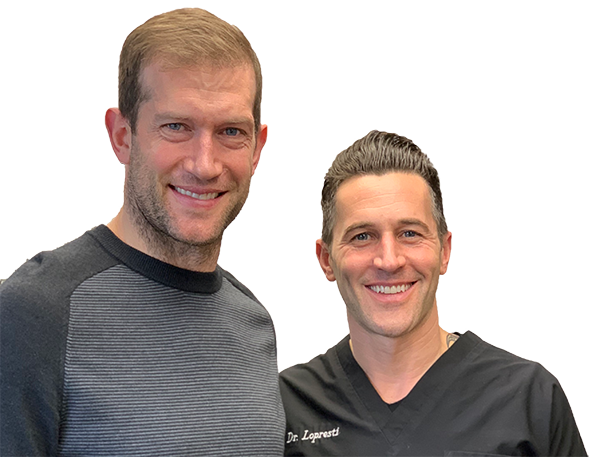
Chief Hair Restoration Surgeon Dr. Matthew Lopresti
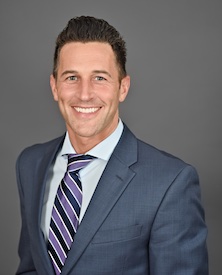
Dr. Matthew Lopresti, DO, is the Chief Hair Restoration Surgeon at Leonard Hair Transplant Associates, where he treats men and women experiencing hair loss in Boston, throughout Massachusetts and across New England. Because every person’s hair loss is different, he takes the time to understand what is happening, what the patient wants to achieve and which treatment makes the most sense for the future. Dr. Lopresti personally performs both Follicular Unit Excision (FUE) and traditional Follicular Unit Transplantation (FUT), while also offering nonsurgical hair loss treatments for patients who may not need or be ready for surgery.
Background and Education
Dr. Lopresti earned his medical degree from the University of New England College of Osteopathic Medicine. He completed his Internship year at St. Joseph’s Medical Center in Pennsylvania, followed by three years of Residency at Boston Medical Center. He finished his subspecialty training through Harvard Medical School. Dr. Lopresti successfully completed a two-year preceptorship in hair restoration surgery directly under Dr. Robert Leonard, retired founder of Leonard Hair Transplant Associates, a 30-year veteran in the field.
As a Fellow of the International Society of Hair Restoration Surgery, Dr. Lopresti holds a distinction known as FISHRS. This designation recognizes hair restoration surgeons who have met exceptional educational standards and remain actively involved in advancing their knowledge within the field. Maintaining Fellow status requires surgeons to continue meeting established educational criteria over time.
His experience includes lecturing nationally and internationally on the surgical and medical treatment of hair loss. By bringing both sides of hair restoration together, he can personally perform Follicular Unit Excision (FUE) and traditional Follicular Unit Transplantation (FUT), while also developing nonsurgical treatment plans that may include PRP with ACell, finasteride and minoxidil when medically appropriate.
What Is a Hair Restoration Surgeon?
A hair restoration surgeon is a physician whose work is focused on understanding hair loss, protecting the hair a patient still has and restoring what has been lost. Hair transplantation is not simply moving follicles from one place to another. The surgeon has to evaluate where hair loss is headed, how much donor hair is available and how to use that limited supply wisely for a result that still makes sense years from now. That requires knowing when FUE is the right approach, when FUT may offer an advantage and when surgery should wait altogether. For Dr. Matthew Lopresti, hair restoration is not one procedure on a long menu of cosmetic services. It is his specialty and the focus of his practice.
What Sets Dr. Lopresti Apart?
What sets Dr. Lopresti apart is that he does not begin with a procedure. He begins with where a patient’s hair loss is today, where it is likely headed and how much donor hair is available to work with for the future. Every consultation considers the pattern of hair loss, donor supply, medical history and long term goals before a treatment plan is developed. The objective is not simply to improve what a patient sees today, but to make decisions that will still make sense as hair loss progresses.
Because Dr. Lopresti works across both surgical and non-surgical hair restoration, the treatment does not have to dictate the plan. He personally performs both Follicular Unit Excision (FUE) and traditional Follicular Unit Transplantation (FUT), while non-surgical options may include PRP with ACell, finasteride and minoxidil when appropriate. His continuing education and participation in medical meetings throughout the United States and internationally help keep that approach current as hair restoration continues to evolve.
Patients researching a hair loss doctor or hair transplant surgeon in Massachusetts can review Dr. Lopresti’s before and after photographs. During the consultation, he will explain the available options, answer questions and help the patient make an informed decision about treatment. Your first conversation is with an experienced member of the Leonard Hair Transplant Associates team who will listen to your concerns, review your hair loss and explain the available options. If hair transplant surgery is appropriate, Dr. Matthew Lopresti personally develops your surgical plan and performs your FUE or FUT procedure.
Hobbies and Home Life

When Dr. Lopresti isn’t working, family comes first. He enjoys spending time with his wife and family, getting outside, heading to the beach and making trips up to Maine. Exercise is also a big part of his life. He’s a regular at the gym, enjoys lifting weights and takes staying in shape seriously, although a good local craft beer can occasionally make the cut too. He’s also a lifelong Boston sports fan, which means he’s experienced just about every possible emotion a sports fan can have.
Travel has become a big part of his life through his work. He regularly attends hair restoration and surgical meetings around the country and overseas. He enjoys seeing new places, but some of the best parts of these trips happen sitting around with other surgeons, comparing approaches, trading ideas and talking about what they’re seeing in their own practices. Not every good idea comes from a lecture hall.
Even after years of performing hair transplant surgery, Dr. Lopresti doesn’t believe you ever reach a point where you know everything. Techniques change, technology changes and every patient brings something different. He likes what he does, he’s competitive about doing it well and he’s always looking for ways to get better. Whether it’s surgery or the gym, standing still has never really been his thing.
What Should You Ask a Hair Transplant Surgeon?
You should ask a hair transplant surgeon about their training, experience, surgical techniques, donor planning, expected results and how your hair loss may progress over time. A good consultation should leave you understanding not only what can be done today, but why a particular approach makes sense for your future.
• What hair transplant technique is right for me and why?
• Do you personally perform both FUE and FUT?
• How much usable donor hair do I have?
• How will future hair loss affect the result we plan today?
• Could non-surgical treatment help preserve the hair I still have?
• Will I potentially need another hair transplant in the future?
• Can I see before and after photographs of patients with hair loss similar to mine?
• Are my goals realistic based on my donor hair and degree of hair loss?
• Who will actually perform my hair transplant procedure?
• What should I expect during recovery and when will I see results?
• What will my hair transplant cost?
The answers matter as much as the procedure. Hair transplantation uses a limited supply of donor hair, so the goal should not simply be to move the most grafts today. The goal is to build a plan that uses that donor supply intelligently and still makes sense if hair loss continues years from now.
The right hair loss treatment depends on what you are losing, what you still have and where your hair loss is headed. Schedule a complimentary consultation with Leonard Hair Transplant Associates in Massachusetts, Rhode Island or New Hampshire to understand your options and determine the right next step. If hair transplant surgery is recommended, Dr. Matthew Lopresti personally develops your surgical plan and performs your FUE or FUT procedure.