



How Much Should a Quality Hair Transplant Cost in Boston?
 The cost of a quality hair transplant in Boston depends on the surgical technique being performed, the strength of the donor area, the amount of hair loss and the surgical plan designed for that patient. That is the clean answer. The more useful answer is that a hair transplant may be one of the worst things to shop for by simply sorting from lowest price to highest.
It is 2026. Before most patients ever sit down with a surgeon, they have already been through Google, AI answers, Reddit threads, TikTok videos, before and after galleries and probably an algorithm that suddenly believes hair transplants are their only interest in life. Within an hour, they can find everything from a Boston surgeon to an overseas package promising thousands of grafts, a hotel and transportation for less than the price of a used Honda.
More information should make the decision easier. Sometimes it does exactly the opposite.
At Leonard Hair Transplant Associates, Chief Hair Restoration Surgeon Dr. Matthew Lopresti personally performs both FUE and FUT hair transplant surgery. His recommendation begins with the patient’s hair loss, donor supply, goals and what that hair loss may look like years from now. Price matters. Of course it does. But before deciding whether something is expensive, it helps to understand exactly what you are buying.
Why Do Hair Transplant Costs Vary?
Hair transplant costs vary because every patient brings a different amount of hair loss, donor hair and surgical work to the table. Someone trying to strengthen a thinning frontal area may need a very different surgical plan from someone who has lost significant hair through the front, top and crown. Donor density matters. Hair characteristics matter. Previous procedures matter. The amount of coverage being attempted matters.
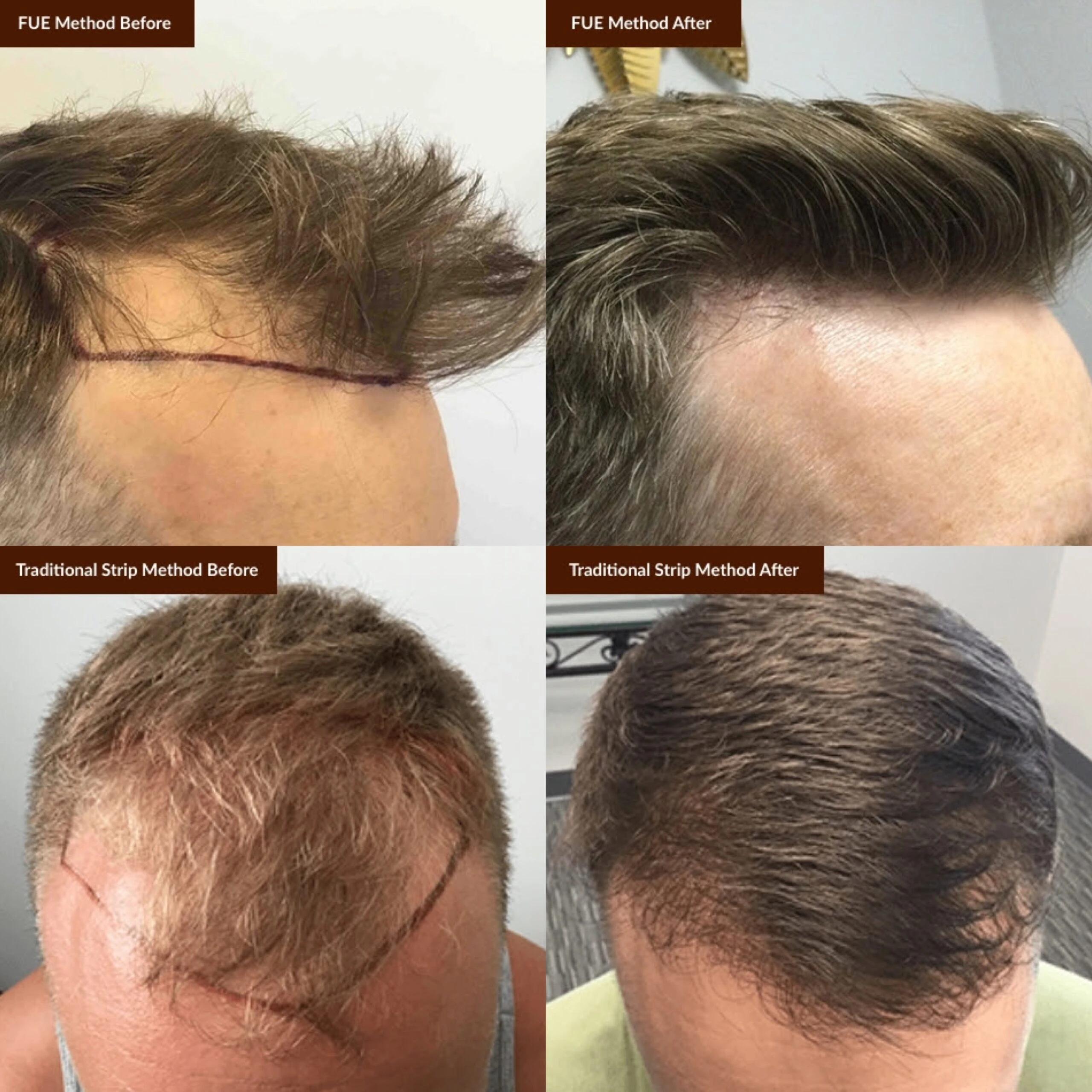
The technique matters too. Follicular Unit Excision, or FUE, removes individual follicular units from the donor area. Follicular Unit Transplantation, or FUT, removes donor follicles through a narrow strip of tissue. Both use the patient’s own permanent donor hair, and both can produce natural looking, growing results in appropriate candidates.
This is where comparing two quotes on your phone can become misleading. Two practices may be giving you prices for two very different ideas of what should happen to your head.
Before comparing the numbers, compare the plans.
Does the Number of Grafts Determine Hair Transplant Cost?
No. Dr. Lopresti does not price hair transplant surgery by the graft. His surgical fees are based on the technique being performed, either FUE or FUT, rather than assigning a price to each individual graft.
Graft count still matters when planning a hair transplant, but for a different reason. It helps determine how much donor hair should be used and where it can create the greatest cosmetic improvement. A larger graft number does not automatically mean a better hair transplant, and it should not become a scoreboard for comparing surgeons.
Donor hair is finite. Every follicle harvested today is part of the supply available for the rest of your life, while hair loss can continue long after the first transplant has grown in. The better question is not, “How many grafts can I get for my money?” It is, “How much donor hair should we use, where will it make the biggest difference and what should we preserve for the future?”
That matters at 50. It matters even more at 30.
Dr. Lopresti evaluates the donor area, pattern of hair loss and areas where transplantation can create the greatest cosmetic improvement. The goal is not to win the internet’s graft counting contest. It is to still like the plan years after you stopped thinking about the number.
Is FUE More Expensive Than FUT?
Yes. FUE is generally more expensive than FUT because it requires more time in the procedure room and more of Dr. Lopresti’s time to individually harvest the follicular units from the donor area. It is a more time intensive harvesting process, and that difference is reflected in the cost.
But a higher price does not make FUE the better procedure. FUE may make sense for someone who prefers shorter hairstyles and wants to avoid a linear donor scar, while FUT may be the better approach for another patient based on donor density, hairstyle, degree of hair loss and how that donor supply may need to be managed over time.
That is one reason it matters that Dr. Lopresti personally performs both FUE and FUT. The conversation does not have to begin with the procedure that costs more, sounds newer or gets more attention online. It can begin with the patient’s hair and which approach makes the most sense for it.
If every patient who walks through a door is told the same procedure is the answer, it is fair to wonder whether the answer was decided before the question was asked.
Why Are Hair Transplant Prices So Different Between Practices?
Hair transplant prices can be dramatically different because patients may be comparing different levels of surgeon involvement, experience, surgical planning, donor management and follow-up care. A price on a screen cannot tell you all of that.
This is where the research tools available in 2026 are useful, provided you ask better questions than simply “How much?”
Who is actually performing the surgery? Does the surgeon perform both FUE and FUT? Why is this particular technique being recommended? How was the donor area evaluated? Why is this amount of donor hair being recommended? What happens if the surrounding hair continues to thin? Can you see results from patients whose hair loss actually resembles yours?
Then close the browser for a minute and use some old fashioned judgment.
Do you trust the surgeon? Does the explanation make sense? Does the office look and feel like a place where you want surgery performed? Are your questions being answered or redirected? Does it feel like someone is planning the next twenty years of your hair, or trying to get a deposit before you leave?
Technology has changed enormously. Common sense still has pretty good software.
Should I Choose the Cheapest Hair Transplant?
No. The cheapest hair transplant is not automatically the best value, just as the most expensive hair transplant is not automatically the best surgery. Price deserves a seat at the table. It just should not sit at the head of it.
You can find astonishingly inexpensive hair transplant offers online. You can also find very expensive ones. Neither number, by itself, tells you whether the surgeon has made good decisions about your donor hair, designed something that will look natural or thought seriously about what happens if your hair loss continues.
There is an old piece of common sense about not buying the cheapest parachute. A hair transplant is obviously not a parachute, but there is something to the logic. When a decision is permanent and the resource being used is limited, price alone is a strange place to put all your attention.
You are not simply paying someone to move hair from Point A to Point B. You are paying for the judgment behind which hairs move, where they go, how they are placed and which ones are deliberately left alone.
Is It Cheaper to Travel Overseas for a Hair Transplant?
Hair transplant surgery overseas can be advertised at dramatically lower prices, but patients should be extremely cautious about choosing surgery based on a package price. The biggest question is not what the trip costs. It is who will actually perform your surgery, what medical standards are being followed and who will be responsible for you when you are back home.
There are highly qualified hair restoration surgeons in other countries, and geography alone does not determine quality. The concern is the growing market of high-volume clinics where a physician may have limited involvement and important parts of the procedure may be performed by technicians. A polished website, thousands of social media followers and a package that includes a hotel, airport transportation and surgery can make the experience look remarkably simple. Surgery is not supposed to be a vacation package.
What Should I Ask Before Traveling Overseas for a Hair Transplant?
The first question to ask before traveling overseas for a hair transplant is who will actually perform your surgery. Find out the name and credentials of the physician who will be responsible for your procedure. The International Society of Hair Restoration Surgery (ISHRS) also provides resources for patients researching hair restoration physicians.
Ask who will design the transplant, who will harvest the donor hair, who will create the recipient sites and who will place the grafts. Find out how many patients are being operated on at the same time and what happens if you develop a complication after flying home. If you cannot get clear answers before sending a deposit, that should tell you something.
The greatest risk is not simply losing the money you saved. Poor planning, overharvesting or unnecessary damage to the donor area can affect what is possible for the rest of your life. A disappointing hotel can be changed the next night. Your donor supply does not check out with the luggage.
A lower price deserves attention. So does the reason it is lower.
The destination is temporary. The work comes home with you.
What Should Be Included in a Hair Transplant Consultation?
A good hair transplant consultation should explain your pattern of hair loss, donor supply, treatment options, realistic potential result and how future hair loss could affect the plan. You should walk out understanding more about your hair than you did when you walked in.
And yes, you should talk about money.
Ask what you are paying for. Ask why the recommended amount of donor hair makes sense. Ask why FUE or FUT is being recommended. Ask whether non-surgical treatment could play a role in preserving existing hair. Ask what the surgeon sees in your donor area that you cannot see when you look in the bathroom mirror.
Bring the questions you found on Google. Bring the answer ChatGPT gave you. Bring the screenshot your friend sent you. A good consultation should survive good questions.
It should not make the decision for you. It should make you considerably better equipped to make it yourself.
Where Does Dr. Lopresti Perform Hair Transplant Surgery Near Boston?
Dr. Matthew Lopresti performs FUE and FUT hair transplant surgery for Leonard Hair Transplant Associates in Newton, Massachusetts and Warwick, Rhode Island. Patients can also meet with the practice for hair loss consultations at its Boston office at 20 Park Plaza and other New England locations, as well as virtually.
That distinction matters because a search for “hair transplant Boston” can make consultation offices and surgical locations look interchangeable. They are not. Boston is an important consultation location for Leonard Hair Transplant Associates, while hair transplant surgery itself is performed in Newton and Warwick.
For patients coming from elsewhere in Massachusetts, New England or farther away, a virtual consultation can also start the process before anyone books a flight, hotel or afternoon off from work.
How Can I Find Out What My Hair Transplant Will Cost?
The only meaningful way to know what your hair transplant will cost is to first determine what your hair actually needs. That means evaluating the pattern of loss, donor supply, goals, potential for future thinning and whether surgery makes sense in the first place.
Leonard Hair Transplant Associates offers complimentary hair restoration consultations in person and virtually. Ask about the price. Ask about donor hair. Ask about FUE and FUT. Ask Dr. Lopresti what he sees happening to your hair over time and how today’s recommendation accounts for it.
If you are comparing several practices, compare them. That is what smart patients do. Just compare more than the estimates.
The internet can give you a thousand prices before lunch. Your donor hair only gives you one supply.