


Can Sunburn Cause Hair Loss? What a Sunburned Scalp May Be Telling You
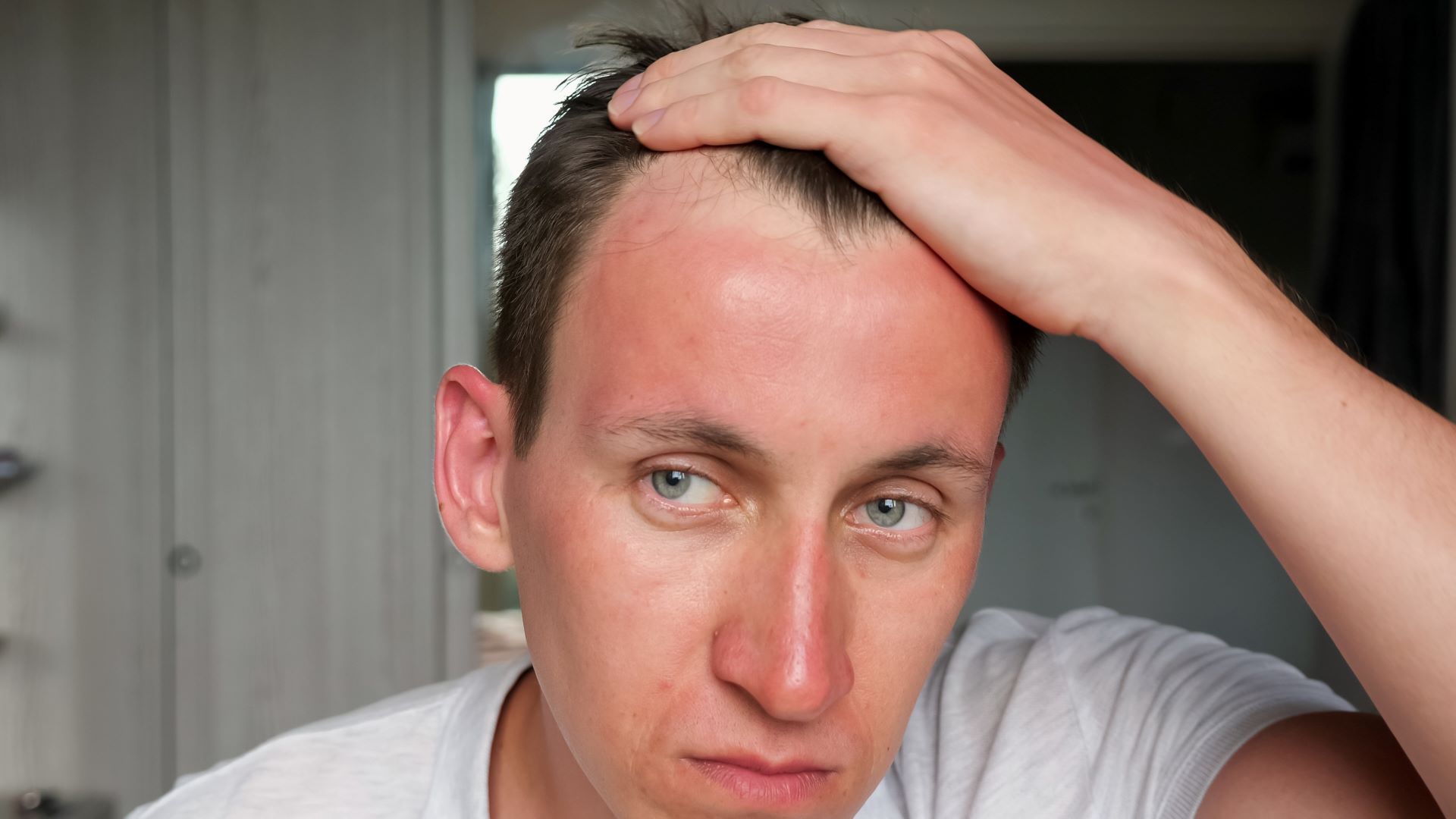 You spend a day outside and come home with something you never used to get: a sunburn on your scalp. Your first thought might be that the sun is making your hair fall out, but the more important question may be the opposite. Is your scalp getting sunburned because you already have less hair protecting it? For most people, an ordinary scalp sunburn is not the cause of male or female pattern hair loss. But if you suddenly notice that your scalp burns more easily than it did a few years ago, especially around your part, crown or other areas where more skin is becoming visible, it may be worth paying attention to what your hair is telling you.
Does a Sunburn on Your Scalp Cause Hair Loss?
A typical sunburn affects the skin of your scalp and does not cause androgenetic alopecia, the genetic condition responsible for male and female pattern hair loss. Severe injury to the scalp can potentially affect the skin and hair follicles, but that is very different from the ordinary sunburn most people experience after spending too much time outside. Sun exposure can also affect the hair you already have. Repeated ultraviolet exposure can contribute to dry, brittle or damaged hair that is more prone to breakage, but hair breakage is different from progressive hair loss occurring at the follicle. Both can make your hair appear thinner, which is why understanding what is actually happening matters.
Why Am I Suddenly Getting Sunburn on My Scalp?
This is where a scalp sunburn can sometimes tell you something important. Your hair provides natural coverage for your scalp, so as that coverage decreases, more skin is exposed directly to the sun. You may first notice it along a widening part, at the crown or around the front and temples as the hair becomes less dense. Someone who spent years outdoors without ever thinking about sunscreen on the scalp may suddenly find that the same amount of sun leaves the skin red and uncomfortable.
In that situation, the sunburn didn’t necessarily create the thinning. The thinning may have created the opportunity for the sunburn. Hair loss can happen gradually enough that you don’t recognize a dramatic difference from one day to the next. Sometimes it is a photograph, bright overhead lighting, a wet head of hair or even that first unexpected scalp sunburn that finally makes the change noticeable.
How Should You Protect a Thinning Scalp From the Sun?
If your scalp is becoming more exposed, protecting that skin becomes increasingly important. A hat can provide physical protection when you’re outdoors, while broad-spectrum sunscreen with SPF 30 or higher can help protect exposed areas of the scalp. Seeking shade and reducing prolonged exposure during periods of intense sunlight can help as well. These steps are about protecting exposed skin from UV damage, not treating the underlying reason your hair may be thinning.
And if you’re worried that wearing a baseball hat to protect your scalp will make your hair fall out, that is another common hair-loss myth. Normal hat wearing does not cause male or female pattern hair loss. We recently addressed that question in more detail in our article about baseball hats and hair loss.
When Is a Sunburn Worth a Second Look at Your Hair?
Getting one scalp sunburn after forgetting your hat at the beach doesn’t mean you’re losing your hair. But if your scalp suddenly seems easier to see, easier to burn or increasingly exposed in areas that used to have better coverage, don’t focus only on the sunburn. Look at what has changed underneath it. A widening part, increasing visibility at the crown, gradual recession or an overall decrease in density may be more meaningful than the sunburn itself.
Dr. Matthew Lopresti, Chief Hair Restoration Surgeon at Leonard Hair Transplant Associates, evaluates men and women experiencing thinning and hair loss throughout Boston and New England. An evaluation can help determine whether you’re experiencing genetic pattern hair loss, another form of hair loss or simply a change that doesn’t require treatment. Sometimes the sunburn isn’t the problem. It’s the first time you noticed the problem underneath it.