



Can Testosterone Cause Hair Loss? The Science Behind Testosterone, DHT and Baldness
If you are taking testosterone and your hair suddenly seems thinner, it is easy to connect the two. You started testosterone. Your hair changed. Testosterone must be causing your hair loss.
The biology is not quite that simple.
Testosterone can play a role in male pattern hair loss, but testosterone by itself does not determine whether you will go bald. The bigger story involves your genetics, an androgen called DHT and, most importantly, how sensitive your individual hair follicles are to that hormonal signal. That is why one man can have relatively high testosterone and maintain a full head of hair while another man with perfectly normal testosterone levels develops significant thinning.
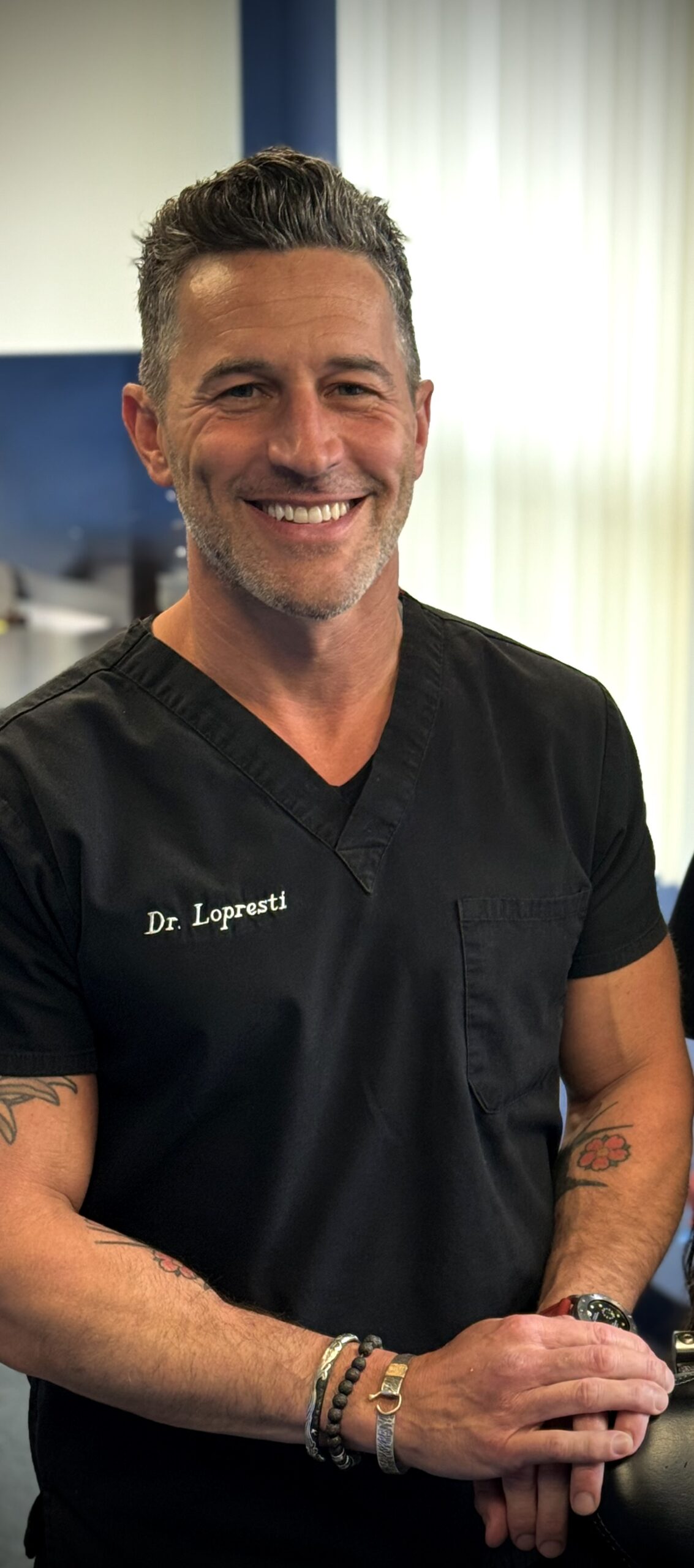
At Leonard Hair Transplant Associates, Dr. Matthew Lopresti evaluates men from Boston and throughout New England who are concerned about changes in their hair, including men using medically prescribed testosterone replacement therapy. One of the first things worth understanding is that your blood testosterone level and what is happening to the follicles on your scalp are related pieces of a much larger puzzle.
Testosterone Doesn’t Simply Make Your Hair Fall Out
Here is the science in plain English. Your body naturally produces testosterone. An enzyme called 5 alpha reductase converts some of that testosterone into another androgen called dihydrotestosterone, usually shortened to DHT. Think of testosterone as the original ingredient and DHT as one of the substances your body can make from it.
 DHT has an important connection to androgenetic alopecia, the medical term for male pattern hair loss. If you have inherited follicles that are particularly sensitive to androgen signaling, DHT can bind to receptors in those susceptible follicles and gradually change the way they grow.
The important word is gradually. Your healthy hair follicle does not normally encounter DHT one morning and simply shut down.
Instead, susceptible follicles can begin a process called miniaturization. Imagine a factory that once produced a thick, strong product but begins making something a little smaller with every production cycle. A follicle that once produced a thick, long hair may begin producing a finer and shorter one. Its active growth period can also become shorter. After enough cycles, the hairs become so fine that the area begins to look visibly thin.
This is why male pattern hair loss often seems to sneak up on you. You may still have hairs in an area, but those hairs are no longer providing the coverage they once did.
Why DHT Affects Some Men More Than Others
If DHT exists naturally in men, why doesn’t every man eventually lose all of his hair? Because the hormone is only part of the equation. The follicle receiving the signal matters too.
Think about sunlight and skin. Two people can stand in the same sun for the same amount of time and have very different reactions because their skin is not biologically identical. Hair follicles behave differently from one person to another as well.
In men who are genetically predisposed to male pattern baldness, certain scalp follicles are more sensitive to androgens. The follicles around the front, temples, top and crown can be particularly susceptible, while follicles around portions of the back and sides of the scalp are generally more resistant. That difference in susceptibility is also one of the biological principles that makes hair transplant surgery possible.
This is why looking only at your testosterone level can be misleading. A laboratory result tells you how much testosterone is circulating in your blood at a particular time. It does not tell you how genetically sensitive the follicles on your scalp are to androgen activity.
You can have testosterone within a normal range and still develop substantial male pattern hair loss. Another man can have a different hormonal profile and keep considerably more hair.
Your follicles get a vote.
So Can Testosterone Replacement Therapy Accelerate Hair Loss?
This is where the answer becomes more individual. Testosterone replacement therapy, commonly called TRT, is prescribed for certain men with testosterone deficiency and other appropriate medical indications. Testosterone and other anabolic androgenic steroids can also be used outside medically supervised treatment, including at much higher doses.
Those situations should not be treated as though they are the same.
Because testosterone can be converted into DHT and androgen activity is involved in male pattern hair loss, changing androgen exposure may be relevant in someone whose follicles are already genetically susceptible. Research examining testosterone supplementation and hair loss, however, does not support telling every man who takes testosterone that he will become bald. There are differences in dose, formulation, medical condition, genetics and individual response.
A better way to think about it is this: testosterone does not necessarily create the genetic instructions for male pattern hair loss. If those instructions are already there, however, changes in your hormonal environment may influence how those susceptible follicles behave.
That is a much different statement from saying, “Testosterone makes you bald.”
TRT and Anabolic Steroid Use Are Not the Same Conversation
This distinction deserves more attention than it received when we originally wrote about this subject in 2018.
A man receiving medically supervised testosterone replacement therapy because his body is not producing an appropriate amount of testosterone is not necessarily in the same situation as someone using high doses of testosterone or other anabolic androgenic steroids to increase muscle mass or athletic performance.
The amount of androgen exposure can be different. The reason for taking it can be different. The medical supervision can be different. Other substances being used at the same time can be different. All of those variables make sweeping statements about testosterone and hair loss unreliable.
If you are taking prescription testosterone and believe your hair has changed, do not reduce your dose, stop treatment or alter your medication based on something you read online. The healthcare professional prescribing your testosterone should manage that part of your care.
What you can do is have your hair evaluated separately. That gives you a chance to answer a different question: Are you actually seeing progressive male pattern hair loss, and if so, what makes sense for your hair?
What Testosterone Related Hair Loss May Look Like
If increased androgen activity is influencing genetically driven male pattern hair loss, you would generally expect the changes to resemble androgenetic alopecia rather than every hair on your scalp suddenly falling out at once.
You might notice your temples slowly moving back. The hair across the front may no longer look as dense as it did several years ago. You may see more scalp when looking down at your crown under bright light. Or you might notice something even more subtle: your hair is becoming increasingly difficult to style because the individual hairs in an affected area are getting finer.
That last change is easy to miss.
A man can look in the mirror and think, “I still have hair there,” without realizing that the hairs themselves have changed. If hundreds or thousands of formerly thick hairs gradually become finer through miniaturization, the scalp begins showing through even though the area is not completely bald.
This is also why older photographs can be surprisingly useful. Find pictures taken before you began noticing the change and compare them with your hair today. Try to use similar angles, hairstyles and lighting. You are not trying to diagnose yourself from a photograph. You are looking for progression.
The question is not whether your hair looked bad under one bright bathroom light last Tuesday. The question is whether it looks consistently different than it did six months, a year or several years ago.
Your Father’s Hair Doesn’t Decide Your Future
 You may already have looked around your family for an answer. Your father is bald, so you assume you will be bald. Your father has great hair, so you assume you are safe.
Neither conclusion is reliable.
Male pattern hair loss has a strong genetic component, but its inheritance is complex. You do not inherit your entire hair future from one person or exclusively from your mother’s or father’s side of the family. Looking at relatives can provide useful clues, but your own scalp tells a more relevant story.
When Dr. Matthew Lopresti evaluates progressive hair loss, he is not simply asking whether your father has hair. He is looking at where you are thinning, whether follicles appear to be miniaturizing, how the pattern has changed, your age, your medical and family history and what you have available in the permanent donor area.
That last piece becomes particularly important if you are eventually considering a hair transplant. Hair restoration planning is not simply about replacing what you have already lost. It also means thinking about what your native hair may do in the future.
A good plan should still make sense if your hair loss continues.
Don’t Let One Blood Test Tell You the Story of Your Hair
It is tempting to reduce this entire subject to numbers. What is my testosterone level? What is my DHT level? If that number goes up, how much hair will I lose?
Unfortunately, human hair does not work like a fuel gauge.
A blood test can provide useful medical information for the healthcare professional managing your hormonal health, but it cannot look at your scalp and tell you exactly how much hair you will have five or ten years from now. Your genetic susceptibility, follicular sensitivity, age and pattern of progression all matter.
This is why your actual hair deserves attention.
Are your temples changing? Is the crown becoming thinner? Are hairs across the top becoming finer? Does your hair look different in photographs than it did before you started testosterone? Has the change continued? Those observations can tell an important part of the story that a testosterone number alone cannot.
If Your Hair Is Changing While You’re Taking Testosterone
You do not need to choose between blaming testosterone for everything and ignoring the change altogether. Keep the two issues in their proper lanes.
If testosterone has been prescribed for you, work with the healthcare professional managing that treatment. If your hair is becoming thinner, have the hair loss evaluated based on what is actually happening on your scalp. Do not change a medically prescribed treatment simply because you are worried about your hair, and do not assume that progressive thinning is something you simply have to accept because you take testosterone.
At Leonard Hair Transplant Associates, Dr. Matthew Lopresti evaluates men experiencing hair loss in Boston, Newton and throughout New England. Depending on your pattern of hair loss, progression, age, donor hair and individual circumstances, the conversation may include monitoring your hair, appropriate non surgical treatments or hair transplant surgery for suitable candidates.
There is no single answer for every man because there is no single head of hair.
Testosterone May Be Part of the Story. Your Follicles Tell Us the Rest.
If there is one thing to remember, make it this: testosterone does not automatically equal baldness. Testosterone can be converted to DHT. DHT plays an important role in male pattern hair loss. But whether those hormonal signals translate into visible thinning depends heavily on the genetic sensitivity of your follicles and how your hair changes over time.
That is why two men can take testosterone and have completely different experiences with their hair.
If you have noticed recession, a thinning crown, finer hairs or a loss of density while taking testosterone, you do not have to diagnose the cause yourself. A complimentary consultation with Dr. Matthew Lopresti can help determine whether you are experiencing male pattern hair loss, how far it has progressed and what options, if any, make sense for you.
The testosterone number matters to the healthcare professional managing your hormones.
What matters to your hair is what those follicles are actually doing.