


Hair Transplant Donor Area: What You Need to Know Before Surgery
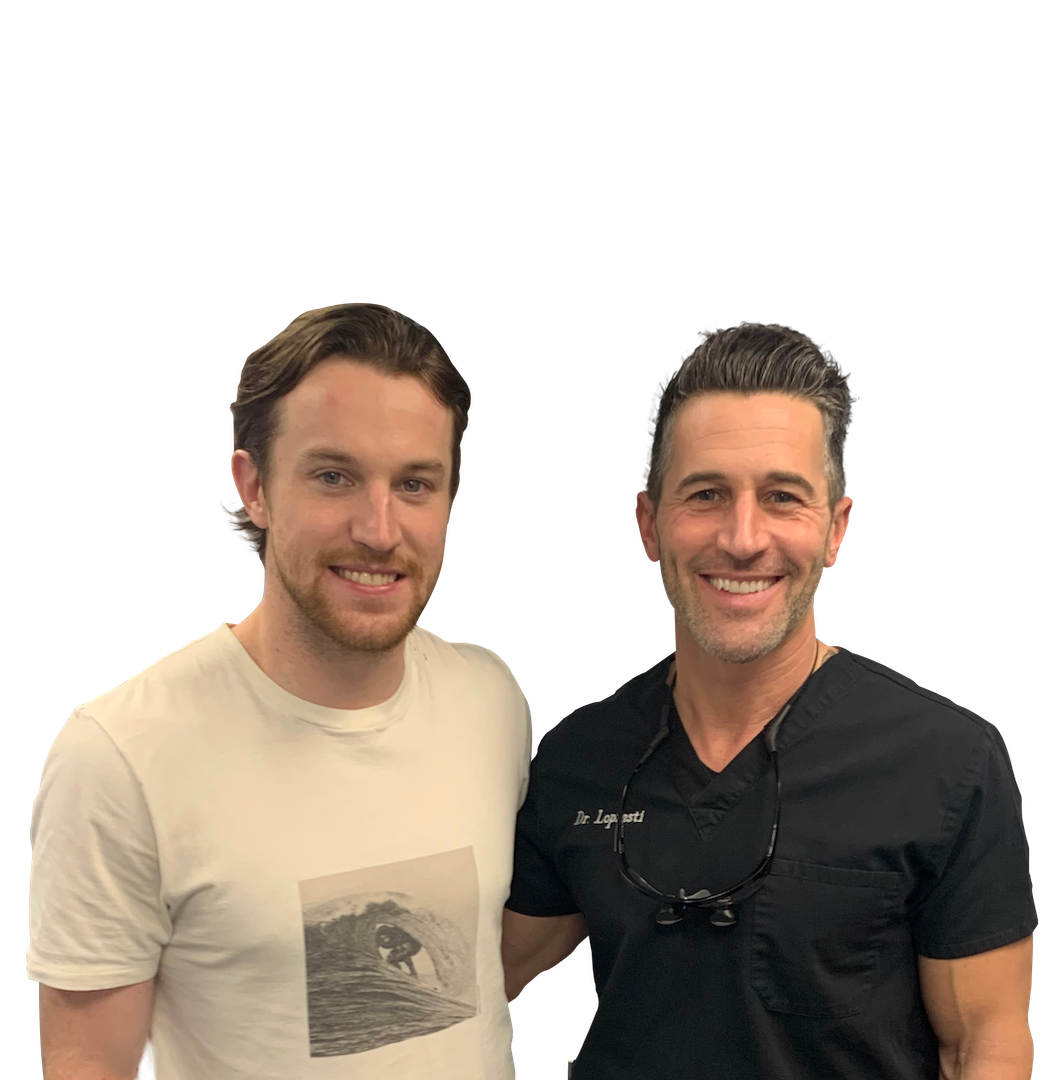
If you are considering a hair transplant, chances are you have spent most of your time looking at the hair you have lost. You look at the front, the temples or the crown and imagine what you would like to see there instead. That is completely understandable. But when Dr. Matthew Lopresti evaluates someone for hair transplant surgery, there is another part of the scalp that matters just as much.
It is the hair you still have.
The donor area is the region of the scalp where hair is taken for a hair transplant, typically from the back and sides of the head. Those follicles can then be moved to areas where hair has thinned or been lost. Whether you are considering Follicular Unit Excision (FUE) or Follicular Unit Transplantation (FUT), the quality and availability of your donor hair play a major role in what can realistically be accomplished.
Think of it this way. A hair transplant does not create new hair. It takes a limited resource you already have and uses it more strategically. That makes the donor area one of the most important parts of planning a natural looking hair transplant.
What Is the Donor Area in a Hair Transplant?
The donor area is generally the region along the back and sides of the scalp where hair tends to be more resistant to the genetic process responsible for common pattern hair loss.
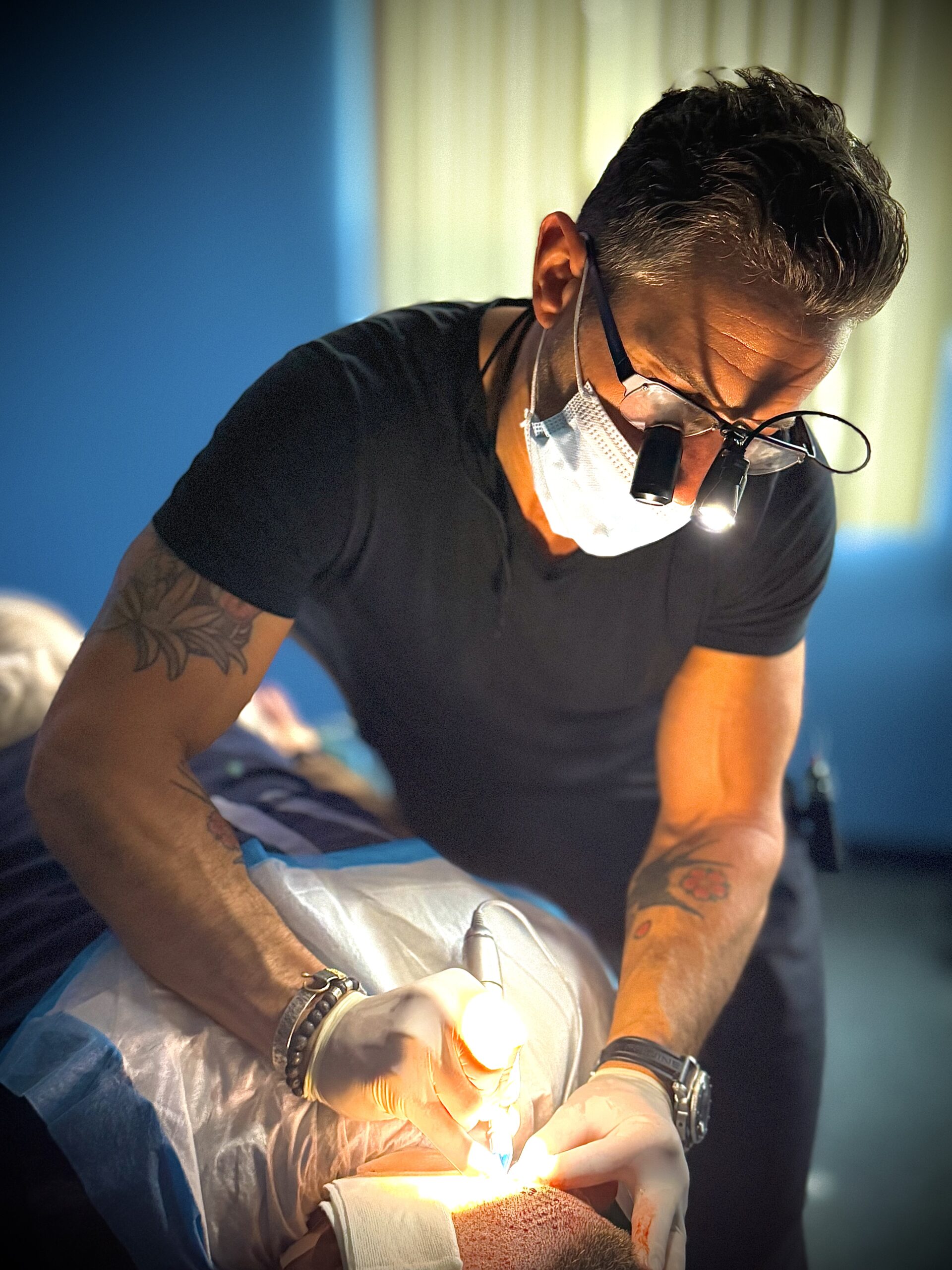 During hair transplant surgery, follicles are removed from appropriate areas within this donor region and transplanted into areas where greater coverage is desired. Once transplanted, these follicles generally retain the characteristics of the area from which they came.
That is why you will often hear the phrase “permanent donor hair.” It does not mean that every hair on the back or sides of your head is automatically suitable for transplantation, or that every transplanted hair is guaranteed to last forever. It means that a qualified hair transplant surgeon identifies follicles within an appropriate donor region that are expected to have greater long term stability.
This is also why simply having plenty of hair on the back of your head does not automatically tell you whether you are a good candidate for surgery. The location, density, quality and characteristics of that hair all matter.
Why Does Donor Hair Matter So Much?
Your donor hair determines what your hair restoration surgeon has available to work with, and that supply is limited.
This is one of the most important ideas to understand before having a hair transplant. If you have progressive hair loss, you may continue losing some of your existing non transplanted hair over the years. The donor hair available today may therefore need to serve not only the hair loss you see now, but potentially the hair loss you could experience later.
That changes the conversation.
The goal is not simply to move as much hair as possible during your first procedure. Good surgical planning means deciding where donor hair will have the greatest visual impact while preserving options for the future. Sometimes restraint today gives you considerably more flexibility tomorrow.
At Leonard Hair Transplant Associates, Dr. Lopresti evaluates the donor area as part of the larger picture. Your age, current pattern of hair loss, family history, hair characteristics, amount of donor hair and the possibility of continued hair loss can all influence the surgical plan.
How Does Dr. Lopresti Evaluate Your Donor Area?
 A donor area evaluation is about more than counting hairs. Dr. Lopresti looks at the amount and distribution of available donor hair as well as characteristics that can affect how that hair may be used.
Density matters, but so do hair caliber, texture, curl, color contrast with the scalp and the stability of the donor region. Two people can appear to have similar amounts of donor hair and still have very different surgical possibilities.
Your expectations matter too. Someone hoping to rebuild a relatively small frontal area presents a very different planning question from someone with more advanced hair loss who wants coverage across a much larger portion of the scalp.
This is one reason an in person hair transplant consultation in Boston can tell you considerably more than photographs alone. Dr. Lopresti can examine both the area you want restored and the donor supply available to restore it. Those two things have to make sense together.
Where Does Donor Hair Come From?
Hair transplant donor hair usually comes from an appropriate region along the back and sides of your own scalp.
There is an important word in that sentence: your.
Hair transplantation works by relocating your own follicles. You cannot simply use donor hair from another person in the way donor tissue may be used in other areas of medicine. Your existing donor supply is therefore something worth protecting.
This is where long term planning becomes particularly important. A patient may walk into a consultation thinking almost entirely about the front of the scalp. A surgeon has to think about the front, the donor area and what the entire pattern may look like years from now.
What Is the Difference Between the FUE and FUT Donor Areas?
Both FUE and FUT use your own donor hair, but the follicles are obtained differently.
With Follicular Unit Excision (FUE) , individual follicular units are removed directly from the donor area. Rather than creating one linear donor scar, FUE leaves many small extraction sites distributed through the area from which the follicles are removed.
With Follicular Unit Transplantation (FUT), a narrow section of donor tissue is surgically removed and the area is closed with sutures. The follicular units within that tissue are then carefully separated for transplantation. FUT produces a linear donor scar that is typically concealed by surrounding hair.
Neither method is automatically the right choice for everyone. Dr. Lopresti performs both FUE and FUT because the better approach depends on the individual patient, including the donor area, hairstyle preferences, degree of hair loss and long term restoration goals. You can explore both approaches on our hair transplant surgery page.
For some patients, the discussion may even include how to preserve the donor supply over a lifetime rather than simply which technique sounds more appealing today.
Does Hair Grow Back in the Donor Area After a Hair Transplant?
The follicles removed for transplantation do not simply regenerate new follicles in the locations from which they were taken.
With FUE, this makes careful distribution of the extractions important. The objective is to remove follicles strategically while maintaining a natural appearance in the remaining donor area. With FUT, the section containing the donor follicles is removed and the scalp is closed, leaving a linear scar.
This is another reason the donor area should be treated as a limited resource rather than an unlimited supply of replacement hair.
You are not borrowing those follicles. You are relocating them.
Can a Donor Area Be Over harvested?
Yes. Removing too much hair from a donor area can leave it looking visibly thin or uneven, particularly with FUE.
You may have seen photographs online of people whose donor areas look patchy after surgery. That is precisely what thoughtful donor management is designed to avoid. The question should never be simply, “How much hair can we take?” It should also be, “How much hair can we responsibly use while protecting the appearance and usefulness of the donor area?”
There is no advantage to improving one part of the scalp if the process unnecessarily creates a new cosmetic problem somewhere else.
Careful donor management is one reason choosing a qualified surgeon matters. The International Society of Hair Restoration Surgery (ISHRS) offers additional patient education about hair restoration surgery and selecting a qualified physician.
That is why the number of follicles that can reasonably be harvested is individual. Bigger numbers are not automatically better surgery.
What If I Don’t Have Enough Donor Hair?
If the donor supply is not adequate for what you are trying to accomplish, hair transplant surgery may need to be approached more conservatively, planned differently or, in some cases, may not be the right option.
This can be disappointing to hear when someone arrives expecting surgery, but a realistic answer is considerably more valuable than an unrealistic promise.
The size of the area you want restored has to be considered against the donor hair available to restore it. If the supply is limited, Dr. Lopresti may discuss what can realistically create the greatest cosmetic improvement rather than attempting to cover every area equally.
Hair restoration is partly about knowing what to do. It is also about knowing what not to do.
Does Having Thick Hair Mean I Have a Good Donor Area?
Not necessarily. Thick looking hair can be encouraging, but donor candidacy depends on more than how full the back of your head appears in the mirror.
Hair density, individual hair thickness, texture, donor stability and the size of the area requiring restoration can all affect what is possible. Even the contrast between your hair and scalp can influence the visual impression of density after transplantation.
That is why two patients with similar patterns of hair loss may receive different recommendations. Hair transplant surgery is not a standardized exchange of a certain number of hairs from one place to another. The raw material is different on every person.
Why Does Future Hair Loss Matter When Planning the Donor Area?
Because the hair transplant you have today still has to make sense if your hair loss progresses tomorrow.
Genetic hair loss is progressive. A patient may restore the frontal portion of the scalp while the non transplanted hair behind it continues to thin over time. Depending on the individual, additional treatment or another hair transplant may eventually be considered.
That possibility should be part of the original plan.
Dr. Lopresti looks beyond the immediate area bothering you today and considers how your pattern may evolve. Preserving donor hair can give a patient more options if additional restoration becomes appropriate later. This long term perspective is also an important part of planning natural looking hair transplant results.
A good hair transplant should not paint you into a corner.
Is the Donor Area Different for Every Patient?
Yes. There is no universal donor area or universal amount of hair that can safely be used.
Your genetics gave you the donor supply you have. The surgeon’s job is to understand it, respect its limitations and determine how it can be used effectively.
For some patients, that may provide considerable flexibility. For others, the donor supply may require a more conservative approach. Neither situation can be determined reliably by comparing yourself with another patient’s photographs or by focusing on a particular number of follicles.
The better question is not, “How many hairs can I get?”
It is, “What can my donor hair realistically accomplish for me?”
Your Hair Transplant Starts in the Back, Not the Front
Most people considering a hair transplant naturally focus on what they see in the mirror. The receding front. The thinning crown. The area that looks different in photographs than it did five or ten years ago.
Dr. Lopresti has to look at something else too: what he has available to work with.
That is the quiet reality behind good hair transplant surgery. The result you want in the front depends on the decisions made in the back. Where the donor hair comes from, how it is harvested, how much is used and how much is preserved can influence not only how your transplant looks after it grows, but what options remain if your hair loss continues.
If you are considering FUE or FUT hair transplant surgery in Boston or elsewhere in New England, your donor area is one of the first things worth understanding. During a complimentary consultation with Leonard Hair Transplant Associates, Dr. Matthew Lopresti can evaluate your hair loss and donor area together and explain what your own hair may realistically allow.
Because before anyone decides where your new hair should go, it makes sense to understand exactly where it is going to come from.