


Is My Hair Thinning? How to Tell If Your Hair Loss Has Changed

If you are wondering whether your hair is actually getting thinner, one of the best places to start is not with what you see in the mirror today. Look at what you saw six months ago, a year ago or even several years ago.
If your hair consistently looks thinner than it did in the past, you may be experiencing hair loss. More visible scalp, less overall coverage, changes around the temples or crown, or a widening part can all be signs of thinning. One photograph or a few days of increased shedding are not enough to know for certain. What matters more is whether something has consistently changed over time.
Maybe you first noticed it in a photograph. Maybe your hair does not style the way it used to. Or maybe someone close to you saw a change before you did. Hair loss often develops gradually, which can make it surprisingly difficult to recognize when you see yourself in the mirror every day.
How Can I Tell If My Hair Is Thinning?
The easiest way to tell if your hair may be thinning is to look for consistent changes in coverage, density and how much of your scalp you can see compared with the past.
Some things worth paying attention to include:
- More scalp showing than you remember
- A widening part or less coverage through the top
- Changes around the front or temples
- More visibility at the crown
- Less overall density or coverage
- Hair that has become harder to style the way it used to
One of these changes by itself does not necessarily mean you have progressive hair loss. What becomes more meaningful is seeing the same change continue over time.
Compare Yourself With Yourself
 Older photographs can be surprisingly useful when you are trying to determine whether your hair has changed.
Pull up pictures from six months ago, a year ago or even several years ago and compare similar angles when possible. Look at your front, temples, top and crown. You are not trying to diagnose yourself from a photograph. You are looking for a pattern.
And compare yourself with yourself, not somebody else’s hair.
Everyone starts with different hair density, texture, color, caliber and genetics. Someone else’s idea of “thick hair” tells you very little about whether your own hair has changed.
The better question is simple: Does my hair look different than it used to?
Can Lighting Make Your Hair Look Thinner?
Yes. Lighting, wet hair, a shorter haircut, styling and even camera angle can dramatically change how much scalp you see.
Anyone who has caught their hair under unforgiving overhead lighting knows how different it can suddenly look. Wet hair can separate and expose more scalp. A shorter haircut can change coverage. A photograph taken from above may show something you never notice looking straight into a mirror.
Temporary shedding can also affect the appearance of your hair.
That is why one bad photograph should not convince you that you are losing your hair. Look for consistency. If the same change appears repeatedly under similar conditions and becomes more noticeable over months or years, that tells you considerably more than what you see on any single day.
Is More Hair in the Shower a Sign of Hair Loss?
Not necessarily. Seeing more hair in the shower, on your pillow or in your brush can get your attention, but shedding alone does not tell you whether you have progressive hair loss.
Hair naturally moves through growth and shedding cycles, and temporary increases in shedding can occur for different reasons. What you ultimately want to understand is whether the overall appearance and density of your hair are changing.
That distinction matters because noticing hair coming out and actually seeing progressive thinning are not always the same thing.
What Areas Should I Watch for Hair Loss?
The front, temples, top and crown are common areas where people begin noticing changes associated with pattern hair loss, although hair loss can appear differently from one person to another.
For some men, the first clue is that the temples have moved back or the frontal area no longer looks as dense. Others first notice more scalp through the crown.
Women may notice less overall coverage through the top or a part that appears wider than it did previously.
The location matters, but the pattern over time matters more. If an area appears consistently different from older photographs, it may be worth having it evaluated.
How Quickly Does Hair Loss Change?
Hair loss can be gradual enough that you may not recognize it happening.
That is part of what makes it frustrating. You see yourself every morning, so small changes tend to disappear into the routine. Then an older photograph appears and suddenly the difference seems obvious.
This is one reason Dr. Matthew Lopresti may ask about when you first noticed a change, how the hair has progressed and your family history when evaluating hair loss at Leonard Hair Transplant Associates.
The goal is not simply to establish that you have less hair than you once did. It is to understand what may be happening and what that could mean going forward.
What Can You Do About Thinning Hair?
The answer depends on what is causing the hair loss and what makes sense for you. Seeing that your hair has changed still does not tell you why it changed, and different forms of hair loss and temporary shedding can sometimes look similar.
That is why choosing a treatment should not be the first decision.
The treatment comes second. Understanding the hair loss comes first.
At Leonard Hair Transplant Associates, options for appropriate patients may include non surgical treatments such as finasteride, topical minoxidil or PRP with ACell. For appropriate surgical candidates, Dr. Lopresti performs both Follicular Unit Excision (FUE) and Follicular Unit Transplantation (FUT) hair transplant surgery.
But noticing thinning does not automatically mean you need treatment at all. For some people, monitoring the hair may make more sense than immediately doing something about it.
When Should I Have My Hair Loss Evaluated?
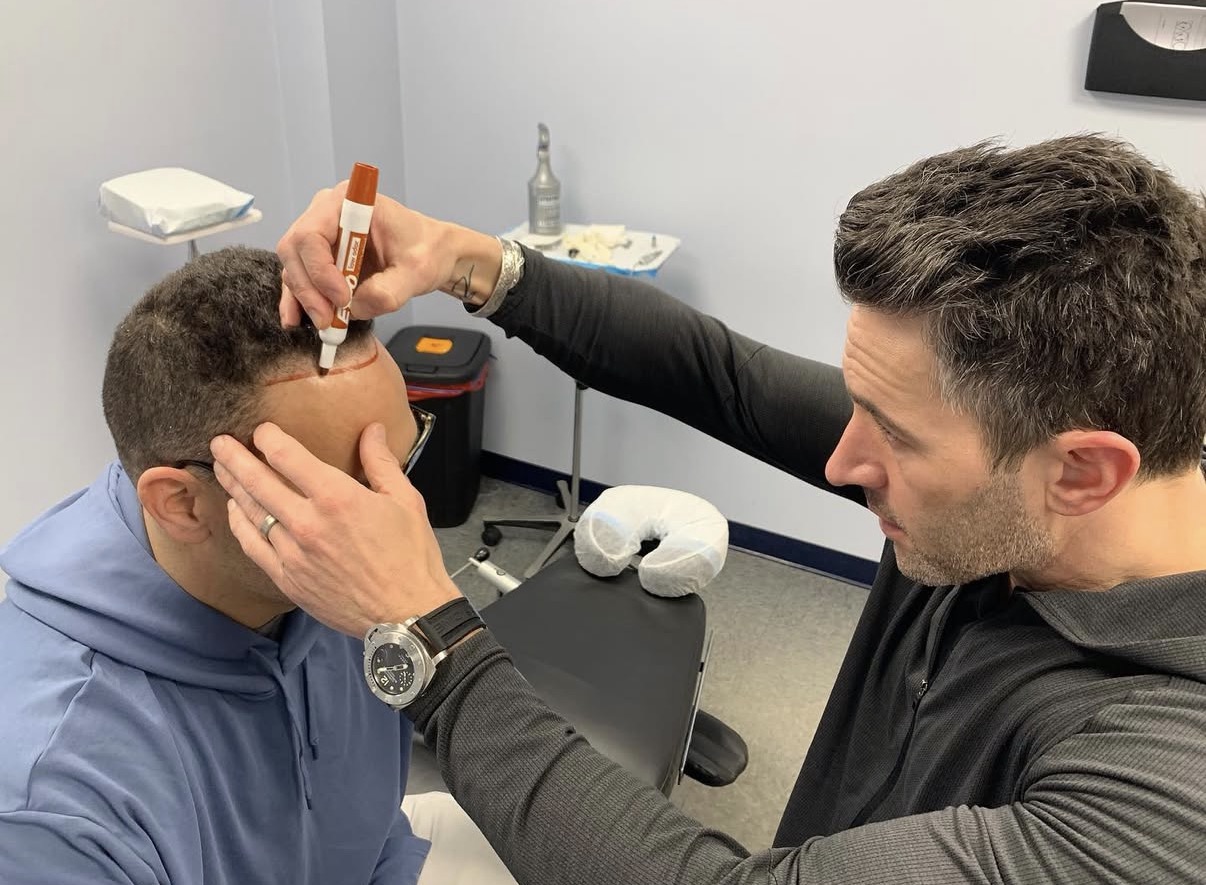
If you continue noticing a change and are no longer sure whether it is your imagination, that is a reasonable time to have someone take a closer look.
Dr. Lopresti, Chief Hair Restoration Surgeon at Leonard Hair Transplant Associates, evaluates each patient individually before recommending treatment. The objective is to understand what has changed, what may be contributing to it and which options, if any, make sense for that individual.
For some patients, a non surgical treatment may be appropriate. For an appropriate candidate, hair transplant surgery may be an option. For someone else, the right answer may simply be to watch the hair and compare it again later.
There is not one answer for everyone.
That is exactly why the evaluation matters.
Not Sure What You’re Seeing?
You do not need to wait until your hair loss becomes obvious to everyone else before asking about it. And you do not need to convince yourself that every bad hair day means you are going bald.
Start with something simpler.
Look back.
Compare photographs. Pay attention to the front, temples, top and crown. Notice whether styling has become more difficult or whether you consistently see more scalp than you remember.
If nothing has really changed, that tells you something.
If it has, that tells you something too.
If you’ve noticed a change but aren’t sure what it means, Leonard Hair Transplant Associates offers complimentary consultations with Dr. Matthew Lopresti for patients throughout Boston and New England, either in person or by Telehealth. He can evaluate what you are seeing and help you understand what, if anything, makes sense to do next.