



How to Apply Rogaine Foam: 6 Steps to Use Minoxidil Correctly
Buying Rogaine is easy. Using it consistently and correctly is the part that matters.
Topical minoxidil, better known by the brand name Rogaine, has been used for decades to treat pattern hair loss. It is available without a prescription, which makes it one of the easiest hair loss treatments to start. But that convenience can also lead people to treat it like an ordinary styling product. They put some in their hair when they remember, use more because they think more will work better, or stop after a couple of months because they do not see enough change.
 Minoxidil does not work that way.
It is a treatment applied directly to the scalp, not something you coat your hair with, and results depend heavily on using the product according to its directions and giving it enough time to work. The American Academy of Dermatology notes that topical minoxidil can stimulate hair growth and help prevent further hair loss in appropriate patients, but it can take approximately six to twelve months to judge results.
If Rogaine Foam is part of your hair loss treatment plan, here is how to use it properly.
1. Start With a Dry Scalp
Before applying Rogaine Foam, make sure you can get the medication where it actually needs to go: your scalp.
Part your hair so you can clearly see the area where you are thinning. The goal is not to cover the hair itself with foam. Minoxidil needs to make contact with the scalp in the treatment area.
This sounds obvious, but it is one of the easiest mistakes to make, especially if you have longer or thicker hair surrounding the thinning area. If most of the foam ends up sitting on your hair, you are not applying the product as intended.
2. Measure the Correct Amount of Rogaine Foam
For 5% minoxidil foam, the labeled amount is generally half a capful per application, but how often you apply it depends on the specific product you are using.
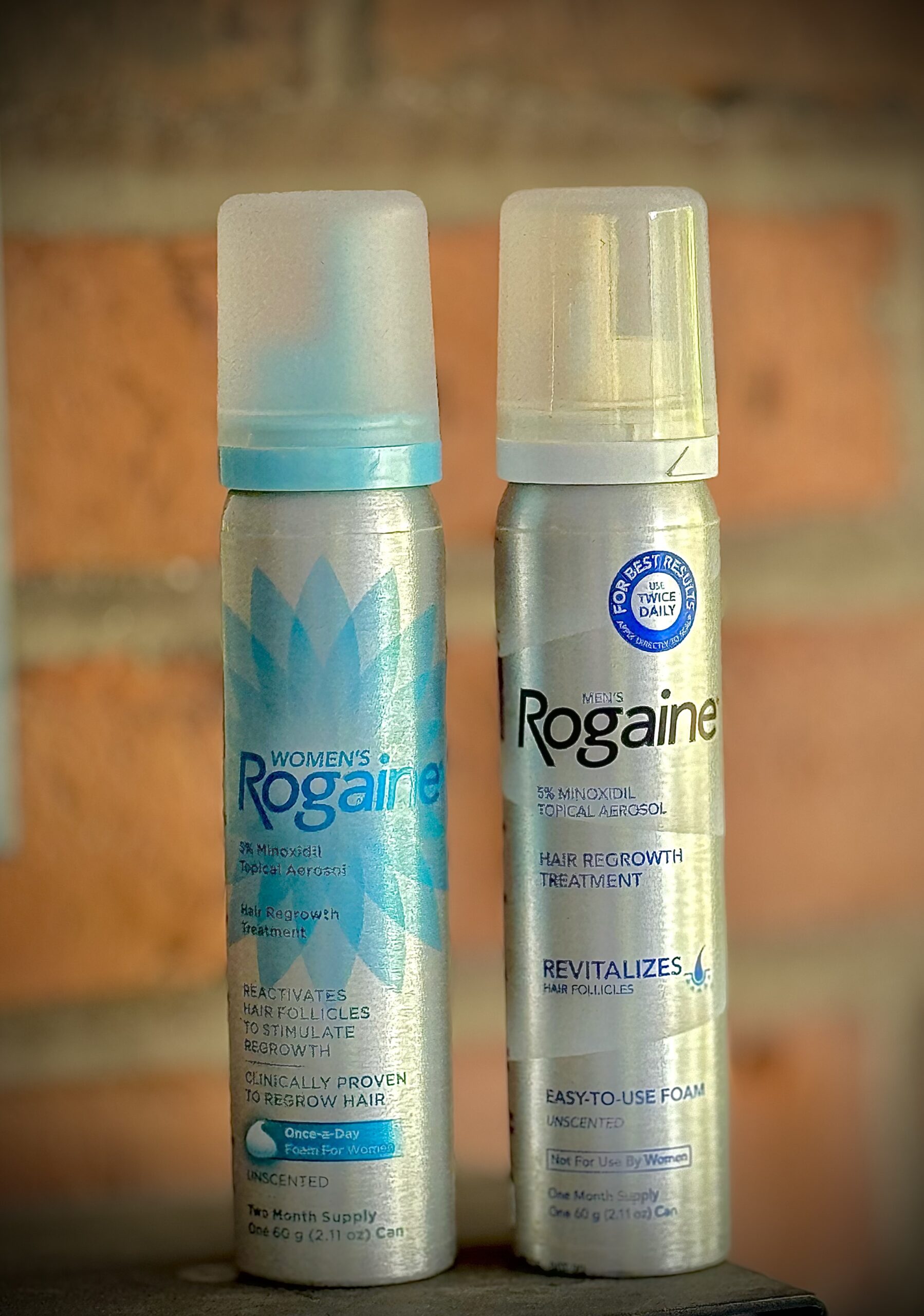
The current FDA labeling for Men’s Rogaine 5% Foam directs men to use it twice daily. Women’s Rogaine 5% Foam is labeled for once-daily application. More is not better, so follow the directions for your specific product rather than assuming every minoxidil product is used the same way.
The foam also melts when it comes into contact with warmth. Cool, dry fingers can make it easier to handle before application.
3. Apply Rogaine to Your Scalp, Not Your Hair
 This is probably the most important practical point on the entire page.
Rogaine goes on your scalp.
After parting your hair, use your fingers to spread the foam directly over the thinning area of the scalp. Gently work it across the treatment area rather than trying to saturate the surrounding hair.
Think of your hair as something you have to work around to reach the skin underneath. Minoxidil needs to reach the scalp where the hair follicles are located. The FDA directions for Rogaine Foam specifically instruct users to apply the product to the scalp rather than the hair.
4. Wash Your Hands After Applying It
Once you have finished applying the foam, wash your hands thoroughly.
This is not just about keeping your hands clean. Minoxidil is intended for the treatment area, and unnecessary contact with other areas of the body should be avoided. A good routine makes this easy. Apply it, wash your hands and move on with your day.
5. Let Rogaine Dry Before Styling Your Hair
Give the medication time to dry on your scalp before applying styling products or going through the rest of your hair routine.
You do not need to walk around all day with your hair looking like you just applied medication. Once the foam has dried, you can style your hair. What matters is giving the minoxidil an opportunity to remain where you applied it instead of immediately wiping, washing or moving it around.
This is one reason many people eventually find a regular time of day that works with their schedule. Hair loss treatment becomes much easier to maintain when it becomes part of a routine rather than something you have to remember from scratch every day.
6. Keep Using It Consistently
This may be the easiest instruction to understand and the hardest one to follow.
Minoxidil is not an overnight treatment. Hair grows slowly, and you should not judge whether Rogaine is working after a few weeks. Some people can also experience increased shedding during the early stages of treatment. If minoxidil is working for you, continued use is generally necessary to maintain its benefits. Stopping treatment can result in losing the benefit you gained from using it.
That is something worth understanding before you start. Rogaine makes more sense as a long-term treatment routine than as something you try occasionally when your hair looks thinner.
How Long Does Rogaine Take to Work?
This is where patience becomes part of the treatment.
You may see Rogaine packaging discussing earlier signs of regrowth, but meaningful improvement in hair density takes time. The American Academy of Dermatology advises that it may take approximately six to twelve months to determine how well minoxidil is working for you.
More importantly, not everyone responds the same way. Minoxidil can help some people maintain existing hair and stimulate growth, but it does not restore every hair that has been lost and it does not produce the same result for everyone.
Take photographs before you begin and periodically afterward using the same lighting, angle and hairstyle. That gives you a much better comparison than trying to remember what your hair looked like six months ago.
What Happens If You Miss a Rogaine Application?
Do not try to compensate by applying extra minoxidil.
Simply resume your regular application schedule according to the directions for your product. Using more minoxidil or applying it more frequently does not mean you will grow hair faster. The FDA labeling specifically warns that using more or using it more often will not improve results.
Missing an occasional application is different from repeatedly using Rogaine inconsistently. If you are going to use topical minoxidil, building it into your normal daily routine gives it the best opportunity to be used as intended.
Does Rogaine Work for Everyone With Hair Loss?
No, and this is an important distinction that gets lost when people see Rogaine sitting on a drugstore shelf.
Hair loss is not one condition. Pattern hair loss, temporary shedding, inflammatory or scarring conditions, medication-related hair loss and other medical causes can sometimes produce similar changes in your appearance. Minoxidil may be appropriate for certain forms of hair loss, but buying it does not tell you why your hair is thinning.
The FDA labeling itself cautions against simply self-treating when hair loss is sudden, patchy or unexplained.
That is why Leonard Hair Transplant Associates approaches hair loss by first looking at the person rather than simply recommending a product. Dr. Matthew Lopresti evaluates how your hair has changed, the pattern of thinning, your history and the condition of the existing hair before discussing which options may make sense.
For some people in Boston, Newton and throughout Massachusetts and New England, topical minoxidil may be part of that plan. For someone else, a different approach may be appropriate.
Rogaine Works Better as a Routine Than a Resolution
Most people do not wake up one morning with dramatically less hair than they had the night before. Pattern hair loss tends to reveal itself gradually. Your part changes. Your scalp becomes easier to see under bright light. The front or crown does not photograph the way it used to. Eventually you realize something has been changing for a while.
That is usually when people start buying things.
The better approach is to understand what is happening first. If minoxidil is appropriate for you, use it correctly, use the right amount and give it enough time to do its job. Do not chase every shampoo, vitamin or new bottle that promises a faster answer.
The six steps are simple. The commitment is the treatment.
And if you are not sure whether Rogaine is right for the type of hair loss you are experiencing, that is a much better question to answer before you spend the next year applying it.