



Realistic Expectations Are the Most Important Part of a Hair Transplant Consultation
Hair transplant surgery has changed considerably over the years, but one part of the process has not. A successful result begins with an honest conversation about what can realistically be accomplished based on the patient’s hair loss, available donor hair, age, goals and the likelihood of future hair loss.
People considering a hair transplant often arrive at a consultation focused on the procedure itself. They want to know how much coverage they can achieve, whether Follicular Unit Excision or FUT is the better option, how the donor area will look afterward and when they will begin seeing new growth. Those are all important questions, but they come after a more fundamental one: What should this particular patient realistically expect from a hair transplant?
At Leonard Hair Transplant Associates, this is an important part of Dr. Matthew Lopresti’s consultation with patients considering hair transplant surgery. The purpose is not simply to determine whether hair can be transplanted. It is to determine whether surgery makes sense for the individual patient, what can reasonably be accomplished and whether that result matches what the patient is hoping to achieve.
A Hair Transplant Cannot Create Unlimited Hair
Hair transplantation works by relocating a patient’s own permanent donor hair from one area of the scalp to areas affected by hair loss. Because there is only so much suitable donor hair available, the donor area becomes one of the most important considerations in planning a hair transplant.
Dr. Lopresti evaluates the quality and availability of donor hair along with the extent and pattern of hair loss, the areas that concern the patient most and how that hair loss may progress in the years ahead. A treatment plan should not be based only on filling the area that looks thin today. It should also consider how to use a limited donor supply appropriately so the result continues to make sense as the patient ages.
This is why knowing where not to transplant can sometimes be just as important as knowing where to transplant. Using too much donor hair too early or creating a result without considering future hair loss can limit the options available to a patient later.
Hair Loss Can Continue After a Hair Transplant
One of the most important things to understand before having hair transplant surgery is that the procedure does not stop the progression of hair loss. Transplanted follicles are selected from appropriate donor areas because those hairs are generally more resistant to the process responsible for common pattern hair loss, but the patient’s existing non transplanted hair may continue to thin over time.
That makes long term planning an important part of the consultation. Age, family history, current pattern of loss, donor availability and the potential for continued thinning all help determine whether surgery is appropriate and how it should be approached. Depending on the patient, non surgical hair loss treatments may also be discussed as part of a broader plan to help maintain existing hair.
The objective is not simply to make an area look better immediately after one procedure. It is to develop a plan that considers where the patient’s hair loss is today and where it may be going in the future.
FUE or FUT Should Follow the Treatment Plan
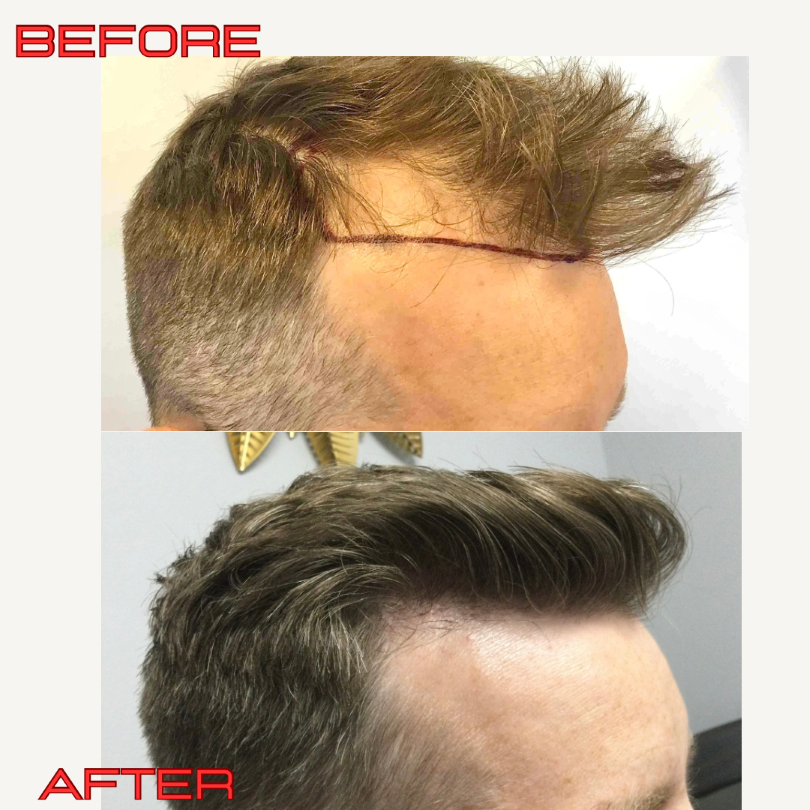 Patients researching hair transplant surgery in Boston often arrive already familiar with FUE and FUT, and some have decided which procedure they want before they ever meet with a surgeon. While understanding the available techniques is helpful, the method used to obtain donor hair should follow the treatment plan rather than determine it.
Leonard Hair Transplant Associates offers both Follicular Unit Excision, commonly referred to as FUE, and Follicular Unit Transplantation, or FUT. Each approach obtains permanent donor follicles differently and has considerations involving the donor area, scarring, hairstyle, available donor hair and long term surgical planning. During a consultation, Dr. Lopresti can evaluate these factors and explain which approach may be appropriate based on the individual patient.
Technology can be an important part of hair restoration surgery, but technology by itself does not create the treatment plan. The surgeon’s evaluation, planning and use of the patient’s donor hair ultimately determine how that technology is applied.
Natural Looking Hair Transplant Results Begin With Planning
A well planned hair transplant should complement the patient’s existing appearance rather than call attention to the fact that surgery was performed. Achieving that requires more than simply moving hair from one part of the scalp to another. The transplanted hair needs to work with the patient’s facial features, existing hair, pattern of loss and available donor supply, while its placement, direction and distribution need to create an appearance that remains natural as the hair grows.
This is also why two people who appear to have similar hair loss may receive very different recommendations. Hair caliber, density, donor availability, scalp characteristics, age, the location of the thinning and the possibility of future hair loss can all influence what can realistically be achieved.
Before surgery is recommended, a patient should understand both the possibilities and the limitations. A consultation should create clarity about the expected result rather than simply create excitement about having a procedure.
Look Beyond the Marketing
Hair restoration is more visible today than it has ever been, which means patients encounter an enormous amount of information and advertising before they ever sit down with a surgeon. Some of that marketing focuses heavily on a particular technology, procedure, number of grafts or dramatic before and after transformation. Those things may attract attention, but they do not replace an individualized surgical evaluation.
Patients should understand who is evaluating their hair loss, who is developing the surgical plan and who will perform the critical portions of the procedure. They should also have an opportunity to discuss donor hair, continued hair loss, recovery, realistic results and whether another procedure could potentially be needed in the future.
Cost is understandably part of the decision as well, but it should be considered in the context of the overall treatment plan. Hair transplant surgery creates a permanent change using a limited supply of donor hair, which makes understanding the recommendation and the surgeon responsible for it particularly important.
What Happens During a Hair Transplant Consultation?
 At Leonard Hair Transplant Associates, Dr. Matthew Lopresti personally evaluates patients considering hair transplant surgery. The consultation provides an opportunity to examine the pattern and extent of hair loss, assess the donor area, understand what concerns the patient most and discuss whether FUE, FUT or a non surgical approach may be appropriate.
Not every person who is concerned about hair loss necessarily needs a hair transplant at that moment. For some patients, surgery may be appropriate. For others, waiting, monitoring the progression of hair loss or considering a non surgical treatment may make more sense. Determining that is part of the value of the consultation rather than a reason to avoid it.
For patients considering hair transplant surgery in Boston or elsewhere in New England, the goal of that first meeting should be straightforward: understand where the hair loss is today, consider where it may be going and determine what can realistically be done about it.