


Can Blow Dryers and Curling Irons Cause Hair Loss?
If you have started noticing more hair in your brush, shorter pieces around your face or a little more scalp showing than you remember, it is natural to look at the things you do to your hair every day and wonder whether one of them is responsible. Maybe you blow dry your hair every morning, use a curling iron several times a week or straighten sections with a flat iron before leaving the house. When your hair begins to look thinner, those hot styling tools can become an easy suspect.
The answer is reassuring, but there is an important distinction to understand. Blow dryers, curling irons and flat irons can damage your hair when they are used with excessive heat or too aggressively, but that type of damage usually happens to the hair shaft, which is the strand you can see and style. Most progressive female hair loss involves changes occurring deeper beneath the scalp at the hair follicle, which is the living structure responsible for growing each strand.
Both problems can leave your hair looking thinner, and both can be upsetting when you are accustomed to your hair looking and feeling a certain way. Understanding the difference between hair breakage and actual hair loss can help you figure out what your hair may be trying to tell you.
First, Think About Your Hair From the Inside Out
A strand of hair seems simple when you are brushing it or wrapping it around a curling iron, but there is more going on than you can see in the mirror. The part of your hair above your scalp is called the hair shaft. Beneath the skin is the follicle, which is essentially the tiny structure responsible for producing that hair.
An easy way to picture the difference is to think about a flower growing from the ground. The flower and stem are what you see above the surface, while the living structures that allow it to grow are below. If part of the stem breaks, that does not necessarily mean the root has stopped functioning. Hair works differently biologically, of course, but the comparison helps explain why a broken strand and a failing follicle are not the same thing.
Your blow dryer and curling iron primarily interact with the hair shaft above your scalp. When too much heat is repeatedly applied, the outer protective portion of that shaft can become damaged. The hair may become drier, rougher and more fragile, making it easier for the strand to split or break before it reaches the length it normally would.
That can certainly change the way your hair looks, but it does not automatically mean you are developing permanent hair loss.
Why Heat Damaged Hair Can Look Like Thinning Hair
This is where things can become confusing, especially if you have longer hair.
 Imagine that most of your hair reaches your shoulders, but increasingly you begin noticing little pieces that are only a few inches long. You may see them sticking up when you style your hair, around the front when you pull your hair back or mixed among the longer hairs when you look closely in the mirror. You might also feel that your hair does not have the fullness it once had.
Your first thought may be that those short hairs are evidence that you are losing your hair.
They might not be.
A hair that has been weakened by repeated heat, chemical processing or other physical damage can break somewhere along its shaft. The follicle underneath the scalp may still be perfectly capable of growing hair, but the strand it produced did not survive long enough to reach its normal length.
If enough strands are breaking, your hair can begin to look less full even though the problem is primarily happening above the scalp.
That is very different from what happens with progressive female pattern hair loss.
Those Short Hairs Could Be Telling You Something Else
There is another reason we would not want you to automatically blame your blow dryer when you begin seeing shorter hairs.
With female pattern hair loss, susceptible follicles can gradually become smaller through a biological process called miniaturization. As a follicle miniaturizes, the hair it produces can become finer, shorter and less substantial than the hair it produced in the past. Instead of a healthy follicle repeatedly producing a strong terminal hair, each successive growth cycle may produce a hair that contributes less coverage.
If this happens across enough follicles, you may begin noticing a wider part, more visible scalp through the top of your hair or an overall decrease in density. You may also find that your hair does not style the way it used to because the individual hairs themselves are becoming finer.
This is one reason looking only at the length of a short hair cannot tell you exactly what happened. A short hair could be a broken strand. It could be healthy new growth. It could also be a finer, shorter hair produced by a follicle undergoing miniaturization.
If you are standing in your bathroom trying to determine which one you are looking at, you should not feel as though you are missing something obvious. These changes can look remarkably similar without a closer evaluation.
Your Hair Doesn’t Have to Give Up Heat Styling
If your blow dryer, curling iron or flat iron is part of how you feel put together in the morning, the answer is not that you have to throw everything away and start air drying your hair forever. The more useful approach is to understand that hair can tolerate styling better when you are not repeatedly asking it to withstand unnecessary amounts of heat.
Hair has an outer protective layer called the cuticle. You can picture the cuticle almost like tiny overlapping shingles protecting the structure underneath. Repeated exposure to excessive temperatures can damage that protective surface, leaving the shaft more vulnerable to dryness, splitting and breakage.
This is why turning every styling tool to its maximum temperature does not necessarily give you a better result. If your hair responds well at a lower temperature, there is little benefit to giving it more heat simply because the appliance can produce it. The same principle applies to holding a curling iron on one section for an unnecessarily long time or repeatedly running a very hot flat iron over the same strands.
With a blow dryer, distance and movement also matter. Holding intense heat very close to one section of your hair for an extended period concentrates that exposure. Keeping the dryer moving and using only as much heat as you reasonably need can reduce unnecessary stress on the shaft.
The goal is not perfect hair care. It is simply treating the hair you have as something worth protecting.
Colored, Bleached or Chemically Treated Hair May Need More Care
If you color, highlight, bleach, relax, perm or chemically straighten your hair, you may already know that it can feel different afterward. That is because chemical processing can alter the structure of the hair shaft, and depending on the treatment and condition of your hair, it may become more vulnerable to additional physical damage.
Now add frequent high heat.
Hair that has already been chemically processed may not tolerate the same amount of heat as healthier, untreated hair. If you have ever noticed that your ends suddenly seem dry, pieces are snapping more easily or certain sections never seem to grow as long as the rest, breakage may be contributing to what you are seeing.
That does not mean you need to stop coloring or styling your hair. It means your routine should take the condition of your hair into account. Lower heat, less repeated contact with hot tools and giving fragile areas a little more attention can make a meaningful difference in how much stress you place on the shaft.
If you recently changed your color, began bleaching more frequently or dramatically increased your use of hot styling tools and then started noticing breakage, that timing is worth considering.
Look at Your Scalp, Not Just the Hair in Your Brush
 When you become worried about hair loss, it is very easy to start watching every strand. You may look at the shower drain, count hairs in your brush or examine the bathroom floor after blow drying. Before long, you can become so focused on individual hairs that you lose sight of the more useful question: Does my hair actually look different than it used to?
Take a look at your part. Has it become wider? Look through photographs from six months ago, a year ago and several years ago. Is more scalp visible through the top today? Has your ponytail become noticeably less full? Are you having to style your hair differently because you no longer have the same coverage?
Those kinds of changes can tell you considerably more than finding a few short hairs after styling.
This is especially important if you reduce the heat, become gentler with your hair and still notice that your density is progressively decreasing. At that point, continuing to blame your curling iron may prevent you from investigating whether something else is happening.
When Your Hair Is Breaking and When It May Actually Be Thinning
One of the easiest ways to understand the difference is to think about where the problem begins.
With heat related breakage, a follicle can still be functioning normally beneath your scalp while the hair shaft it produced becomes damaged and breaks above the surface. As healthier hair continues growing from that follicle, the damaged length can eventually be replaced.
With progressive female pattern hair loss, the issue is occurring at the follicle itself. The follicle is gradually producing a finer and shorter hair, which means simply cutting off damaged ends, lowering the temperature of your styling tools or switching shampoos does not address the biological process underneath the scalp.
Sometimes you can have both problems at once. You might have heat damaged, chemically processed hair while also beginning to experience female pattern hair loss. That combination can make the change in your appearance seem more dramatic and make it particularly difficult to figure out the cause on your own.
This is why we would rather help you understand what is actually happening than simply tell you to stop using your blow dryer.
When It’s Worth Having Your Hair Looked At
If you notice occasional breakage after using a curling iron or flat iron, making your styling routine gentler may be a reasonable first step. If your hair continues becoming thinner despite those changes, or you are seeing a widening part, progressively more visible scalp or a loss of density that has continued for months or years, it may be time to look beyond your styling routine.
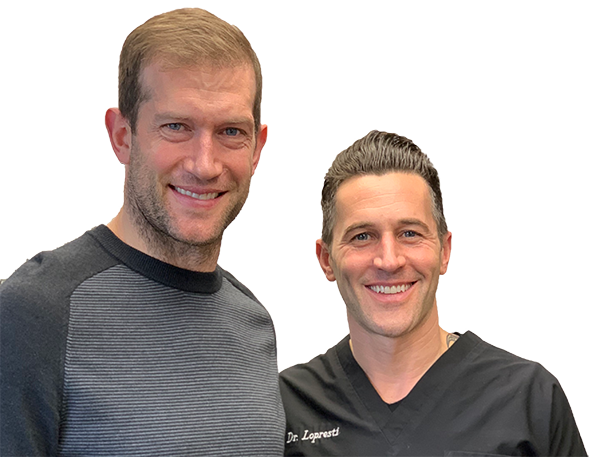
At Leonard Hair Transplant Associates, Dr. Matthew Lopresti evaluates women concerned about hair loss in Boston, Newton and throughout New England. The purpose of an evaluation is not to assume that every woman with thinning hair needs treatment. It is to look at the pattern, progression and characteristics of the hair and determine whether what you are seeing appears to be breakage, progressive hair loss or something that may need evaluation by another healthcare professional.
For some women, finding out that the follicles appear healthy and that breakage may be contributing to the problem can be reassuring. For others, the evaluation may identify signs of progressive female hair loss that deserve a different conversation. Either way, understanding what is happening gives you something much more useful than standing in front of the mirror wondering whether you caused the problem yourself.
You Didn’t Ruin Your Hair Because You Like to Style It
If your hair is important to you, noticing it change can be upsetting, and it is easy to start replaying everything you may have done wrong. Maybe you colored it too often. Maybe the flat iron was too hot. Maybe you should have stopped blow drying it years ago.
Hair does not need that kind of blame.
Yes, excessive heat can damage the hair shaft, and changing the way you style your hair can help reduce future breakage. But progressive hair thinning can happen for reasons that have nothing to do with how carefully you used your curling iron. Female pattern hair loss, hormonal changes, temporary shedding and other conditions can all affect the appearance of your hair in different ways.
If you are seeing more scalp, a wider part, less density or a change that simply does not seem to be improving, you do not have to diagnose it from the hairs in your brush. A complimentary consultation with Dr. Matthew Lopresti can help you understand what may be happening and whether anything needs to be done about it.
Your blow dryer may be hard on your hair if you use too much heat. Your curling iron may be causing some of those broken pieces you see around your face. But if your hair is truly becoming thinner, you deserve a better answer than simply being told to turn down the temperature.