


Does Rosemary Oil Really Grow Hair? The Truth Behind the TikTok Hype
TikTok has sold us a lot of things over the years. Skincare routines with twelve steps, supplements promising to turn back the clock, and enough beauty hacks to fill an entire bathroom cabinet. Now, thanks to #HairTok, rosemary oil has found its way into the spotlight. Scroll through your For You Page and you’ll see creators documenting their scalp-oiling routines, showing off their so-called hair growth journeys, and declaring rosemary oil the ultimate natural alternative to expensive hair loss treatments. The before-and-after videos are convincing, the comment sections are enthusiastic, and the shopping links are never far away.
There’s just one problem. A viral trend isn’t the same thing as a medical breakthrough.
So, does rosemary oil actually regrow hair? Despite what you may have heard on TikTok, there isn’t enough reliable clinical evidence to recommend rosemary oil as an effective treatment for male or female pattern hair loss. A small study has generated considerable attention, but its findings have been stretched far beyond what the research actually demonstrated. At Leonard Hair Transplant Associates, we believe there’s a big difference between something that looks promising on social media and something that has earned its place in modern hair restoration.
When the Algorithm Becomes Your Hair Loss Expert
 It’s easy to see how rosemary oil became a sensation. The formula for going viral is practically perfect. Take an inexpensive, familiar ingredient, add a compelling personal transformation, throw in a few scientific-sounding claims, and let the algorithm do the rest. Suddenly, a bottle of rosemary oil is being marketed as the secret to thicker hair, a fuller crown, and even reversing a receding hairline. Some creators have gone so far as to suggest that rosemary oil works just as well as minoxidil, an established medication used to treat pattern hair loss.
But before accepting that comparison, consider what’s missing from those videos. We don’t know whether the person actually had genetic hair loss, whether they were using other treatments, or whether their hair was simply recovering from temporary shedding. We rarely see standardized photographs taken under identical lighting, with the same hairstyle and at the same angle. And a creator’s personal experience, however sincere, cannot establish that a product caused the results they’re showing.
Then there’s the business of going viral. Affiliate links, sponsored products, TikTok Shop promotions, and carefully edited transformations can make a compelling sales pitch. None of those things automatically makes a creator dishonest, but they do give viewers a reason to ask tougher questions. When someone promises dramatic hair growth from a few drops of oil, the most important question isn’t how many views the video has received. It’s whether the claim can survive serious scientific scrutiny.
The Rosemary Oil Study Everyone Talks About. Here’s What It Actually Found.
Much of the excitement surrounding rosemary oil traces back to a clinical study published in 2015. Researchers compared rosemary oil with 2% topical minoxidil in 100 men experiencing androgenetic alopecia, commonly known as male pattern baldness. After six months, both groups demonstrated increased hair counts, and the researchers did not find a statistically significant difference between the groups.
That last detail has become the foundation of countless claims that rosemary oil works just as well as minoxidil. It’s also where the story starts getting ahead of the science.
The study involved only 100 participants, lasted six months, and compared rosemary oil specifically with 2% minoxidil, not the 5% formulation commonly used by men today. It also lacked a placebo group, making it difficult to determine how much of the observed improvement was attributable to rosemary oil itself. Most importantly, failing to find a statistically significant difference between two treatments does not prove they are equally effective.
This was an interesting early investigation, not definitive proof that rosemary oil reverses genetic hair loss. The findings would need stronger, larger, independently replicated studies before rosemary oil could reasonably be placed alongside established medical treatments. Yet on social media, those important limitations are often reduced to a catchy headline about a natural ingredient outperforming conventional medicine.
Our position is straightforward. Rosemary oil has not demonstrated the level of clinical evidence necessary for us to recommend it as a reliable hair loss treatment. If you’re experiencing progressive thinning, we would not advise relying on it in place of established medical options.
For readers interested in the research itself, the original study is available through the National Library of Medicine.
Your Scalp Isn’t a TikTok Experiment
One of the biggest misconceptions surrounding natural hair remedies is that something must be safe simply because it comes from a plant. Rosemary essential oil is a concentrated substance, and applying it directly to the scalp can cause irritation, itching, redness, or allergic contact dermatitis. Even diluted preparations may not agree with everyone, particularly those with sensitive skin or existing scalp conditions.
More importantly, hair loss isn’t a single condition that can be addressed with a universal DIY routine. A man experiencing hereditary thinning at the temples may have an entirely different condition from a woman noticing increased shedding after childbirth. Nutritional deficiencies, certain medications, hormonal changes, inflammatory scalp conditions, and other medical issues can all contribute to hair loss. Some forms are temporary, while others may progress without appropriate treatment.
That’s why diagnosing the cause matters. A person experiencing temporary shedding might begin using rosemary oil just as their hair naturally starts recovering. Months later, they credit the oil for the improvement, post a transformation video, and convince thousands of viewers to follow the same routine. It’s an understandable conclusion, but it doesn’t establish cause and effect.
For someone with progressive male or female pattern hair loss, the stakes are different. Hair follicles can gradually become smaller, producing increasingly fine hairs before some stop producing visible hair. Delaying an appropriate evaluation while experimenting with unproven products may mean missing an opportunity to preserve more of the hair you still have.
What Actually Deserves Your Attention When Your Hair Starts Thinning?
If you’re concerned about hair loss, there are established treatments worth discussing with a qualified healthcare professional. Unlike the latest viral scalp serum, these options have been studied in clinical settings, with known benefits, limitations, and potential side effects.
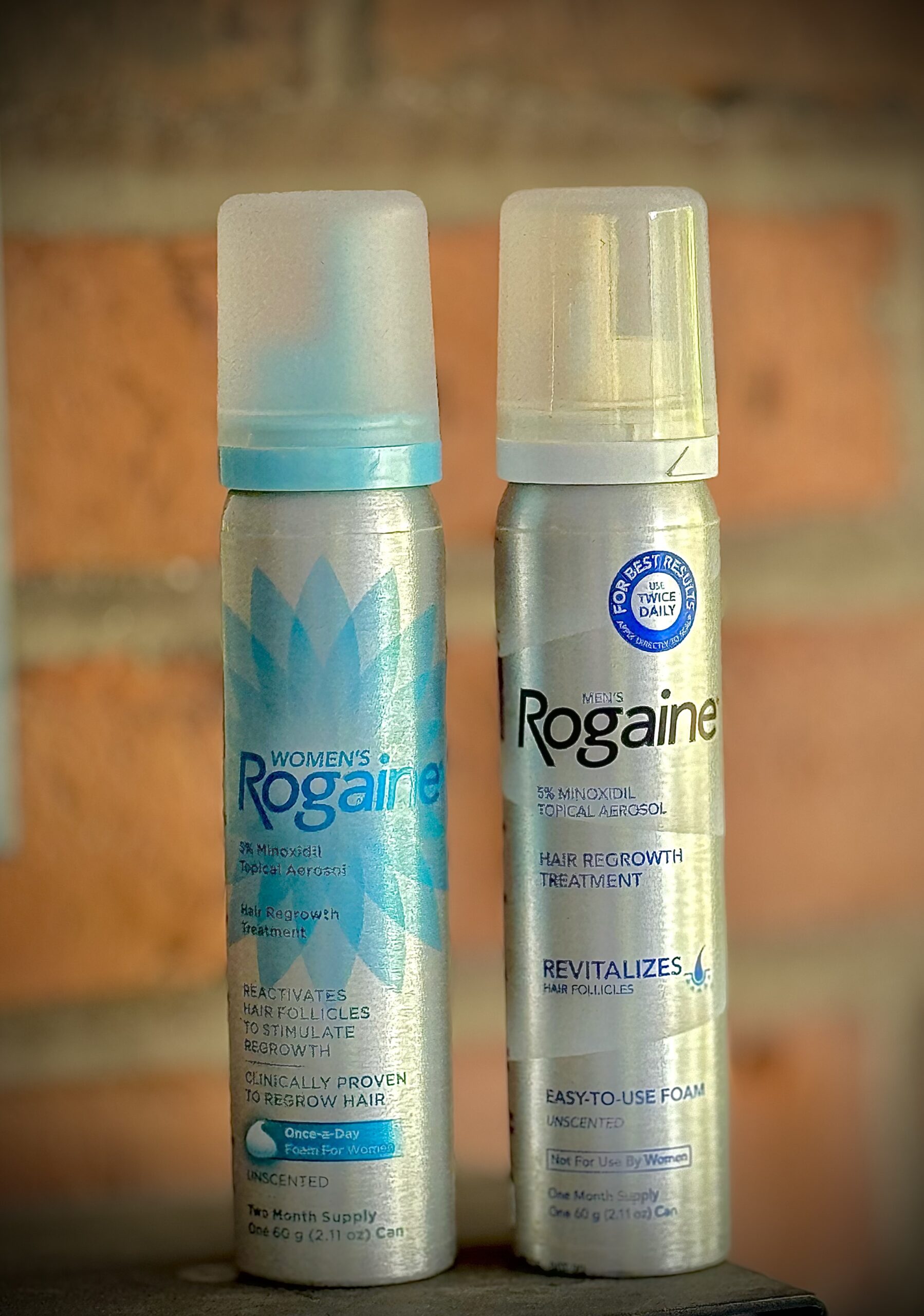 Minoxidil, commonly known by the brand name Rogaine, is an FDA-approved topical treatment for certain types of pattern hair loss in men and women. It can help stimulate hair growth and maintain density in some patients, although results vary and continued use is generally necessary to maintain its benefits. Finasteride, available as Propecia and generic finasteride, is an FDA-approved oral medication for male pattern hair loss. It works by reducing dihydrotestosterone (DHT), a hormone involved in the gradual miniaturization of genetically susceptible hair follicles. Finasteride requires appropriate medical evaluation and is not suitable for everyone.
At Leonard Hair Transplant Associates, we also offer non-surgical hair restoration options, including Platelet-Rich Plasma (PRP) with ACell for selected patients. PRP uses concentrated platelets from the patient’s own blood, and some clinical research suggests it may help improve hair density in certain cases of pattern hair loss. Results vary, and evidence establishing an additional benefit from ACell remains limited. Low-level laser therapy is another option with some clinical support, and certain devices have received FDA clearance for specific hair loss indications.
For patients who have already experienced significant hair loss, hair transplant surgery may provide an opportunity to restore hair to areas affected by genetic balding. Dr. Matthew Lopresti performs both Follicular Unit Transplantation (FUT) and Follicular Unit Excision (FUE), selecting the approach based on the patient’s individual circumstances, donor hair availability, and long-term goals. Surgery can produce lasting cosmetic improvement, but it does not stop surrounding native hair from continuing to thin.
None of these treatments comes with a guarantee, and none is appropriate for every patient. That’s exactly the point. Hair restoration should be based on an individual’s diagnosis and realistic expectations, not whichever product happens to be trending this week.
The Real Cost of Chasing a Hair Growth Trend
Rosemary oil may not be the most expensive product on your bathroom shelf, but its price tag isn’t necessarily the biggest concern. The real cost can be the time spent waiting for a result that may never come.
Think about how easily six months can disappear. You see a video, order the product, follow the routine, and convince yourself that the next month might finally bring a noticeable difference. Meanwhile, if you’re experiencing progressive genetic hair loss, the underlying process may be continuing. And unlike a bad haircut, not every change in hair density is easily reversed.
This doesn’t mean every person noticing thinning needs medication or surgery. Some people benefit from monitoring their hair over time. Others may need an evaluation for an underlying medical issue. The goal isn’t to rush into treatment. It’s to avoid confusing a popular internet routine with an informed medical decision.
At some point, it’s worth asking yourself whether you’re treating your hair loss or simply participating in somebody else’s content strategy.
A Better Hair Loss Strategy Than Whatever’s Trending
There’s nothing wrong with enjoying TikTok. It can introduce people to new ideas, encourage conversations about hair loss, and make a subject that once felt embarrassing easier to discuss. But there’s a difference between discovering an idea online and trusting it with your long-term hair health.
Dr. Matthew Lopresti, Chief Surgeon of Leonard Hair Transplant Associates, is a Diplomate of the American Board of Hair Restoration Surgery and a Fellow of the International Society of Hair Restoration Surgery. Our practice has helped patients throughout Boston, Newton, Massachusetts, Rhode Island, New Hampshire, and the surrounding New England region explore surgical and non-surgical hair restoration options. Hair transplant surgery is performed in Newton Centre, Massachusetts, and Warwick, Rhode Island, with consultations also available at our Boston office.
During a complimentary consultation, we can discuss your hair loss history, what you’re noticing, and which treatment options may be appropriate. Sometimes the best next step is treatment. Other times, it’s further evaluation or simply monitoring your hair before making a decision. Either way, you’ll have a clearer understanding of your options than a social media algorithm can provide.
Rosemary oil may continue collecting millions of views, enthusiastic testimonials, and glowing product reviews. That doesn’t make it a proven solution for hair loss.
The algorithm knows what gets your attention. It doesn’t know what’s happening to your hair.
If you’re noticing thinning, a receding hairline, or changes in your hair density, schedule a complimentary consultation with Leonard Hair Transplant Associates and get answers grounded in medical knowledge rather than social media hype.