


Will I Keep Balding After My Hair Transplant?
If you’re thinking about getting a hair transplant, chances are you’ve already spent plenty of time looking in the mirror, noticing the changes in your hair, and wondering what you can do about them. Maybe you’ve been researching your options for months. Maybe you’ve been thinking about it for years. Either way, you’re considering making an investment in yourself, and you want to know that the results will last. That’s completely understandable. After all, the last thing you want is to restore your hair today only to find yourself dealing with more hair loss a few years down the road.
So, let’s address one of the biggest questions patients have before surgery. Yes, you can continue balding after a hair transplant. While the transplanted follicles are generally resistant to the genetic process responsible for pattern baldness, the natural hair surrounding them can continue to thin as you get older. A hair transplant can restore hair you’ve already lost, but it doesn’t stop the underlying progression of male or female pattern hair loss.
That doesn’t mean a hair transplant isn’t worth considering. Far from it. It simply means that getting the best possible result involves looking beyond how your hair will appear next year. You also want to think about how it could look five, ten, or even twenty years from now. And that’s where thoughtful planning makes all the difference.
A Hair Transplant Changes Where Your Hair Grows, Not Why You’re Losing It
 Here’s something that surprises a lot of people. The hair on the back and sides of your scalp is often genetically different from the hair on top. Those follicles are generally more resistant to dihydrotestosterone (DHT), the hormone involved in male and female pattern hair loss. That’s why someone can experience significant balding on top while still having plenty of hair around the back and sides.
During hair transplant surgery, healthy follicles are carefully taken from these donor areas and transplanted into areas where your hair has thinned or disappeared. The remarkable thing is that those follicles generally retain their original characteristics even after being moved. In other words, they’re usually still resistant to the same genetic process that caused your original hair loss.
But here’s the part you need to understand. Your existing hair doesn’t suddenly become resistant just because you’ve had a transplant. If you’re experiencing androgenetic alopecia, the medical term for genetic pattern hair loss, the follicles surrounding your transplanted hair can continue to weaken and produce thinner strands over time.
Think about it this way. Let’s say you restore the front of your scalp in your thirties. Your transplanted hair may continue growing for years, but if the natural hair behind it gradually thins during your forties, the overall appearance could change. That doesn’t necessarily mean your transplant failed. It means your original hair loss continued, which is exactly why your surgeon should be thinking about the future before the first graft is ever placed.
What Happens to Your Hair After Surgery?
It’s normal for transplanted hair shafts to shed during the first several weeks after surgery, and that doesn’t necessarily mean you’ve lost the transplanted follicles. In fact, temporary shedding is an expected part of the recovery process for many patients. Understandably, seeing hair fall out after you’ve just had a procedure to restore it can be frustrating, especially if nobody has explained what to expect.
The important thing to remember is that the follicles generally remain beneath your scalp even when the visible hairs shed. As the follicles enter a new growth cycle, they begin producing new hair. At Leonard Hair Transplant Associates, we typically explain that early growth becomes noticeable around five to six months after surgery, with more significant cosmetic improvement developing between nine and twelve months. Your final results can continue maturing for approximately sixteen to eighteen months.
That’s why patience is such an important part of hair restoration. The hair you see a few weeks after surgery isn’t the finished result, and the shedding you experience during recovery is different from the gradual loss of your existing, non-transplanted hair. Knowing the difference can save you a lot of unnecessary worry.
Protecting the Hair You Still Have
If your goal is to enjoy your hair transplant results for years to come, protecting the natural hair you still have deserves just as much attention as restoring what you’ve already lost. Remember, your transplanted follicles are generally more resistant to genetic balding, but your surrounding hair may not be. Depending on your age, hair loss pattern, and medical history, there may be treatments worth considering to help slow additional thinning.
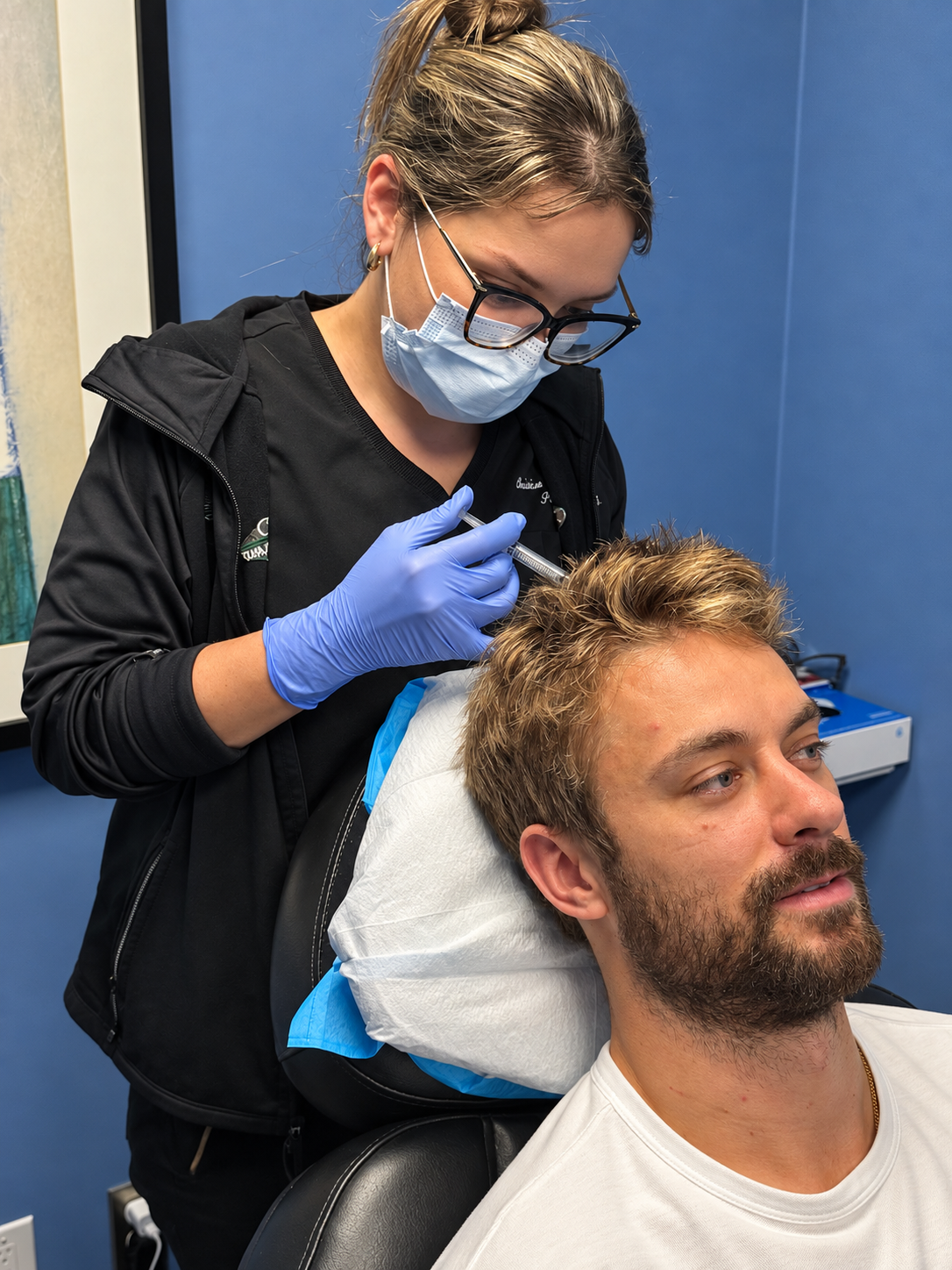 For some patients, medications such as finasteride and minoxidil can play an important role. Finasteride works by reducing DHT, helping slow the process that causes susceptible hair follicles to shrink. Minoxidil can help stimulate hair growth and improve density in certain individuals. Neither medication is appropriate for everyone, and it’s important to understand the potential benefits, side effects, and need for continued treatment before deciding whether either makes sense for you.
We also offer Platelet-Rich Plasma (PRP) with ACell at Leonard Hair Transplant Associates for selected patients experiencing hair thinning. PRP uses concentrated platelets from your own blood, which release growth factors involved in cellular signaling and tissue repair. Research suggests PRP may help some patients with pattern hair loss, although results vary and evidence for the additional benefit of ACell remains limited. It’s not a guaranteed way to prevent future balding, but it may be one option to discuss as part of an individualized treatment plan.
The key is understanding that hair restoration and hair preservation aren’t the same thing. One helps replace hair you’ve lost. The other focuses on maintaining the hair you still have. Depending on your situation, addressing both may be the smartest long-term approach.
Will You Need Another Hair Transplant Later?
You might benefit from another hair transplant in the future if your natural hair continues to thin, but that doesn’t mean everyone needs a second procedure. Some patients are happy with their initial results for many years, while others decide to address additional areas as their hair loss progresses. Your age, family history, donor hair availability, and personal expectations all play a role.
One thing we always want patients to understand is that donor hair is a limited resource. You only have so many follicles available in the back and sides of your scalp, and once those follicles are removed for transplantation, they don’t grow back in the donor area. That’s why using your donor hair wisely is so important, especially if you’re younger and may experience additional thinning over the coming decades.
Imagine having a very aggressive transplant in your twenties or early thirties without considering what your hair might look like at fifty. You could end up needing additional restoration later, but with fewer donor follicles available to work with. A more thoughtful approach considers your current goals while preserving options for the future. Sometimes that means recommending a more conservative surgical plan, and sometimes it means discussing ways to stabilize your hair loss before moving forward.
More grafts don’t automatically mean a better hair transplant. The right number of grafts, placed in the right areas, with the future in mind, is what matters.
The Difference Between Getting More Hair and Getting It Right
A successful hair transplant should look natural today while taking into account how your hair may change over time. That means considering your existing hair loss, the quality of your donor area, your facial proportions, and the likelihood of additional thinning. It’s not simply about filling in the areas where you’ve lost hair. It’s about creating a result that looks appropriate for you now and continues to make sense as you age.
At Leonard Hair Transplant Associates, Dr. Matthew Lopresti, our Chief Surgeon, is a Diplomate of the American Board of Hair Restoration Surgery and a Fellow of the International Society of Hair Restoration Surgery. He performs both Follicular Unit Transplantation (FUT) and Follicular Unit Excision (FUE), allowing recommendations to be based on your individual needs rather than trying to fit every patient into the same procedure.
We welcome patients from Boston, Newton, throughout Massachusetts, Rhode Island, New Hampshire, and the surrounding New England region. Hair transplant surgery is performed in our Newton Centre, Massachusetts, and Warwick, Rhode Island offices, and your complimentary consultation is an opportunity to discuss not just what you’d like to improve, but what you can realistically expect over the long term.
A hair transplant can make a tremendous difference in how you look and feel. But the best results aren’t just about seeing more hair in the mirror a year from now. They’re about making smart decisions today that you’ll still feel good about years down the road. Because ultimately, the goal isn’t simply to give you more hair. It’s to give you a result that continues to look like you.
If you’re considering hair transplant surgery or have questions about ongoing hair loss after a previous procedure, contact Leonard Hair Transplant Associates to schedule a complimentary consultation with Dr. Matthew Lopresti.