


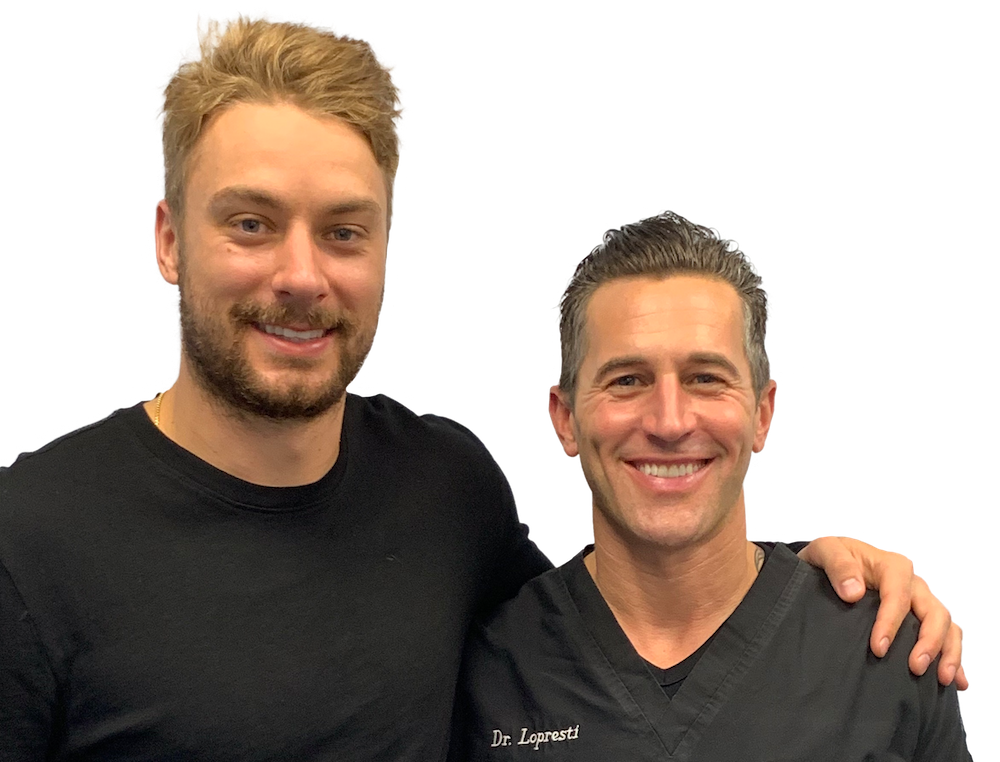
Ashton Kutcher Reveals That He Has Hair Loss… But He Got Many Facts Wrong!
This article was originally published in June 2018 in response to Ashton Kutcher publicly discussing his experience with hair loss and hair loss medication. Treatment information and products referenced in the original article reflect the options and clinical perspective discussed at that time. Dr. Robert Leonard retired from Leonard Hair Transplant Associates in 2018, and specific laser devices previously offered by the practice are no longer sold by Leonard Hair Transplant Associates.
During a recent interview on Conan, Ashton Kutcher indicated that he has been experiencing hair loss for about five years. Though he readily admitted that he is not a scientist or hair loss expert, he got a number of facts wrong, which were broadcast throughout the world. I’d like to set the record straight.
He was concerned about frontal hairline recession and told Conan O’Brien that he was prescribed Avodart (dutasteride) for his hair loss. First of all, this medication is not FDA approved to treat hair loss although many doctors prescribe it for this purpose. A problem, though, is that it works typically only in the crown area of the scalp and not in the frontal area of Ashton’s concern.
 He talked a lot about finasteride, which is the only FDA approved oral medication to treat male pattern baldness called Propecia. Finasteride is FDA approved for the treatment of male pattern hair loss, although individual response and the degree of improvement can vary.
It was mentioned that it has to be stopped while trying to have a baby, which is not the case. Women, themselves, of childbearing age, however, should not take this medication.
He and Conan then went on describing about how testosterone and hair were related when they thankfully confirmed that they were not scientists and had not been sure that what they were saying was correct; it wasn’t!
Today, there are several medical and non-surgical approaches that may be considered for appropriate patients experiencing hair loss, including finasteride, topical minoxidil and low level laser therapy. Treatment recommendations depend on the individual’s pattern and progression of hair loss, medical history and long-term goals. These treatments are generally intended to help preserve existing hair and manage progressive hair loss, while hair transplantation may be considered when surgical restoration is appropriate.
For appropriate patients with a receding hairline or more extensive hair loss, hair transplant surgery may be an option. The procedure moves follicles from an appropriate donor area to areas of thinning or baldness. Because hair loss can continue in non-transplanted areas, long-term planning and treatment of progressive hair loss remain important considerations.
I’m thrilled that Ashton Kutcher was open with the public about how his hair loss was bothering him enough to seek medical treatment. I just had to help out a little to clear up any mis-information provided so that the audience got correct facts about current approved hair loss therapies.
Dr. Robert Leonard
Founder of Leonard Hair Transplant Associates